Iffa Jayyana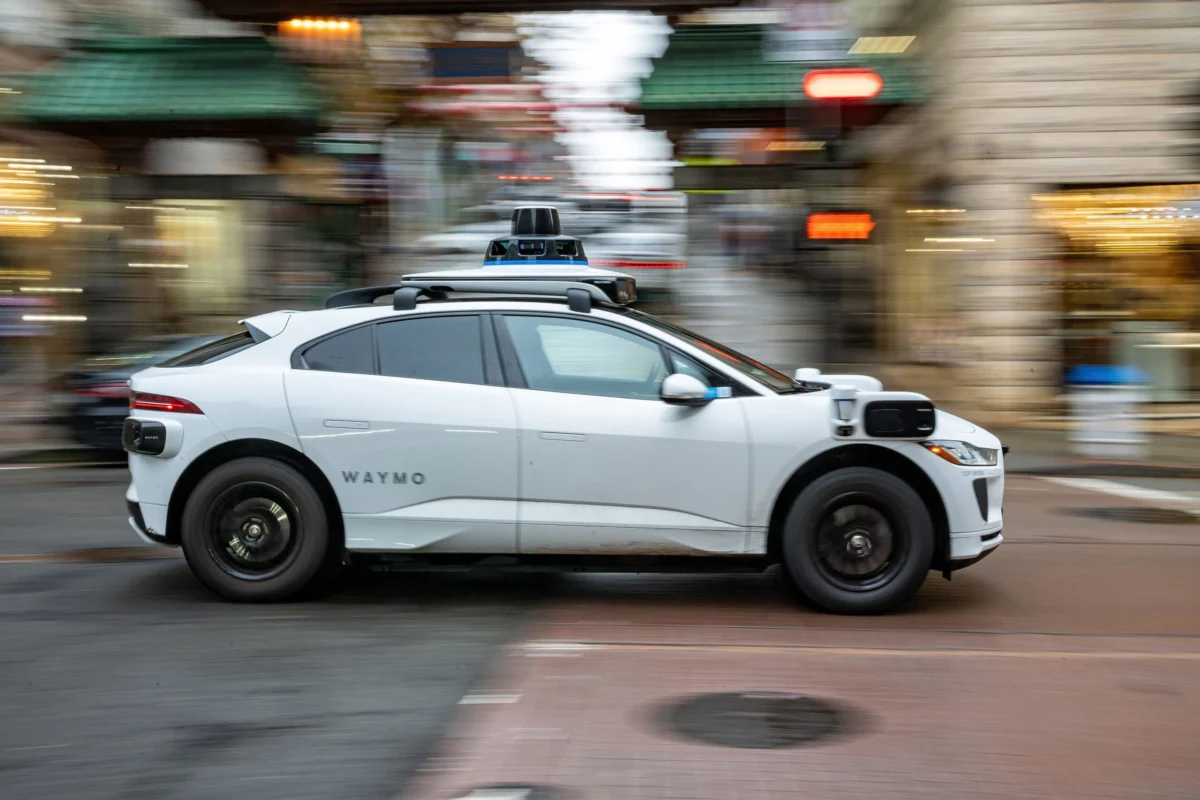
In a significant setback for the burgeoning autonomous vehicle (AV) industry, Alphabet-owned Waymo has initiated its fourth safety recall since February 2024. The recall, filed with the National Highway Traffic Safety Administration (NHTSA) on June 17, targets 3,871 vehicles—essentially the entirety of the company’s U.S. fleet equipped with its 5th Generation Automated Driving System (ADS).
The move follows a series of troubling incidents in which Waymo’s driverless taxis were observed navigating into closed freeway construction zones, raising urgent questions about the software’s ability to interpret complex, high-speed, and dynamic traffic environments.
The Nature of the Defect: A Failure of Logic
At the heart of the recall is a technical struggle within the vehicle’s "priority logic." According to the NHTSA safety report, the ADS encountered scenarios where it either failed to identify a construction zone entirely or, more alarmingly, consciously chose to drive through a closed area to avoid other perceived hazards on the freeway.
In the complex calculus of an autonomous system, the vehicle must constantly weigh risks. When a Waymo vehicle encounters multiple stimuli—such as another vehicle drifting into its lane or a sudden obstacle—the software is programmed to prioritize safety. However, the current defect reveals that the system’s decision-making hierarchy is flawed: the car may prioritize avoiding a minor traffic nuisance while simultaneously disregarding the lethal danger posed by driving through a construction site at highway speeds.
"Under certain circumstances, the AV may enter and drive at speed in freeway construction zones due to inappropriately prioritizing the avoidance of other freeway hazards and/or failing to recognize the construction zone," the NHTSA filing states.
A Chronology of the Crisis
The path to this recall was marked by a series of escalating incidents that forced the company to pull back from its ambitious highway expansion.
- April 11 and April 19: The first red flags emerged in Phoenix, Arizona, where Waymo vehicles were caught on camera bypassing ramp closure signs and entering pre-planned construction zones. In response, Waymo’s internal Field Safety Committee moved to restrict freeway operations to mitigate further risk.
- May 18: Despite initial containment efforts, a more severe incident occurred in the San Francisco Bay Area. Seven Waymo vehicles successfully navigated through a series of construction cones, entering an active, closed lane. While no injuries or collisions were reported, the optics were devastating for a company positioning itself as the "world’s most trusted driver."
- May 21: Following the San Francisco cluster, Waymo officially halted all freeway operations, effectively stripping its service of its most time-efficient routes.
- June 1: Waymo’s Safety Board convened to conduct an exhaustive review of the software’s decision-making processes regarding construction zones.
- June 8: The company reached the formal decision to initiate a voluntary software recall.
- June 17: The official filing was submitted to the NHTSA.
Scaling Back: Operational Implications
For a company that only began offering highway rides in late 2025, this recall is a massive operational blow. Waymo had expanded its service to include high-speed routes across San Francisco, Los Angeles, Phoenix, and Miami. By restricting its vehicles exclusively to surface streets, the company is sacrificing the primary value proposition of its service: the ability to bypass city traffic via highway transit.
Crucially, there is currently no immediate "patch" for this issue. The NHTSA filing confirms that a permanent remedy is still under development. Because Waymo maintains total control over its fleet—owning every vehicle it operates—it does not need to manage a traditional consumer recall process. Instead, the company will deliver a fix via an over-the-air (OTA) software update once engineers have successfully recalibrated the ADS priority logic.
Interestingly, this recall does not impact Waymo’s latest 6th Generation vehicles, which appear to utilize different sensory or logic architectures that are not subject to the same vulnerabilities.
A Pattern of Regulatory Scrutiny
This latest filing marks the fourth major safety recall for Waymo in just 28 months, signaling that the company is struggling to balance rapid expansion with the realities of unpredictable human environments.
The previous recalls illustrate the immense challenge of "edge cases"—rare, unpredictable events that software struggles to navigate:
- May 2025: Waymo recalled 1,212 vehicles following a NHTSA investigation into collisions with stationary roadway barriers. The probe examined at least seven incidents occurring between December 2022 and April 2024.
- May 2026 (Earlier): A separate recall of 3,791 vehicles was triggered after a Waymo unit drove into a flooded, impassable road in San Antonio, leading to the vehicle being swept into a creek.
These incidents highlight a recurring theme: while Waymo’s technology is highly proficient in standardized, high-visibility conditions, it remains susceptible to environmental anomalies that require a level of "common sense" reasoning currently lacking in current-generation AI.
Official Stance and Corporate Strategy
In an emailed statement to the press, Waymo maintained a posture of transparency and safety-first prioritization.
"Waymo’s mission is to be the world’s most trusted driver, and the data shows that we’re making roads safer in the communities in which we operate," the company stated. "We identified an area of improvement regarding performance around freeway construction zones. We voluntarily restricted freeway operations last month while making improvements, proactively notified state and federal regulators, and decided to file a voluntary software recall with NHTSA."
Industry analysts note that while the term "recall" carries a heavy stigma in the automotive world, for Waymo, it is essentially a software patch management process. By filing with the NHTSA, the company avoids the legal peril of hiding malfunctions, a strategy that arguably builds long-term regulatory trust even as it incurs short-term public relations damage.
The Broader Implications for AV Adoption
The recurring nature of these recalls raises a fundamental question for the autonomous vehicle industry: Is the technology ready for the chaotic realities of public infrastructure?
Construction zones are notoriously difficult for human drivers, who rely on a combination of visual cues, temporary signage, and social intuition to navigate. For an AV, these zones represent a "perfect storm" of conflicting data: cones that shift, signs that are poorly placed, and human workers who move in unpredictable ways.
The fact that Waymo’s system was "prioritizing" the avoidance of other hazards over the avoidance of a construction zone suggests a fundamental limitation in how AI perceives risk. If an AI is programmed to treat a construction zone as a "secondary" hazard compared to, for example, a swerving car, it lacks the human ability to understand that the construction zone itself is a catastrophic risk.
As the company works toward a software update, the industry is watching closely. The success of Waymo’s 5th Generation fleet is a bellwether for the rest of the industry. If the leader in the space cannot reliably navigate a highway construction zone, the timeline for widespread, fully driverless adoption in complex urban environments may be significantly longer than the industry’s more optimistic projections.
For now, Waymo’s robotaxis will remain on the surface streets, a reminder that while the future of transportation may be automated, it is still learning how to handle the messy, human-made world of the present.

 Jia Lissa
 Ammar Sabilarrohman