Rifan Muazin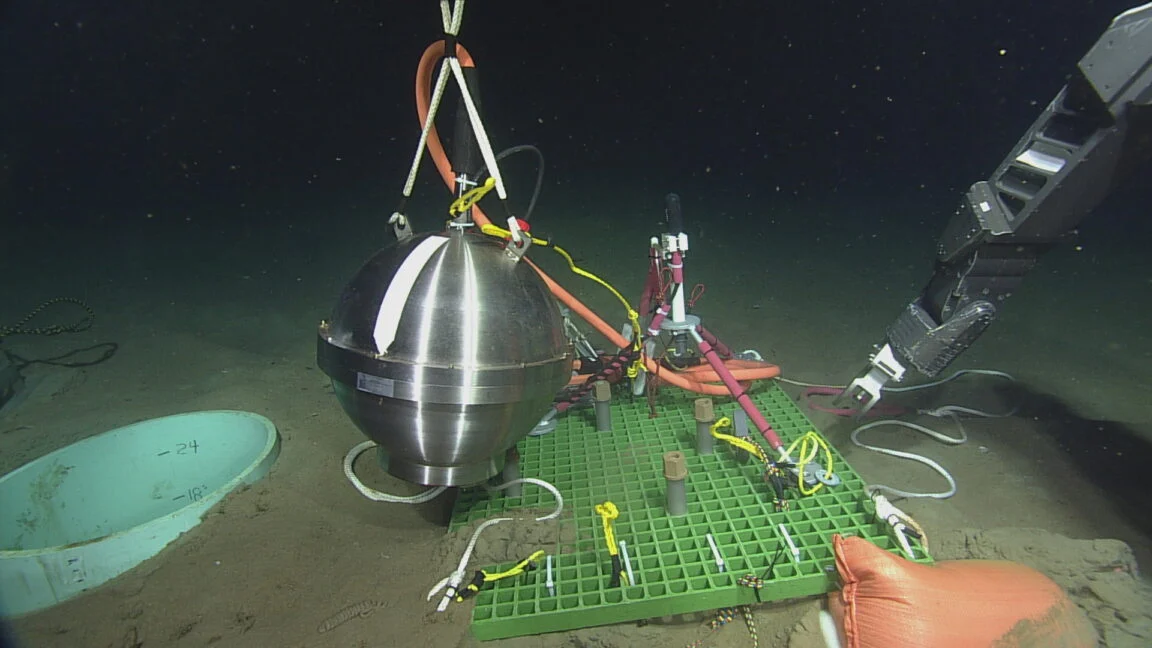
In a stunning reversal of policy that has sent ripples of relief through the global scientific community, the federal government is expected to announce today that it will scrap its plan to decommission the Ocean Observatories Initiative (OOI). The decision follows an intense month of public outcry and bipartisan pressure, effectively halting a move that would have dismantled a $350 million investment in critical marine infrastructure.
For weeks, the scientific community had been bracing for the loss of one of the world’s most sophisticated ocean-monitoring networks. While the government’s initial announcement in May was abrupt and lacked a formal justification, the reversal suggests a newfound recognition of the OOI’s vital role in national security, climate resilience, and economic stability. However, as the news breaks, researchers are now pivoting to a more urgent concern: the status of the equipment and the integrity of the data streams that were left in limbo during this month of uncertainty.
The Anatomy of the OOI: A Global Sensor Network
To understand the stakes of this reversal, one must first grasp the sheer scale of the Ocean Observatories Initiative. Managed by the National Science Foundation (NSF), the OOI is not merely a collection of buoys; it is a complex, multi-modal network of arrays strategically positioned throughout the Atlantic and Pacific Oceans.
The system utilizes an array of moored and mobile sensors—including autonomous underwater vehicles (AUVs) and gliders—to provide near-real-time data to academic researchers, government planners, and private industries. The network tracks a staggering array of variables, including:
- Physical Oceanography: Monitoring currents, wave height, and water temperature.
- Biogeochemistry: Tracking salinity, oxygen levels, acidity, and chemical compositions that signal ecosystem health.
- Geophysics: Utilizing seismic sensors to detect tectonic activity and underwater volcanic eruptions.
With over 100 distinct data products available for public consumption, the OOI serves as the "eyes and ears" of the deep sea. It is a fundamental tool for anyone attempting to map the impact of a warming planet on the marine environment, making its proposed decommissioning particularly baffling to experts in the field.
Chronology of a Crisis: From Silence to Reversal
The crisis began in May, when federal authorities quietly initiated the process of dismantling the network. The lack of an official rationale triggered immediate speculation among the scientific community and climate policy analysts.
May: The Silent Shutdown
The sudden announcement caught stakeholders by surprise. There was no public hearing, no preliminary study, and no transition plan for the researchers who relied on the OOI for their ongoing projects. As the NSF began the process of decommissioning, suspicion focused heavily on the political climate. Given the network’s integral role in climate change research, many critics argued that the move was an attempt to stifle data collection related to ocean acidification and rising sea temperatures.
Early June: The Mounting Backlash
As the implications of the shutdown became clear, the opposition coalesced. Academics from top-tier research institutions, fisheries managers, and weather forecasters began to sound the alarm. They argued that the OOI was not merely a "climate project" but a critical component of the national infrastructure. The data provided by the OOI is essential for predicting hurricane intensification, managing commercial fish stocks, and ensuring the safety of maritime trade routes.
Mid-June: The Turning Point
By mid-June, political pressure began to mount. The silence from the administration was met with aggressive inquiries from members of Congress who oversee federal science funding. The realization that the shutdown would have significant downstream effects on the American economy—specifically within the fishing and shipping sectors—appears to have been the decisive factor in the reversal.
Today: The Official Reprieve
According to reporting from The New York Times and corroborated by statements from high-ranking government officials, the administration is set to walk back its decision. Rep. Zoe Lofgren, the ranking Democrat on the House Science Committee, confirmed that the government has signaled its intent to keep the OOI operational.
Supporting Data: Why the OOI is Irreplaceable
The value of the OOI lies in its continuity. Oceanographic research relies on long-term data sets to distinguish between natural seasonal variability and long-term anthropogenic change. A gap in the data, even one as short as a month, can create a "blind spot" that complicates modeling efforts for years to come.
According to data management reports from the OOI, the network delivers petabytes of information annually. This information is utilized in:
- Weather Forecasting: By measuring ocean heat content, meteorologists can more accurately predict the intensity of tropical storms as they move across the Atlantic. Without OOI data, hurricane models lose a critical input, potentially leading to less accurate public warnings.
- Fisheries Management: The National Oceanic and Atmospheric Administration (NOAA) utilizes OOI data to understand migration patterns influenced by shifts in salinity and temperature. This is essential for setting sustainable harvest quotas.
- National Defense: Subsurface acoustic and seismic data are vital for understanding the maritime environment, which is increasingly a theater of geopolitical competition.
The cost of replacing such a network would far exceed the initial $350 million investment. The logistics of deployment, the cost of specialized research vessels, and the technical expertise required to maintain the hardware represent an institutional knowledge base that would be nearly impossible to reconstitute once disbanded.
Official Responses and Political Implications
The reversal has been met with guarded optimism. While the scientific community celebrates the survival of the OOI, the experience has left a sour taste.
"The decision to dismantle the OOI was an act of scientific sabotage," said one researcher who wished to remain anonymous. "To reverse it now is the right thing to do, but it doesn’t explain why the idea was ever entertained in the first place. We need assurances that this won’t happen again."
Representative Zoe Lofgren’s office has emphasized that oversight will remain stringent. There is a strong feeling in Washington that the federal government must justify any future attempts to reduce funding for long-term monitoring infrastructure. The episode has highlighted a disconnect between political decision-making and the technical requirements of modern scientific research.
Furthermore, the role of the National Science Foundation has come under scrutiny. Critics are calling for a formal review of how the NSF handles the decommissioning of large-scale facilities to ensure that public interest and scientific utility are prioritized over administrative convenience or political pressure.
The Path Forward: Assessing the Damage
While the OOI has been saved, the "big question" remains: What is the state of the network?
During the month-long decommissioning process, some sensors were likely powered down or moved, and routine maintenance was undoubtedly suspended. The OOI relies on a delicate balance of power, data transmission, and hardware calibration. If parts of the network were physically disconnected or if software updates were halted, it could take weeks, if not months, to recalibrate the entire system to ensure that the data flowing back to shore is accurate.
The administration’s expected announcement today will likely include a pledge to restore the network to full functionality. However, the scientific community will be watching closely to see if the funding is merely restored to current levels or if the government intends to invest in the necessary repairs to compensate for the disruption caused during the month of uncertainty.
Implications for Future Science Policy
The OOI saga serves as a cautionary tale about the vulnerability of scientific infrastructure in a polarized political environment. The fact that the decision was reversed suggests that when the scientific community mobilizes—and when the economic and practical consequences are clearly articulated to policymakers—science can win.
Moving forward, the OOI will likely need to engage in a more robust public relations campaign to ensure that its value is understood not just by climatologists, but by the general public and the lawmakers who hold the purse strings. The network is no longer just a research tool; it is a vital utility for modern life, as necessary as satellites or weather stations.
As we look to the future, the resilience of the OOI will be tested not just by the harsh environments of the Atlantic and Pacific, but by the shifting tides of federal policy. For now, the sensors remain in the water, the data is flowing, and the nation’s view of the deep ocean remains clear. But the events of the past month have made one thing clear: in the pursuit of knowledge, the status quo is never guaranteed.


 Suro Senen
 Ali Ikhwan