Iffa Jayyana
In the digital age, a brand’s reputation can shift in the span of a single afternoon. A customer posts a short video clip critiquing a product; initially, it garners a few hundred views and a handful of benign comments. By sunset, however, the post has transcended its niche, reaching thousands of individuals who have never interacted with the brand before.
This scenario is the new reality for organizations. People now discover news, debate its merits, and solidify their opinions within the same social media feeds. This convergence means that a single viral post can fundamentally alter brand perception long before a communications team has even drafted a response. As traditional reporting cycles continue to lose ground to the velocity of social media, the gap between external events and internal awareness has become a dangerous liability.
According to the Q1 2026 Sprout Social Pulse Survey, social media has officially supplanted traditional news outlets as the primary source for breaking information. Forty-nine percent of consumers now turn to social platforms first, outstripping television (45%) and digital news applications (32%). For businesses, relying on retrospective data—dashboards that explain what did happen—is no longer sufficient. To survive, organizations are increasingly turning to predictive media intelligence to close the gap between occurrence and reaction.
The Evolution of Media Monitoring: From History to Hindsight
Predictive media intelligence is a sophisticated suite of technologies designed to forecast the trajectory of news stories and consumer trends. By leveraging artificial intelligence to analyze live social and media data, these systems identify emerging patterns, allowing organizations to anticipate how public narratives will evolve before they reach their peak.

Traditional vs. Predictive Monitoring: A Comparative Analysis
The fundamental difference between legacy monitoring and predictive intelligence lies in temporal orientation. Traditional monitoring is retrospective; it tracks mentions, coverage volume, and sentiment after the fact. It provides a post-mortem of where public attention has been.
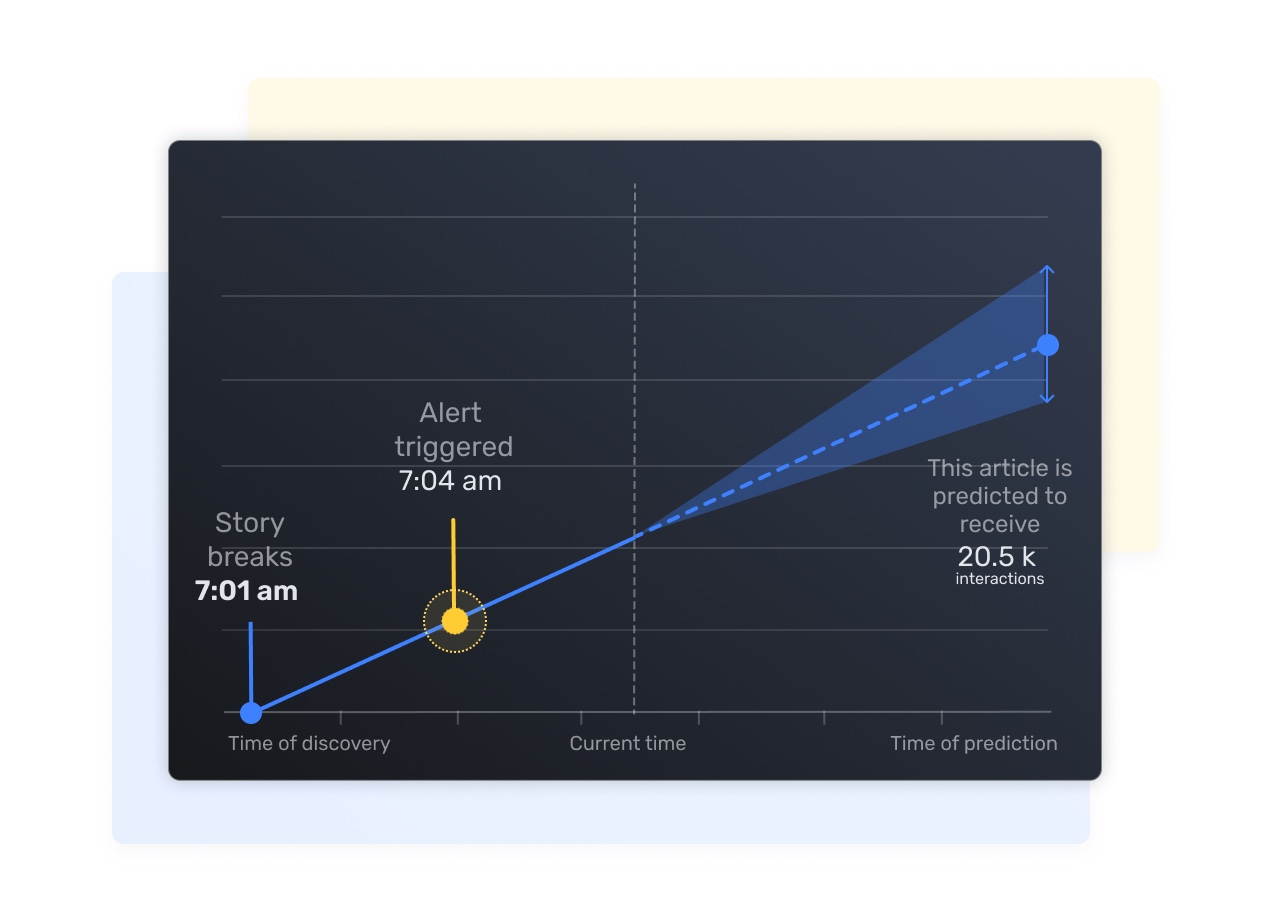
In contrast, predictive media monitoring acts as a radar system. By utilizing real-time engagement velocity—measuring how quickly a story is spreading and which specific demographics are amplifying it—the system estimates the future reach of a topic.
| Feature | Traditional Media Monitoring | Predictive Media Intelligence |
|---|---|---|
| Primary Focus | Historical mentions/engagement | Emerging stories and future reach |
| Data Basis | Past reporting | Real-time engagement + historical patterns |
| Objective | Understanding the past | Anticipating future developments |
| Decision Support | Retrospective reporting | Active, real-time crisis/opportunity management |
The Chronology of an Emerging Narrative
The lifecycle of a modern news story rarely follows a linear path. Using platforms like NewsWhip by Sprout Social, the process begins the moment a piece of content is published.
- Detection: The system captures metadata, including the source, author, and topic.
- Velocity Calculation: The platform monitors the rate of engagement. Is the interaction count climbing linearly, or is it accelerating exponentially?
- Pattern Matching: The AI compares the current story’s behavior against historical benchmarks. Has this specific topic gained traction in the past? Who are the primary drivers of the conversation?
- Projection: The system generates a forecast for the coming hours, identifying whether the narrative will likely fade into obscurity or explode into a mainstream event.
This process is dynamic. Should a celebrity resharing a post or a corporate spokesperson issue a response, the system recalculates its predictions in real-time, accounting for these "shocks" to the narrative.
Supporting Data: Where Attention Flows
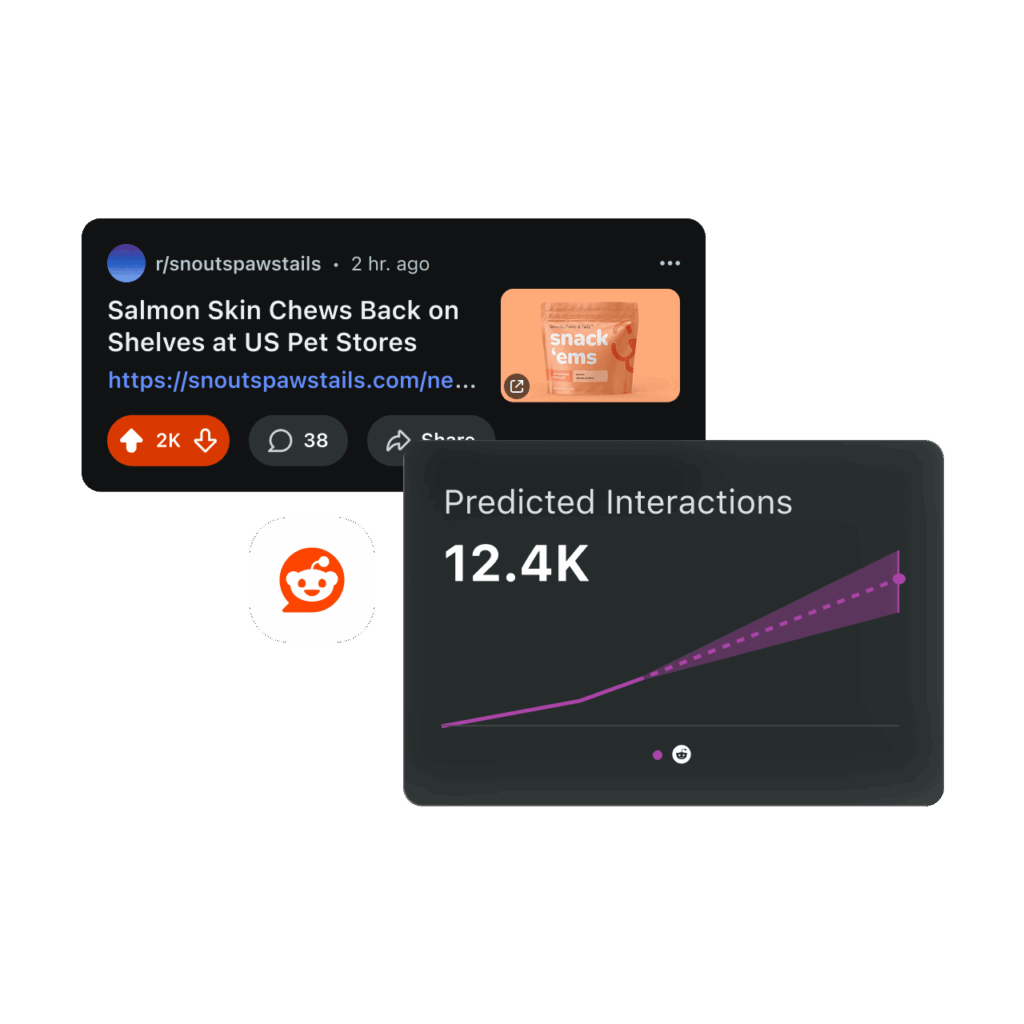
The effectiveness of predictive intelligence is tied directly to the breadth of its data sources. While major networks like Facebook, Instagram, and YouTube remain the dominant arenas for news consumption, the early signals of a crisis often ignite in decentralized spaces.
The Q2 2025 Sprout Social Pulse Survey indicates a significant migration of user attention. Fifty-one percent of global users plan to increase their time on community-driven platforms like Reddit, while 48% are pivoting toward emerging networks like Bluesky and Mastodon. Consequently, a modern predictive engine must look beyond the mainstream to identify these subterranean shifts. By integrating Reddit discussions and X commentary into the broader article rankings, organizations can witness a story’s arc across the entire digital ecosystem, catching the spark before it becomes a wildfire.
The Mechanics of Prediction: AI Models at Work
The engine beneath predictive media intelligence consists of four primary AI models, each serving a distinct analytical function:
1. Sentiment Analysis
Virality is not inherently negative, but it is often nuanced. Advanced sentiment analysis identifies the emotional tone—anger, confusion, trust, or excitement—underpinning a conversation. If a brand sees a spike in mentions, sentiment analysis clarifies whether the audience is feeling "betrayed" (requiring immediate crisis intervention) or "excited" (suggesting an opportunity for brand amplification).
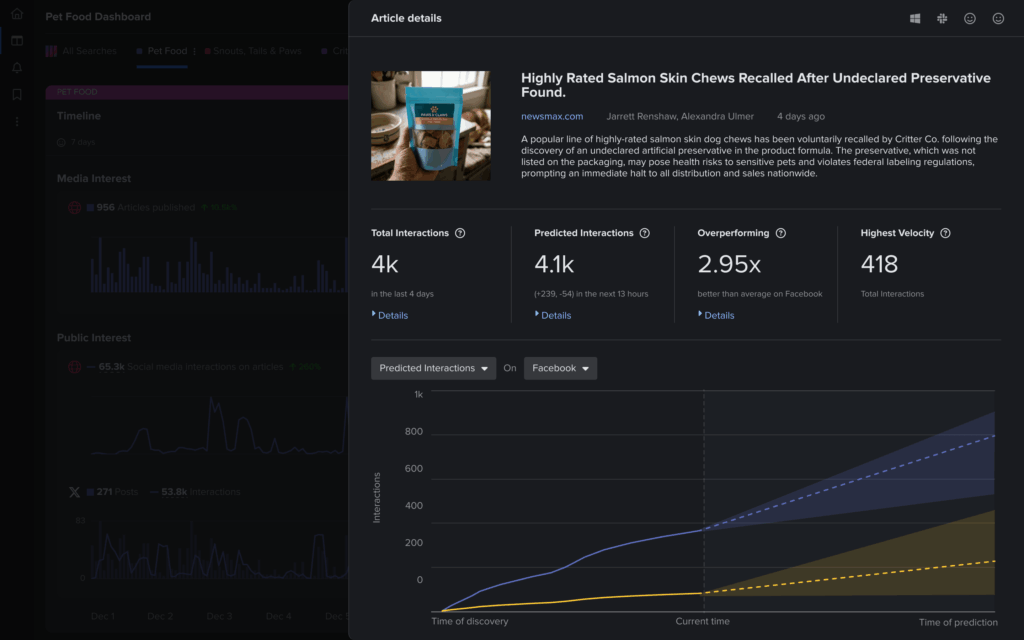
2. Time Series Forecasting
This model utilizes historical data to project future growth. It helps communicators answer the critical question: "Will this die out by tomorrow, or is this the start of a multi-day news cycle?" This allows for the intelligent allocation of resources.
3. Topic Modeling
In the midst of a massive influx of data, noise is the enemy. Topic modeling clusters large volumes of commentary into actionable themes. During a product launch, for example, the AI can discern if the primary driver of conversation is "pricing," "usability," or "sustainability," allowing the team to tailor their messaging to address specific consumer concerns.
4. Anomaly Detection
This serves as the early warning system. By establishing a baseline of "normal" brand interaction, the AI can trigger an alert the moment a statistically significant deviation occurs. This identifies anomalies—such as a sudden surge in mentions at 3:00 AM—before they become mainstream news.
Official Perspectives and Industry Application
The shift toward predictive intelligence has fundamentally changed how communications professionals operate.
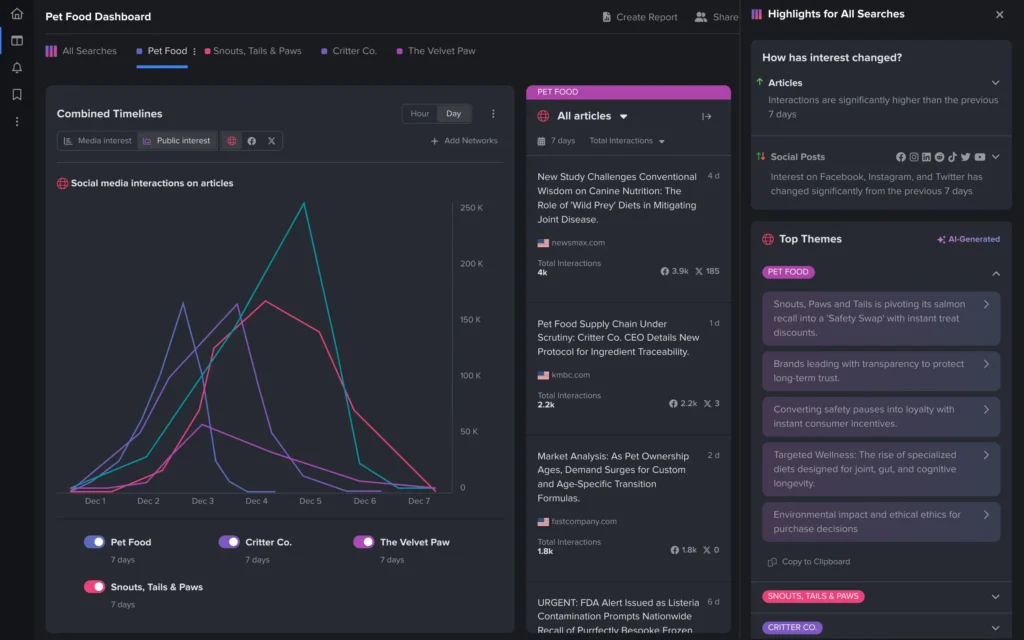
Jaclyn Ruelle, formerly of the Martin Agency, highlights the practical utility of these tools: "We rely on predicted interactions to see if a story is going to die out by the next morning. If our brand joins the conversation, we need to know if it’s on the brink of having staying power beyond the 24-hour window."
Similarly, organizations such as the World Health Organization (WHO) have utilized predictive monitoring to manage public health information. By identifying emerging, vaccine-related misinformation early, their teams can issue evidence-based corrections before false narratives become entrenched.
Implications for Strategic Decision-Making
Predictive media intelligence does not replace existing business intelligence; it enriches it. While sales data tells you what a customer did, predictive intelligence tells you what the market might do next.
Six Strategic Applications
- Crisis Management: Moving from reactive firefighting to proactive mitigation. By assessing the scale of a potential crisis against past historical trends, brands can make data-backed decisions on whether to issue a statement or refrain from "feeding the trolls."
- Campaign Optimization: Using local media analysis to ensure creative content resonates across diverse geographic markets, avoiding the "one-size-fits-all" trap.
- Media Relations: Moving beyond static media lists. PR professionals now prioritize journalists and outlets based on their actual engagement levels, ensuring pitches reach the most influential voices.
- Trendspotting: Identifying cultural tipping points. By monitoring when interest in a niche topic moves from subreddits to mainstream news, brands can position themselves as thought leaders in emerging categories.
- Real-Time Strategy: Identifying gaps in product expectations or service quality before they manifest in negative sales reports or customer support churn.
- Brand Awareness: Identifying underserved audiences by analyzing the questions and comparisons consumers are making in forums and social communities.
The Future: Agentic AI and Reduced Alert Fatigue
The future of media intelligence lies in "agentic" capabilities—autonomous AI agents like the Trellis Monitoring Agent. These agents do not just flag a story; they provide full-context briefs, evaluate the importance of the narrative based on brand-specific criteria, and suggest potential courses of action.
This reduces "alert fatigue," a common ailment where communications teams are overwhelmed by constant notifications, leading to critical information being missed. By filtering the noise, these agents transform monitoring from a state of "something happened" to "something important is changing."
As we move toward 2026 and beyond, the competitive advantage will go to those who can see the narrative shift before it hits the headlines. In an environment defined by volatility, predictive media intelligence is no longer a luxury—it is the essential foundation of modern corporate governance.


 Asep Darmawan
 Sagoh
Sagoh