Asep Darmawan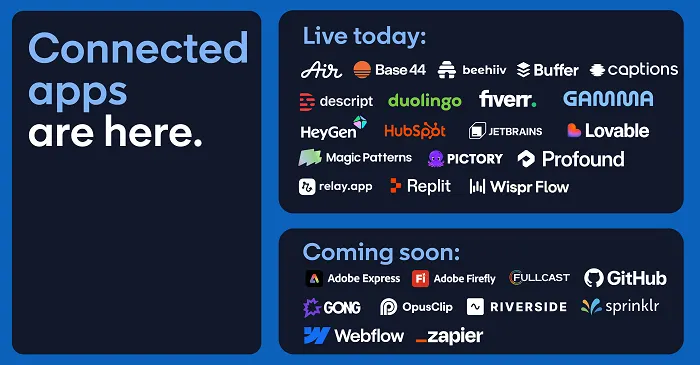
In the modern digital economy, the traditional resume—a static document listing job titles and generic skills—is rapidly becoming an artifact of the past. As the barrier to entry for technical proficiency lowers through generative AI and specialized software, employers are finding it increasingly difficult to distinguish between a candidate who has "heard of" a tool and one who has mastered it.
LinkedIn, the world’s largest professional network, is moving to bridge this gap. This week, the company announced a significant expansion of its "Connected Apps" initiative, a feature designed to transform how users showcase their technical expertise. By allowing members to link their professional accounts directly to their LinkedIn profiles, the platform is shifting from self-reported claims to verified, dynamic evidence of real-world productivity.
The Core Transformation: Moving from "Listings" to "Evidence"
For years, the "Skills" section of a LinkedIn profile has been notoriously unreliable. It is a space where buzzwords thrive, often cluttered with vague descriptors like "Microsoft Office," "Strategic Planning," or "Communication." While these tags serve as keyword markers for recruiters, they offer little insight into a candidate’s actual competency.
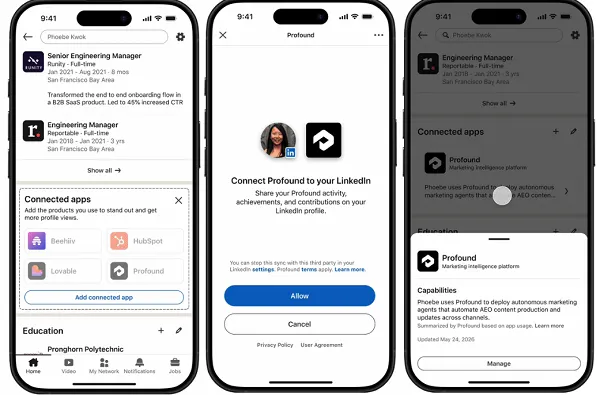
LinkedIn’s new "Connected Apps" element changes the paradigm. By integrating directly with third-party software providers, LinkedIn can now pull usage data—not private project content, but verifiable activity patterns—to generate a living record of expertise.
When a user connects an app, the platform creates a statement based on actual product usage. For instance, rather than merely stating that a user knows "HubSpot," the integration might display a specific, dynamic insight such as, "Creates and sends segmented email campaigns in HubSpot’s Marketing Hub." This shift is fundamental: it moves the conversation from what you say you can do to what you actually accomplish within the tools that define your industry.
Chronology: From AI Pilots to a Broader Technical Ecosystem
The journey toward verified skills did not happen overnight. It is the result of a deliberate, phased strategy to increase the utility of the LinkedIn profile for both job seekers and hiring managers.
- January 2025: The Generative AI Pivot: LinkedIn initiated its foray into verifiable credentials by launching "Skill Qualifications" specifically for generative AI. Recognizing that AI proficiency was becoming a non-negotiable requirement for many roles, LinkedIn sought a way to validate the rapidly proliferating—and often dubious—claims of AI mastery.
- Early Collaborations: Following the success of the initial pilot, LinkedIn began working with early-adopter platforms such as Descript, Duolingo, Lovable, Relay.app, and Replit. These partnerships allowed the company to test how "real-world usage" could be parsed into professional summaries on a profile.
- The Current Expansion: As of this week, the feature has expanded significantly. A new wave of partners—including Air, Base44, Beehiv, Buffer, Fiverr, Gamma, HeyGen, HubSpot, JetBrains, Magic Patterns, Mirage/Captions, Pictory AI, Profound, and Wispr Flow—has been added to the ecosystem.
- The Future Roadmap: The momentum is not slowing down. LinkedIn has already confirmed a pipeline of upcoming integrations that includes industry titans such as Adobe, GitHub Copilot, Gong, OpusClip, Riverside, Sprinklr, Webflow, and Zapier.
Supporting Data: Why "Proof" Matters in the Current Job Market
The drive toward verification is fueled by a volatile labor market where the demand for specialized technical skills is skyrocketing. LinkedIn’s own internal data suggests that the demand for marketers with AI-specific skills has more than doubled year-over-year.
When skill demand increases at such a rapid pace, the "skills gap" widens. Recruiters are overwhelmed with applications, and candidates are struggling to stand out. In this environment, social proof and verified technical capability act as a filter.
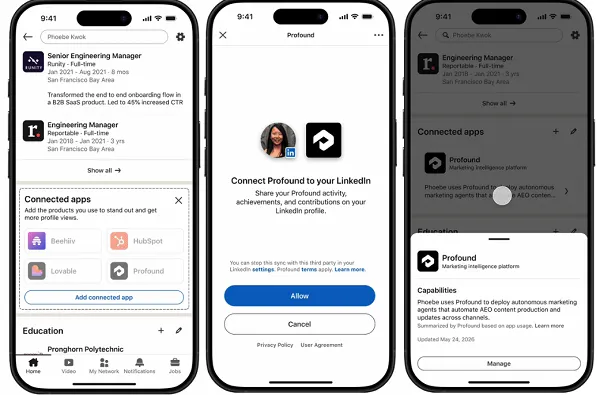
Data from the early testing phases of the Connected Apps program indicates that profiles featuring verified app integrations receive higher engagement from recruiters. When a recruiter sees a "Top User" badge or a specific, automated description of a candidate’s proficiency in a tool like Webflow or HubSpot, the friction in the hiring process is reduced. The candidate is no longer just a name on a list; they are a verified practitioner.
Official Responses and the Mechanics of Credibility
LinkedIn has been clear about its intentions: they want to transform the profile into a "living" document.
"You can now connect the apps you use every day directly from your LinkedIn profile," the company stated in its official announcement. "Once connected, each app generates a simple statement based on your real activity—a simple, specific description of how you actually use it."
A critical aspect of this feature is its dynamic nature. LinkedIn emphasized that while these descriptions are provided by the app and cannot be manually edited by the user (ensuring the integrity of the data), they update in real time. If a user’s usage patterns evolve—perhaps moving from basic email scheduling in HubSpot to complex automated marketing workflows—the description on their profile will reflect that growth.
Furthermore, the introduction of the "Top User" signal adds a gamified, meritocratic layer to the feature. For those who rank among the most engaged users of a specific platform, the badge serves as a powerful endorsement of their expertise. This creates a feedback loop: professionals are incentivized to deepen their usage of industry-standard tools, and in return, they receive verifiable validation of their commitment to professional development.
Implications for the Future of Professional Identity
The rollout of Connected Apps has profound implications for the future of work, hiring, and personal branding.
1. The Death of the "Resume Stuffer"
The era of inflating one’s resume with lists of software one has used once for five minutes is drawing to a close. With third-party verification, the "Skills" section becomes a source of truth. Candidates will have to rely on their actual, sustained engagement with professional tools rather than just keywords.
2. A New Era for Recruiters
For talent acquisition professionals, this is a game-changer. The ability to search for candidates based on verified technical proficiency—rather than self-reported claims—will drastically reduce the time spent in the initial screening phase. Recruiters will be able to see not just what a candidate knows, but how they apply that knowledge in a production environment.
3. The Rise of the "Power User" Brand
The "Top User" badge is likely to become a new form of digital status. Just as developers display their GitHub contributions or writers display their portfolios, professionals across all sectors will begin to curate their profiles to showcase their status as power users of the tools that drive their respective industries.
4. Continuous Learning and Skill Evolution
Because the profile updates in real-time, the static resume is effectively replaced by a dynamic portfolio. This encourages a culture of continuous learning. If a professional stops using a tool or switches to a new software stack, their profile will naturally evolve to reflect their current reality, keeping their "professional identity" aligned with their actual capabilities.
The Challenges Ahead: Privacy and Ecosystem Lock-in
While the benefits are clear, the expansion of Connected Apps does bring up valid questions regarding data privacy and platform dependency.
By linking external apps to LinkedIn, users are granting a degree of data access to their professional network. While LinkedIn has emphasized that it is capturing "real activity" rather than sensitive private data, the scope of what constitutes "usage" will need to be transparent to maintain user trust.
Furthermore, there is the risk of "ecosystem lock-in." If a professional becomes heavily reliant on LinkedIn-verified apps to prove their worth, they may feel pressured to stick with the specific software vendors that LinkedIn chooses to integrate with. As the list of partners grows, it will be essential for LinkedIn to maintain a level playing field, ensuring that both established giants (like Adobe and HubSpot) and emerging startups have a path to integration.
Conclusion: A More Transparent Professional Landscape
LinkedIn’s latest update is a bold step toward a more transparent, merit-based professional landscape. By leveraging the data generated through our daily work, the platform is moving beyond the limitations of the traditional resume and into a future where expertise is verified, dynamic, and instantly recognizable.
As the lines between technical proficiency and professional success continue to blur, tools like Connected Apps will become essential. They do not just help users get hired; they define what it means to be a professional in the age of AI and high-frequency digital collaboration. For the candidate who embraces these tools, the reward is clear: a profile that doesn’t just describe their career, but actively proves it.

 Nana
Nana