Nila Kartika Wati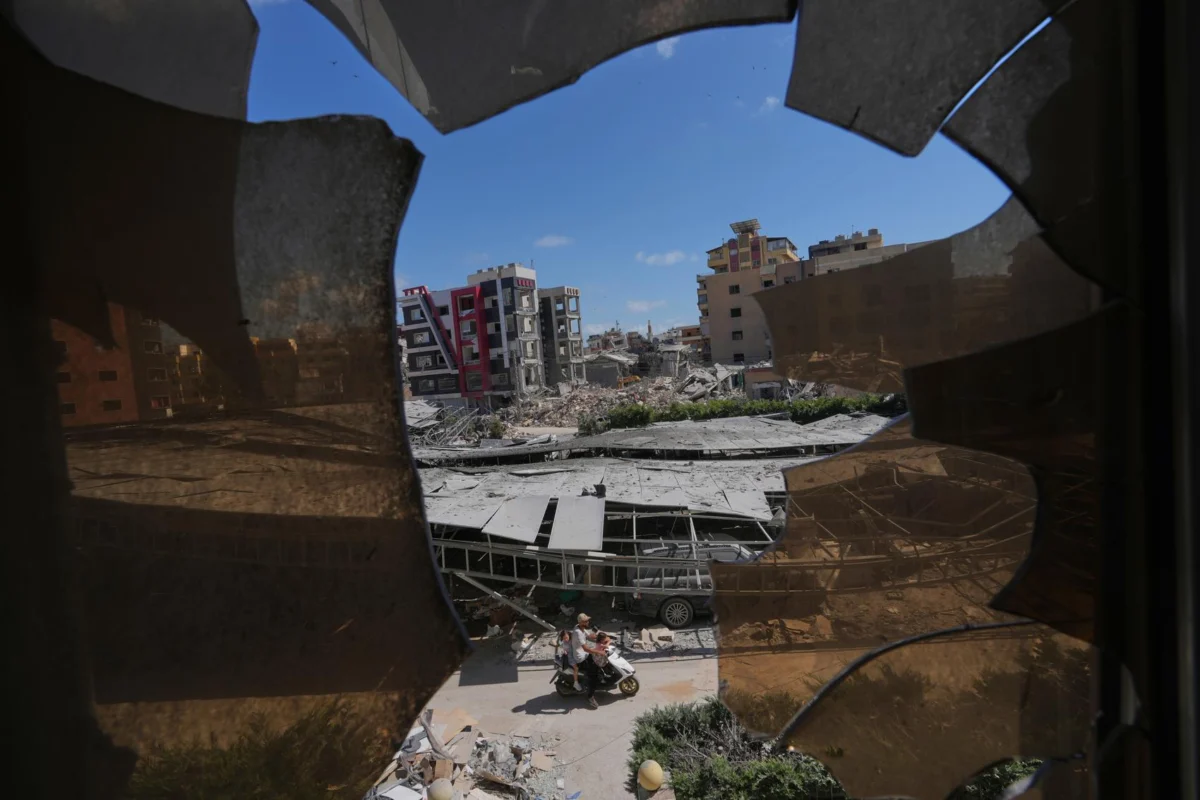
JERUSALEM/BEIRUT — The ink had barely dried on the historic peace accord signed at the Palace of Versailles when the tremors of ongoing conflict threatened to tear it apart. As of Friday, the nascent agreement between the United States and Iran—designed to halt hostilities across the Middle East—is facing its first major test. Intensive Israeli military strikes across southern Lebanon have ignited a volatile standoff, casting doubt on the immediate implementation of a ceasefire that was intended to secure regional stability.
The Current State of Hostilities: A Breach of Protocol
The Israeli military confirmed on Friday that its forces conducted a series of robust airstrikes throughout southern Lebanon overnight. The campaign, which the Israel Defense Forces (IDF) described as ongoing, marks a significant escalation despite the existence of a signed pact that calls for a cessation of military operations "on all fronts, including in Lebanon."
Lebanon’s state-run National News Agency reported a devastating toll from the strikes, noting that at least 16 people have been killed. As the dust settles in the border regions, Hezbollah—the Iran-backed militant group—has reported intense, close-quarters combat with Israeli ground forces. The persistence of these engagements suggests that the "immediate halt" to fighting envisioned by the Washington-Tehran agreement remains more of an aspiration than a reality on the ground.
Chronology of the Escalation
The rapid sequence of events over the past 72 hours has left international observers struggling to keep pace with the shifting geopolitical landscape:
- Wednesday: U.S. President Donald Trump and French President Emmanuel Macron finalize an initial peace pact with Iran at the Palace of Versailles. The agreement, intended to stabilize the region, takes effect immediately, mandating a total ceasefire.
- Thursday: U.S. Vice President JD Vance postpones a critical trip to Switzerland, where he was slated to lead follow-up talks aimed at cementing a permanent end to the broader Iran-U.S. conflict. The White House cites "logistical issues."
- Thursday Evening: Reports emerge from Al-Mayadeen, a pan-Arab satellite channel with close ties to Hezbollah, claiming that Tehran is stalling the dispatch of its delegation to Switzerland. The reason cited is Israel’s refusal to cease its military campaign in Lebanon.
- Friday Morning: Israeli Prime Minister Benjamin Netanyahu reiterates his stance, declaring that IDF forces will remain in Lebanon until the "threat from Hezbollah has been eliminated," effectively sidelining the ceasefire terms.
Supporting Data and Strategic Context
The conflict in Lebanon has become a focal point for the durability of the U.S.-Iran deal. The agreement specifically hinges on two pillars: the cessation of military operations and the protection of Lebanon’s "territorial integrity and sovereignty."
Israel’s refusal to comply with the withdrawal aspect of the agreement is deeply rooted in domestic political pressures. Prime Minister Netanyahu, who faces a challenging electoral cycle later this year, has positioned himself as the primary safeguard against regional threats. By maintaining a presence in southern Lebanon, he is signaling to his base that national security remains paramount, even at the cost of international diplomatic consensus.
For Iran, the situation is equally complex. The Tehran-backed Hezbollah serves as a critical strategic asset in the Levant. However, the U.S.-Iran pact represents a rare opportunity for Iran to secure relief from economic sanctions and diplomatic isolation. By delaying the Swiss delegation, Iran is engaging in a high-stakes game of brinkmanship, attempting to force the United States to exert more pressure on Israel to withdraw.
Official Responses and Diplomatic Friction
The diplomatic fallout from the ongoing strikes has been swift and acrimonious.
The U.S. Position: A Balancing Act
Following the signing of the pact, Vice President JD Vance offered a stark, public reminder of the complexities of the current U.S. foreign policy. During a briefing, Vance stated that President Trump remains "the only head of state in the entire world who is sympathetic to the nation of Israel at this moment in time."
This comment highlights a growing divide between the White House’s public commitment to the Iran deal and its traditional, bedrock support for Israel. The administration finds itself in a precarious position: it must enforce the ceasefire to prove the efficacy of the Versailles pact while simultaneously managing a historic ally that refuses to adhere to its terms.
The Iranian and Hezbollah Stance
Hezbollah’s leadership has maintained that they are responding to Israeli aggression, framing their resistance as a defensive necessity. The state-affiliated media in Lebanon continues to report on the civilian cost of the airstrikes, effectively utilizing the humanitarian crisis to erode the international legitimacy of the Israeli operation.
The Israeli Justification
Prime Minister Netanyahu’s office has remained largely unmoved by the international outcry. The Israeli narrative emphasizes that the agreement between the U.S. and Iran does not account for the specific security concerns of Israel, particularly regarding the rocket capabilities of Hezbollah. By defining the threat as an existential one, the Israeli government has effectively categorized the Versailles agreement as a secondary concern compared to the security of its northern border.
The Implications: A Pact on the Brink
The failure of the ceasefire to take root in Lebanon poses an existential threat to the U.S.-Iran pact. If the fighting continues, it could lead to several cascading outcomes:
1. The Collapse of the Swiss Talks
If Iran refuses to send its delegation to Switzerland, the window for a permanent, long-term resolution will likely close. The planned talks were intended to address nuclear enrichment, regional proxies, and economic sanctions. Without this dialogue, the temporary ceasefire—even if it were to hold—would eventually crumble under the weight of unresolved grievances.
2. Domestic Political Repercussions in the U.S.
The Biden-era foreign policy shift, now being navigated by the Trump administration, is under heavy scrutiny. If the U.S. is perceived as unable to control its own proxies or allies, the political capital invested in the Versailles deal will evaporate. Critics in the U.S. Congress are already pointing to the ongoing strikes as evidence that the agreement is fundamentally flawed.
3. Regional Instability
The lack of territorial integrity in Lebanon, as noted in the peace pact, leaves the country vulnerable to continued intervention. A failure to enforce the pact could invite other regional actors to intervene, potentially broadening the conflict beyond the current Israel-Hezbollah front.
4. The Future of Israeli-U.S. Relations
The tension between the White House and the Netanyahu administration is at an all-time high. The blunt warning from Vice President Vance suggests that the U.S. is reaching the limit of its patience. If Israel continues to ignore the directives of its primary patron, the U.S. may be forced to choose between the integrity of its new Iran deal and its historic commitment to Israel, a decision that would have profound ramifications for global diplomacy.
Conclusion
As the sun sets on another day of violence in southern Lebanon, the international community watches with bated breath. The Versailles agreement was designed to represent a "new chapter" in Middle Eastern relations, yet the reality on the ground remains trapped in the cycles of the past.
Whether this agreement can survive the current escalation depends entirely on the willingness of both Jerusalem and Tehran to subordinate their immediate tactical objectives to the broader strategic necessity of peace. As of now, the guns remain loud, the diplomats are silent, and the promise of a peaceful 2026 hangs by a thread.
© Copyright 2026 The Associated Press. All rights reserved. This material may not be published, broadcast, rewritten or redistributed without permission.


 Neng Nana
 Asro
Asro