Pevita Pearce
As the summer of 2026 hits its stride, Japan finds itself at the center of a diverse array of global and domestic developments. From the high-stakes drama of the FIFA World Cup to the corridors of international diplomacy and the inner workings of Japanese industry, this week’s news cycle underscores the nation’s complex role on the world stage.
I. FIFA World Cup 2026: A Campaign Defined by Grit and Controversy
Japan’s opening match of the 2026 FIFA World Cup—a hard-fought 2-2 draw against the Netherlands—has proven to be one of the most talked-about events of the tournament. The match, which saw Japan exhibit remarkable resilience, was defined by a late equalizer from Daichi Kamada that salvaged a point for the Samurai Blue.
The Van der Vaart Controversy
The post-match discourse, however, was quickly overshadowed by a regrettable incident involving Dutch pundit and former Real Madrid star Rafael van der Vaart. While providing commentary for NOS TV regarding Kamada’s goal, van der Vaart attempted to analyze the defensive lapse of his compatriots. In his assessment, he remarked that the Japanese players “all look alike,” a comment that was immediately met with a stunned silence from his co-hosts.
Though he attempted to walk back the statement by labeling it a “joke,” the backlash was swift and global. Organizations including the anti-discrimination charity Kick It Out condemned the remark as perpetuating harmful racial tropes. Recognizing the severity of the offense, van der Vaart issued a formal apology on Thursday, stating, “It was never my intention to offend, hurt, or discriminate against anyone. If my comment has caused pain or upset, I would like to offer my heartfelt apologies.”

The "Clean-Up" Phenomenon
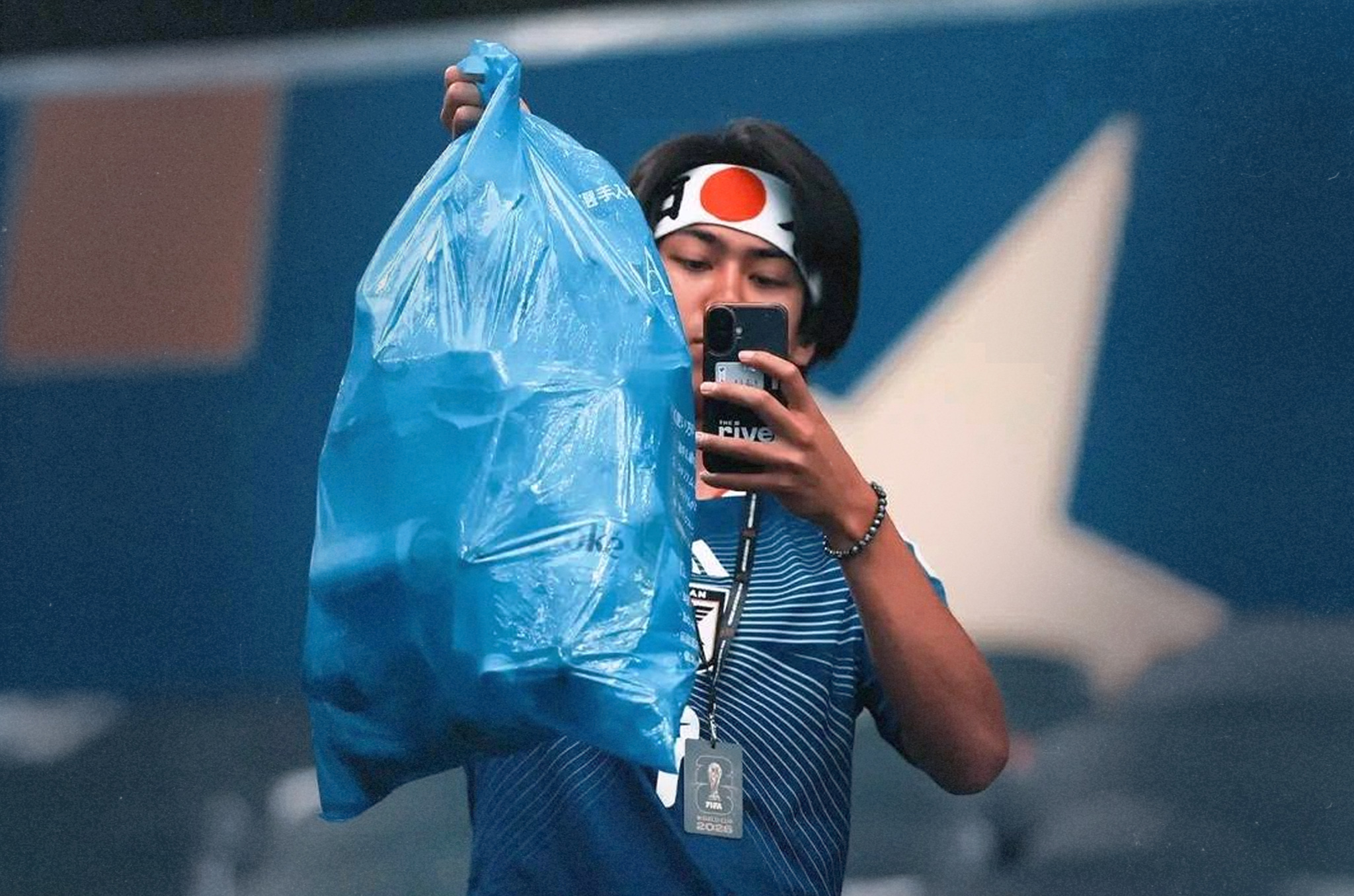
Amidst the sporting drama, the Japanese fan base once again captured the world’s imagination. Following the final whistle, footage emerged of Japanese supporters not merely celebrating the draw, but systematically cleaning the stadium stands, filling blue trash bags with litter left behind by spectators.
This act, rooted in the Japanese cultural ethos of Tatsu tori ato wo nigosazu (“a bird does not soil the nest it leaves behind”), has become a staple of Japan’s presence at international tournaments. While some cynics have questioned whether the practice is performative, the prevailing sentiment remains one of deep admiration, highlighting a standard of civic responsibility that continues to serve as a model for global sporting events.
II. Diplomatic Ties: Trump and Takaichi’s Unlikely Alliance
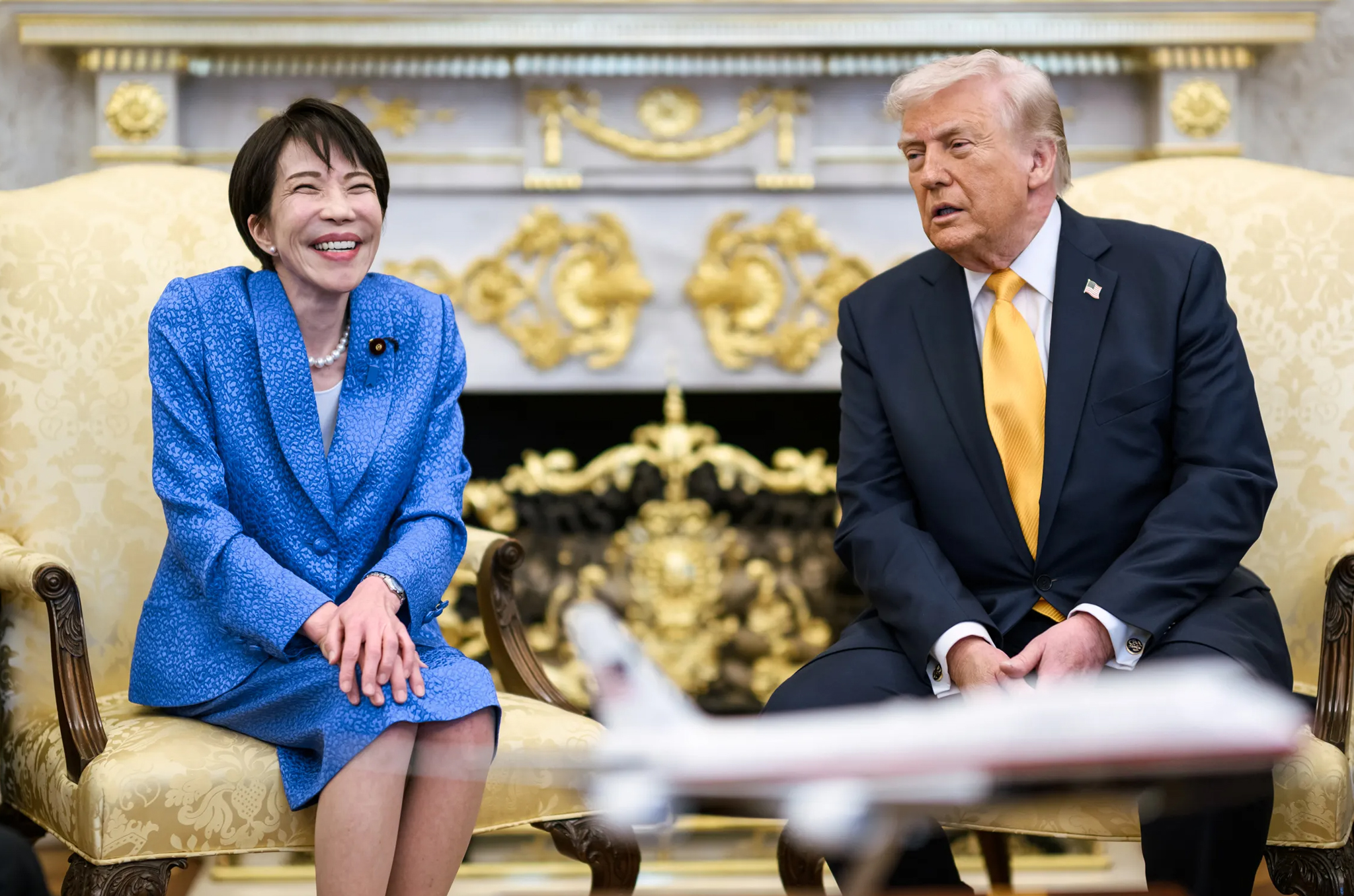
The geopolitical landscape remains equally intriguing. During the closing press conference of the G7 Summit in France, U.S. President Donald Trump singled out Japanese leader Sanae Takaichi as his “biggest fan” among current world leaders.
A Strategic Bond
The relationship between the two leaders has been a focal point of international observation throughout the year. During a state visit to Washington earlier in 2026, Takaichi was effusive in her praise of the U.S. President, famously stating, “I firmly believe that it is only you, Donald, that can achieve peace across the world.”
The dynamic is not without its peculiarities. Observers often point to the stark contrast between Takaichi’s staunch support and moments of visible discomfort, such as when she appeared startled by a lighthearted, yet historically charged, remark made by Trump regarding the attack on Pearl Harbor. Despite these optics, the political commitment remains firm; reports suggest Takaichi has even prepared a nomination for the U.S. President for the Nobel Peace Prize, a move that signals the depth of the current administration’s reliance on the U.S.-Japan security alliance.
III. Economic Oversight: The Alleged Ice Cream Cartel
On the domestic economic front, the Japan Fair Trade Commission (JFTC) has launched a high-profile investigation into six major confectionery companies, suspecting the formation of an illegal price-fixing cartel.
The Scope of the Investigation
The companies under scrutiny—Akagi Nyugyo, Ezaki Glico, Lotte, Meiji, Morinaga Milk Industry, and Morinaga & Co.—are accused of violating Japan’s Antimonopoly Act. Investigators suspect that these entities coordinated price hikes of 5% to 10% on frozen desserts over the course of several years.
According to reports, the coordination was allegedly facilitated through a series of private meetings and email exchanges designed to ensure that retail price increases of roughly ¥10 per item were implemented in unison across the market. This is the first time the JFTC has targeted the ice cream sector, suggesting a broader crackdown on anti-competitive behavior in Japan’s food and beverage industry. If proven, these companies face significant fines and the potential for a forced restructuring of their pricing strategies.
IV. Legal and Social Updates: Bobby Ologun and Tokyo Infrastructure
In a development that has shocked the Japanese entertainment industry, Nigerian-born television personality Bobby Ologun (officially Bobby Konda) was arrested on Sunday.
Allegations and Legal Standing
The 60-year-old celebrity is currently in police custody following allegations of sexual assault involving a female acquaintance at his residence in Chiba Prefecture. The incident allegedly occurred on April 21. Ologun, who was apprehended at Haneda Airport upon his return from an overseas trip, has categorically denied the charges, telling investigators that “the facts are completely different.” His agency has stated they are cooperating with legal counsel to verify the details of the incident, noting that no prior history of conflict existed between the parties involved.
Modernizing Tokyo Transit: Metro CrowdNavi
On a more positive note for Tokyo residents, the Tokyo Metro Co., Ltd. has officially launched Metro CrowdNavi, a digital tool designed to alleviate the daily pressures of commuting.
The website, which is available in both English and Japanese, provides real-time congestion data for all nine Tokyo Metro lines. By utilizing data from the previous five days, the platform offers a visual heatmap that helps passengers identify the least crowded times and train cars. This service, which successfully completed a trial phase on the Hibiya, Tozai, and Chiyoda lines, now covers the entire network. With a color-coded system ranging from light blue (ample seating) to purple (extreme congestion), the initiative represents a significant leap forward in utilizing big data to improve the quality of life for the millions who rely on Tokyo’s rail infrastructure.

V. Implications and Future Outlook
As we look toward the remainder of the year, these events highlight several key trends.
- Cultural Integration vs. Global Perception: The incidents surrounding the World Cup illustrate the ongoing tension between Japan’s traditional values—such as the cleanliness of its fans—and the challenges of navigating a globalized media landscape that is increasingly prone to controversy and misunderstanding.
- Economic Accountability: The JFTC’s move against the ice cream industry signals a tougher regulatory environment in Japan. As the nation faces inflationary pressures, the government is signaling that it will no longer tolerate the artificial inflation of staple goods through back-room coordination.
- Political Realignment: The U.S.-Japan relationship, defined by the personal rapport between Takaichi and Trump, remains a cornerstone of regional stability. However, the unconventional nature of this relationship will continue to test the patience of domestic political critics and foreign diplomats alike.
- Digital Transformation: The success of Metro CrowdNavi underscores a wider push by the Japanese government and private sector to implement "smart city" solutions. By prioritizing user-friendly, data-driven tools, Tokyo continues to set the benchmark for urban management.
The coming months will undoubtedly provide further clarity on the legal outcomes for Bobby Ologun, the potential antitrust penalties for the confectionery giants, and the continued success of Japan’s World Cup campaign. For now, the nation remains a compelling blend of rigorous discipline, technological ambition, and complex diplomatic maneuvering.
Updated: June 19, 2026


 Neng Nana
 Asro
Asro