

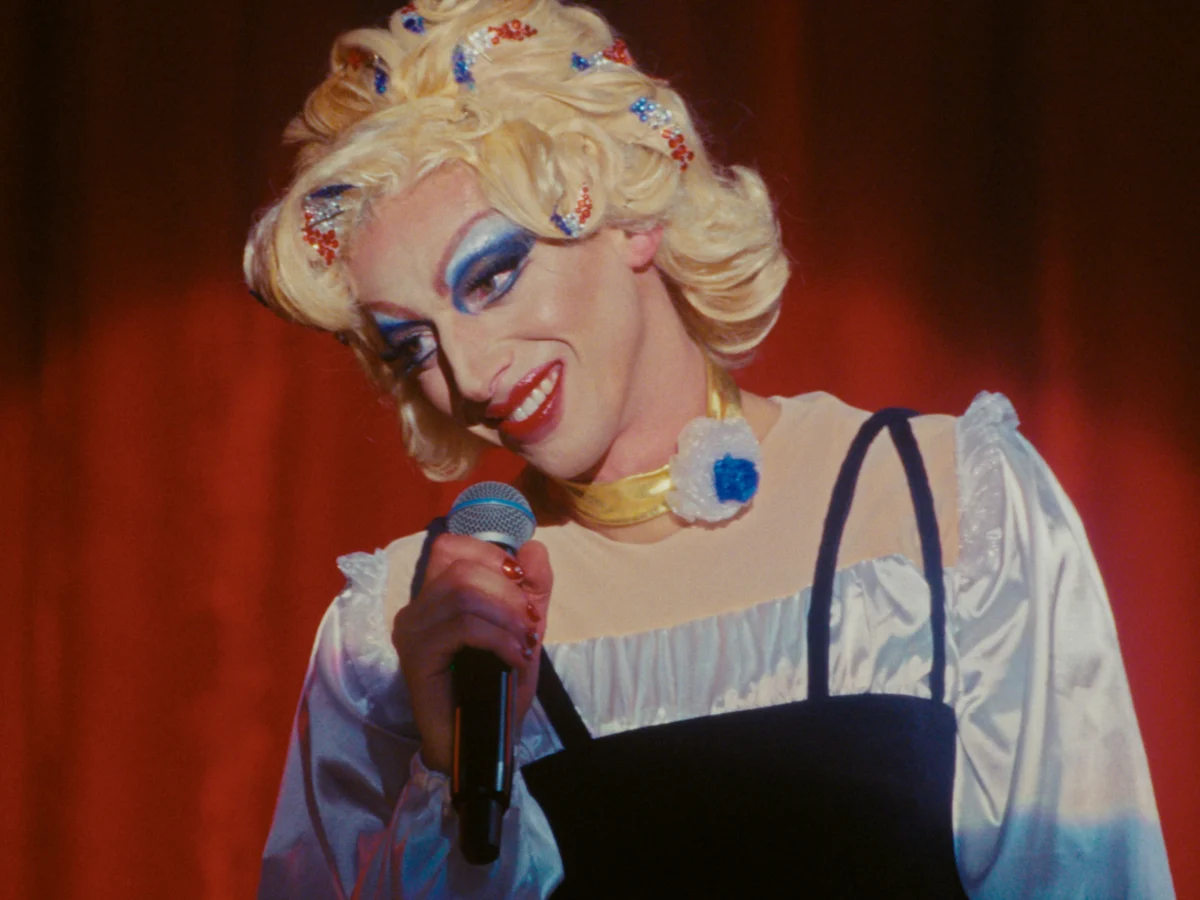
In the quiet, picturesque landscape of the Czech countryside, where tradition often dictates the rhythm of daily life, director Šimon Holý is sparking a radical, colorful conversation. His latest feature, Chica Checa, which makes its highly anticipated debut at the Crystal Globe Competition of the Karlovy Vary Film Festival, is far more than a simple coming-of-age story. It is a vibrant, compassionate exploration of familial bonds, the courage of authenticity, and the resilience of the queer identity in an increasingly polarized political climate.
The Genesis of a Heartfelt Vision
The journey to bring Chica Checa to the screen was a labor of love that spanned nearly a decade. For Holý—who serves as the film’s writer, director, and composer—the project grew alongside his artistic evolution, developing in the shadows of his debut feature, Mirrors in the Dark.
Holý describes the creative spark as something almost subconscious. "I took it as a challenge, and one day I had a dream where I saw basically most of the film," he recalls. Upon waking, he immediately transcribed the vision into his diary. It was only later, upon reflection, that he understood the source of his inspiration: "I realized what the subconsciousness was doing. It told me the story of my mother, and it was inspired by my own life in a village, juxtaposed with what is happening to our society right now."
A Narrative of Connection and Courage
Chica Checa follows the life of Zdena, a widow and mail carrier living in a small Czech village. Her existence is defined by a sense of duty—caring for her bedridden, hospitalized mother—and a persistent, quiet loneliness that she works hard to deny.
The catalyst for change is her son, Lukáš, who has built a life in Paris. Lukáš harbors a secret that creates a chasm between him and his mother: he is gay and makes his living as a drag queen performing under the moniker "Chica Checa" (Czech Girl). When his grandmother’s health begins to fail, her dying wish is to see a famous singer perform for her. Seeing an opportunity to bridge the gap between his two worlds, Lukáš steps into the role of the performer, bringing his drag persona into the sterile, somber environment of the hospital.
What follows is not the explosive conflict often depicted in films about "coming out," but rather a nuanced, deeply moving exploration of mother-son dynamics. As Zdena witnesses her son’s performance, her perspective shifts, allowing her to expand her horizons beyond the rigid expectations of her village and perhaps find a new sense of happiness and belonging.
Challenging the Aesthetics of Despair
One of the most striking aspects of Holý’s directorial approach is his conscious rejection of the "depressive" tropes associated with Central European social realism. For decades, depictions of the Czech village in cinema have leaned into cool, blue palettes, somber moods, and bleak, inevitable hardship.
"I wanted to build this film as an antithesis to the social realism of the late 90s and early 2000s," Holý explains. "Whenever there is a village film, it’s always very depressive, very blue, very cold. That is why our film is very white, vibrant, and very yellow."
This visual vibrancy is mirrored in his direction of the actors. He explicitly instructed his lead, the expressive Pavla Tomicová, to avoid the "Euro-arthouse" style of muted, subtle facial reactions. Instead, he encouraged her to embrace emotion and intensity, fitting for a story that finds its heartbeat in the theatricality of drag.
The Chemistry of Casting
The casting of the film proved to be an exercise in serendipity. Holý initially resisted casting Tomicová, having worked with her previously and desiring a fresh face for the role of Zdena. However, Tomicová remained persistent, eventually convincing the director to hold an impromptu reading with Jan Cina, who plays Lukáš.
"There was something magical happening," Holý says. "They had never acted together before and didn’t really know each other, but in ten seconds, it was clear they were the right people."
Tomicová brought a profound layer of depth to the character of the mother. Even without having a gay son herself, she connected with the universal themes of the screenplay. As Holý notes, "She was always saying that this is not a story about coming out or queerness for her. It’s more about otherness, about being ‘othered,’ and the paralyzing fear of not being a good mother."
Jan Cina, a prominent actor in his own right, also underwent a transformation. Initially hesitant about being typecast—given his public identity as a gay man who has performed drag on television—Cina was convinced by Holý’s assurance that the role was about his craft, not his identity. Through a dedicated workshop with a professional choreographer and drag artist, Cina not only mastered the performance but discovered a new creative outlet, eventually developing his own drag persona, "La Chica."
A Political Subtext in Uncertain Times
While Holý and producer Alžběta Janáčková initially viewed the project as a personal, gentle narrative, the sociopolitical climate of the Czech Republic and the broader West has shifted the film’s impact.
"We felt there was a way to say something important in a very gentle, warm way," Holý says. "We wanted to open a discussion without pushing an agenda aggressively."
However, during the editing process, the filmmakers and industry figures, including Karlovy Vary artistic director Karel Och, recognized the inherent political weight of the story. As the LGBTQ+ community faces a resurgence of right-wing pressure and legislative threats across Europe and the United States, the film has taken on a new, urgent significance.
"I am also a music programmer for the Prague Pride Festival, so I see what is happening to queer rights in the region," Holý notes. "I realized that we thought it was hard for queer people eight years ago, but now it is even harder."
The Threat to Cultural Independence
Holý’s concerns extend beyond the specific rights of the LGBTQ+ community to the broader health of the Czech cultural ecosystem. He points specifically to the political maneuvers attempting to reduce the funding and independence of Czech Television—the country’s primary public broadcaster.
"They are actively fighting the Czech cinema with this," he asserts. By reducing budgets and threatening editorial independence, the political establishment risks stifling the voices that make the Czech audio-visual industry vibrant and critical.
"What it means is that they will definitely hurt the culture as a whole," he says, noting that Czech Television remains the second-biggest financier of the local film industry. The struggle for the film’s themes—individual expression against institutional rigidity—is, in many ways, reflective of the current struggle to protect the independence of the media itself.
Conclusion: A Beacon of Hope
As Chica Checa heads toward broader distribution via Pluto Film, it carries the weight of a production that is as much about the necessity of art as it is about the necessity of love. By choosing to tell a story of reconciliation rather than conflict, and by choosing vibrant light over the dark shadows of the past, Šimon Holý has crafted a film that stands as a testament to the power of empathy.
In a world where the political discourse is increasingly defined by fear and exclusion, Chica Checa offers a necessary, warm, and defiant reminder that the most radical act one can perform is to be oneself—and to be loved for it, even in the smallest of towns. The film, produced by Silk Film with co-production support from Arina Film, The French Connection, and the embattled Czech Television, serves as both a beautiful piece of cinema and a rallying cry for the importance of cultural and personal freedom.










