Siti Muinah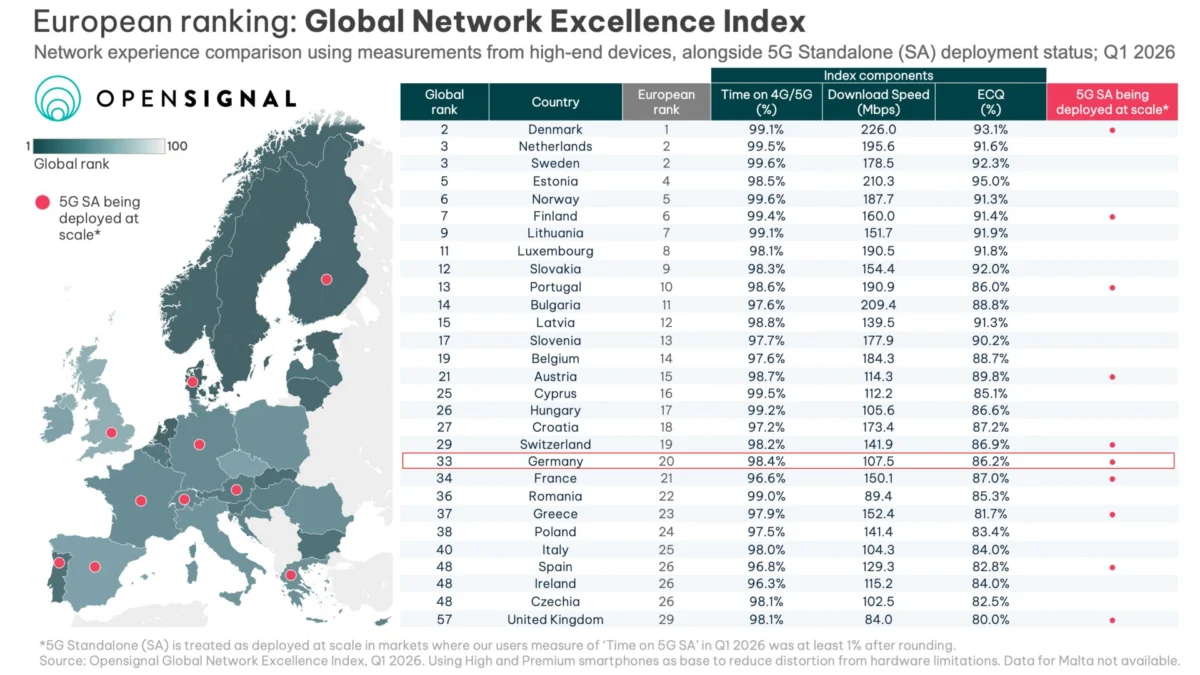
The promise of 5G was never merely about faster download speeds; it was about the fundamental transformation of mobile infrastructure. As we navigate the midpoint of the decade, the next critical evolution—5G Standalone (5G SA)—is steadily advancing across the European continent. However, a comprehensive analysis by Opensignal of 29 European markets as of Q1 2026 reveals a stark reality: the rollout is uneven, deeply fragmented, and often invisible to the average consumer.
While the "5G" icon on our smartphones has become a ubiquitous sight, the reality behind that symbol is often far more complex. The transition from 5G Non-Standalone (NSA) to 5G Standalone represents the most significant architectural shift in mobile telecommunications in a generation, yet the path to a seamless, continent-wide standard remains riddled with technical and commercial hurdles.
Main Facts: The Architectural Shift
To understand the current state of European connectivity, one must first distinguish between the two dominant modes of 5G deployment.
From 5G Non-Standalone to True Autonomy
For years, 5G deployment has relied on "Non-Standalone" (NSA) architecture. In this setup, the 5G radio access network is anchored to an existing 4G LTE core network. While this allowed operators to market "5G" quickly by leveraging existing infrastructure, it limited the potential of the technology.
5G Standalone (SA) removes this dependency entirely. It introduces a dedicated 5G core network, enabling the "full stack" of 5G capabilities. This is not just a software update; it is a fundamental reconfiguration of how data travels through the airwaves and back to the internet backbone.
Key Performance Indicators (KPIs) of 5G SA
The shift to SA is designed to unlock four specific technological pillars that 5G NSA cannot achieve:
- Ultra-Low Latency: By removing the 4G anchor, packet processing times are slashed, enabling millisecond-level responsiveness.
- Network Slicing: Operators can partition the network into "slices," prioritizing specific traffic—such as emergency services, autonomous vehicles, or industrial IoT—over standard consumer web traffic.
- 5G Voice (VoNR): Standard 5G NSA requires the phone to drop back to 4G for voice calls. 5G SA enables native Voice over New Radio (VoNR), keeping the entire session on the 5G network.
- Massive Connectivity: The SA core is built to handle significantly higher densities of IoT devices per square kilometer compared to the legacy 4G core.
Chronology: The Road to 2026
The timeline of European 5G adoption has been characterized by aggressive auctions followed by cautious implementation.
- 2020–2022 (The Foundation Era): Most European operators focused on 5G NSA, prioritizing massive MIMO deployment in urban centers to improve capacity.
- 2023–2024 (The Pilot Phase): Major Tier-1 carriers in markets like Germany, the UK, and France began deploying 5G SA cores, primarily targeting high-value enterprise clients and testing "private network" scenarios.
- 2025 (The Regulatory Push): European regulators, including the Bundesnetzagentur in Germany, began pressuring operators to shift from "marketing 5G" to "infrastructure 5G," citing the need for industrial competitiveness.
- Q1 2026 (The Current Status): As per the Opensignal report, 5G SA is no longer a futuristic concept but a commercial reality. However, it is being rolled out in a "patchwork" fashion, where availability is heavily dependent on the intersection of hardware, software, and carrier policy.
Supporting Data: The European Patchwork
The Opensignal analysis of 29 European markets highlights a significant "expectation gap." While coverage maps might show broad 5G availability, the quality and architecture of that 5G vary wildly.
The Disconnect Between Coverage and Experience
In Germany, for example, the Bundesnetzagentur reported 5G SA coverage reaching approximately 90% of the landmass by late 2024. Yet, actual user experience remains inconsistent. The data shows that simply having a 5G signal does not guarantee a 5G SA connection.
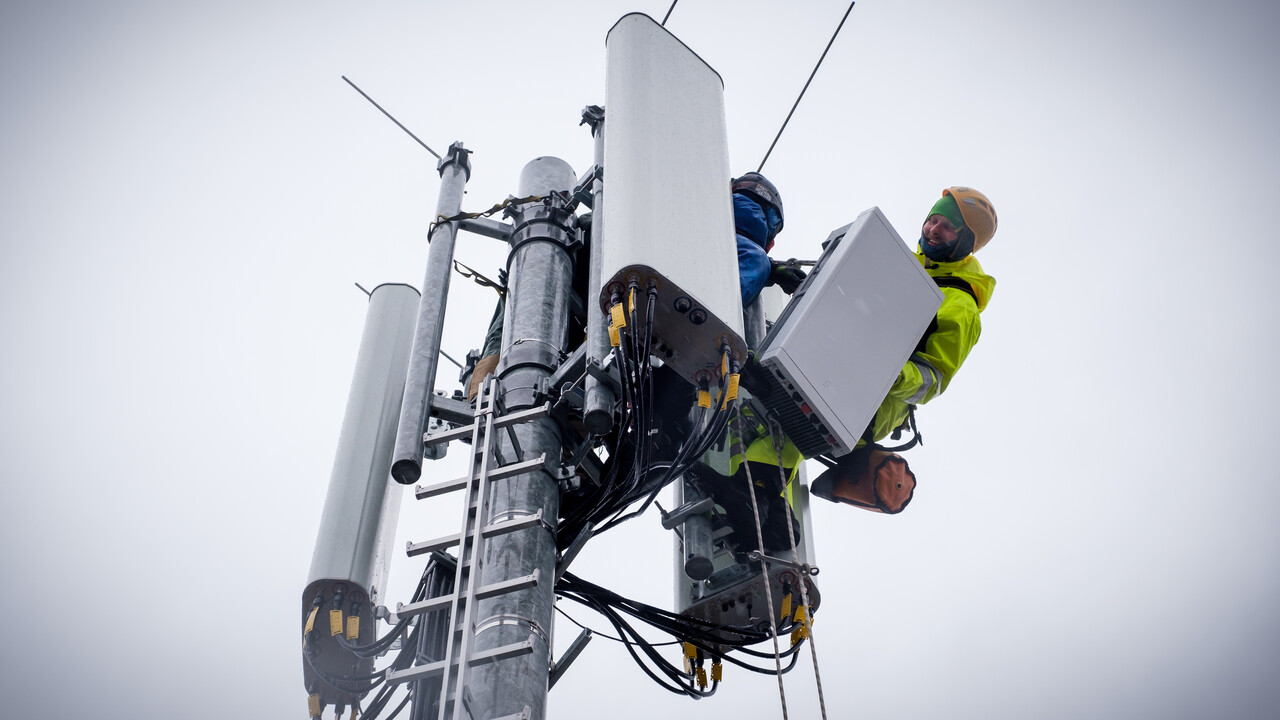
Factors influencing true 5G SA usage include:
- Device Compatibility: Not all 5G-capable smartphones are equipped with the modem firmware required to support the latest 5G SA profiles.
- Carrier Configuration: Some operators restrict 5G SA access to specific "Premium" or "Enterprise" tariff plans, effectively gating the technology behind a paywall.
- Network Load Balancing: In periods of high traffic, some networks automatically offload devices to 4G LTE to ensure stability, masking the 5G SA benefits.
Official Responses and Strategic Implications
Industry leaders and regulatory bodies are currently locked in a debate regarding the speed of the rollout.
The Operator Perspective
Major carriers argue that the cost of upgrading the core network is astronomical. They contend that the Return on Investment (ROI) for 5G SA is not yet visible in consumer markets, as standard mobile browsing, social media, and video streaming perform adequately on 5G NSA. Consequently, operators are prioritizing "Return on Capital Employed" (ROCE) by focusing on industrial use cases where businesses are willing to pay for low latency and network slicing.
The Regulatory Perspective
Regulators are increasingly concerned about a "digital divide" within Europe. If certain regions or customer segments are stuck on 5G NSA while others enjoy the full benefits of 5G SA, the continent’s goal of a unified "Digital Single Market" may be compromised. There is growing sentiment among EU policymakers that 5G SA must be treated as a public utility rather than a luxury product.
Implications: Why This Matters for the Future
The Industrial Revolution 4.0
The true value of 5G SA is not in how fast a user can download a movie, but in how the network manages the "Internet of Everything." For smart cities, 5G SA allows for real-time traffic management. For the manufacturing sector, it enables remote robotic maintenance with zero margin for error.
The Consumer Experience
For the average user, the impact of 5G SA will be subtle but profound. As 5G Voice (VoNR) becomes standard, call quality will improve significantly. Furthermore, as network congestion is mitigated through better slicing, users in crowded areas (like stadiums or city centers) will experience fewer "network timeouts" compared to the current 5G NSA standard, which often struggles under heavy, mixed-protocol loads.
The Path Forward
The Opensignal report concludes with a stark warning: Deployment is not the same as adoption. For 5G SA to reach its potential, Europe must address three key areas:
- Device Ecosystem: A concerted effort to ensure all new mid-range and budget smartphones fully support 5G SA standards.
- Standardization: Harmonizing tariff structures so that 5G SA is the baseline, not an "add-on" feature.
- Public-Private Partnerships: Continued investment in rural 5G infrastructure to ensure the benefits of low-latency connectivity are not confined solely to major metropolitan hubs.
Conclusion
As of early 2026, Europe stands at a crossroads. The transition to 5G Standalone is underway, but it is currently a "patchwork" of innovation. While the technical groundwork is being laid, the ultimate success of this transition depends on whether operators and regulators can align their interests to prioritize universal access over tiered, exclusionary service models. The future of European connectivity will not be defined by the 5G icon on our screens, but by the silent, robust, and lightning-fast architecture operating invisibly in the background.

 Jia Lissa
 Lina Hope