Nila Kartika Wati
By Matthew Wilson | Tech & Gaming Correspondent
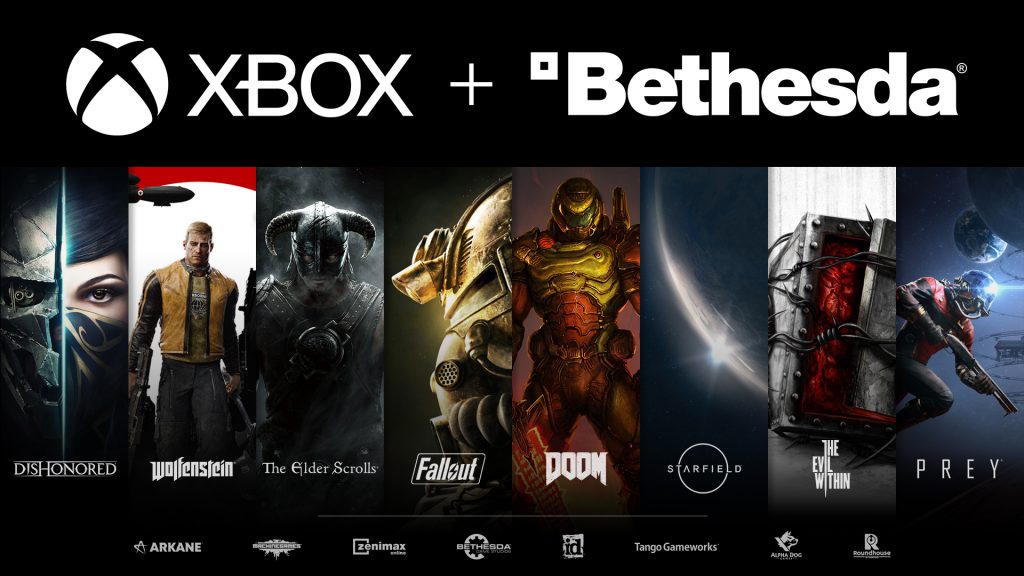
The gaming industry is currently witnessing one of the most volatile periods of consolidation and contraction in its history. Following reports earlier this week regarding potential closures of Xbox-owned studios—including Compulsion Games, Ninja Theory, and Double Fine—the focus has shifted toward the Zenimax/Bethesda ecosystem. As Microsoft continues to integrate its massive acquisitions, the initial promise of creative autonomy and diverse project scopes appears to be yielding to a strategy defined by aggressive cost-cutting and a narrow focus on "guaranteed" intellectual property (IP).
The Main Facts: A New Wave of Uncertainty
The current wave of anxiety surrounding Microsoft’s gaming division stems from credible industry reports suggesting that layoffs have already begun within the Zenimax/Bethesda group. George Broussard, a veteran developer and co-founder of 3D Realms and Apogee, recently signaled that the cuts may be significantly more severe than initially anticipated by the public or the gaming press.
The core of the issue lies in the shift of Microsoft’s internal philosophy. While the 2018–2021 acquisition spree was characterized by the pursuit of diverse, boutique, and mid-sized experiences, the current climate—heavily influenced by the $69 billion Activision Blizzard merger—has forced a pivot. It appears that any studio not currently tethered to a major, high-revenue, multi-generational IP, such as The Elder Scrolls or Fallout, is now being viewed through the lens of strict fiscal optimization.
Chronology: From Acquisition to Contraction
To understand the current crisis, one must look at the timeline of Xbox’s aggressive expansion and subsequent retraction:
- 2018–2020: The Era of Expansion: Under the leadership of Phil Spencer, Microsoft embarked on a mission to build a "Netflix for Games" service, leading to the acquisition of heavy hitters like Ninja Theory, Obsidian, and InXile, followed by the landmark $7.5 billion acquisition of Zenimax Media in 2021.
- 2021–2023: The Integration Phase: Following the Zenimax purchase, Microsoft allowed studios like Bethesda Game Studios, id Software, and Arkane to operate with relative independence. However, early warning signs emerged with the underperformance of titles like Redfall, which led to internal scrutiny.
- Early 2024: The Activision Blizzard Impact: Following the finalization of the Activision Blizzard deal, Microsoft announced layoffs affecting 1,900 employees across its gaming division.
- Current Week: The Second Wave: Reports surfaced regarding potential shutdowns of Compulsion, Ninja Theory, and Double Fine, followed immediately by reports that the Zenimax infrastructure is being targeted for a "deeper" round of layoffs than previously expected.
Supporting Data: Why the Model is Shifting
The financial pressures facing Microsoft are not abstract. Industry analysts point to several factors driving this restructuring:
- The Subscription Ceiling: Xbox Game Pass, while highly popular, has struggled to reach the explosive growth numbers that would justify the massive overhead of keeping dozens of mid-sized studios fully funded.
- Margin Compression: The cost of AAA game development has skyrocketed. A project that might have been profitable on a $50 million budget a decade ago now often requires $200 million or more in development and marketing costs, forcing publishers to abandon "experimental" titles in favor of safe bets.
- Licensing vs. Ownership: Reports from Insider Gaming suggest that Arkane Lyon—the studio behind Deathloop—may be at risk. Their current project is a high-budget Marvel title. Because this involves licensing fees paid to Disney/Marvel, the profit margins are significantly thinner compared to an IP like Starfield or Fallout, where Microsoft owns the rights entirely. In the current "efficiency-first" environment, these licensing hurdles are viewed as liabilities rather than opportunities for brand expansion.
Official Responses and Industry Silences
As of this writing, Microsoft has remained largely tight-lipped regarding the specific rumors of studio closures. While the company has confirmed in previous statements that it is committed to "long-term growth," the lack of a formal denial regarding the potential shuttering of legendary studios like Double Fine or the Zenimax cuts has only fueled speculation.
The silence is standard corporate procedure during periods of internal restructuring; however, it has created a vacuum that is being filled by frustrated developers and industry observers. Internally, morale at these studios is reportedly at an all-time low. When Microsoft acquired these teams, the pitch was that they would provide the "creative heartbeat" of the Xbox ecosystem. The current reality, where developers fear for their jobs based on whether their project aligns with a spreadsheet, stands in stark contrast to the initial acquisition promises.
Implications: The Death of the "Boutique" Xbox Studio
The implications of this shift are profound for the future of gaming. If Microsoft continues this path, the industry will lose one of its most important buffers against total homogenization.
1. The "AAA-or-Bust" Mentality
If studios are forced to pivot exclusively to massive, multi-year, live-service, or blockbuster single-player games, the industry loses the "mid-tier" game. Titles like Hi-Fi Rush—which was a critical darling—may become artifacts of the past. If a game cannot hit a specific, massive revenue target, it will not be greenlit, regardless of its critical reception or fan loyalty.
2. Loss of Institutional Knowledge
When a studio is shuttered or gutted, the loss is not just the software they were building; it is the team culture, the proprietary tools, and the collective experience of the developers. Once a team like that is dispersed, it is nearly impossible to recreate. The closing of long-standing studios would represent a permanent loss of talent for the industry.
3. A Homogenized Library
Xbox’s value proposition has always been its variety. By focusing only on the "tentpole" franchises, Microsoft risks turning Game Pass into a service where users pay for a collection of games that all feel cut from the same cloth. If every game is a massive, 100-hour open-world RPG, the value of the subscription service actually decreases for the consumer who craves variety.
Conclusion: A Turning Point for Microsoft
The situation involving Zenimax and the broader Xbox studio network serves as a grim reminder that in the world of big tech, even the most beloved creative studios are subject to the cold realities of corporate finance. While Microsoft may argue that these moves are necessary to sustain the business in a high-interest-rate environment, the long-term cost may be the very thing that made Xbox a compelling brand in the first place: its soul.
As the industry waits for official confirmation on the scale of these cuts, one thing is clear: the era of the "hands-off" acquisition is over. Microsoft is now firmly in the era of consolidation, and the gaming landscape will likely look very different by the end of the year. Whether this results in a more profitable company remains to be seen, but for the developers and players who supported these studios for years, the current trajectory is a cause for significant alarm.
The question remains: Can Microsoft reconcile the need for financial efficiency with the inherent, unpredictable, and often expensive nature of creative game development? Based on this week’s news, the answer seems to be that they are no longer willing to try.


 Nana Muazin
 Raul Delapena Setiawan