Muslim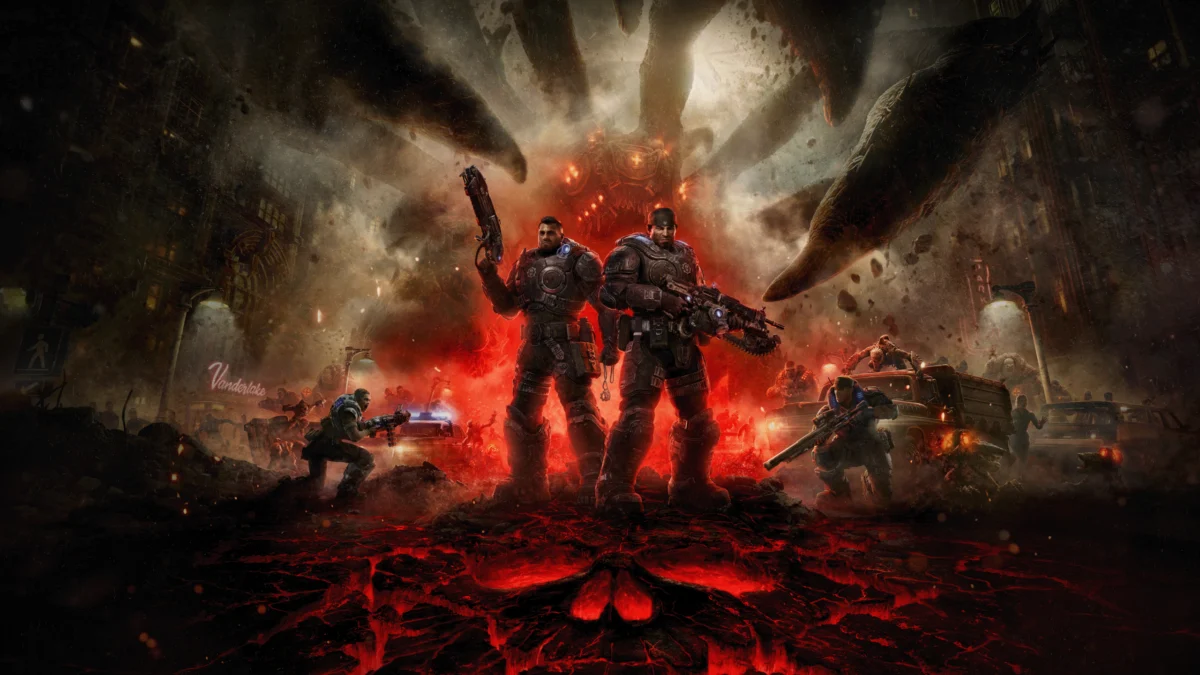
The landscape of the video game industry underwent a seismic shift during this summer’s showcase, as Microsoft’s gaming division clarified its long-term vision for the Xbox brand. For years, the industry operated under a binary expectation: console exclusives were the primary drivers of hardware adoption. However, following a series of high-profile announcements, Microsoft has introduced a nuanced, "case-by-case" strategy that attempts to balance the necessity of hardware-selling blockbusters with the broader revenue potential of multi-platform distribution.
The Core Revelation: A Divided Portfolio
The most immediate takeaway from the recent showcase is the clear line drawn between Microsoft’s marquee intellectual properties. Fans awaiting the next generation of Xbox staples received a complex set of updates regarding platform availability.
Confirming speculation that had swirled in the lead-up to the event, Microsoft announced that Gears of War: E-Day—the highly anticipated prequel to the storied franchise—and inXile Entertainment’s steampunk RPG Clockwork Revolution will remain firmly tethered to the Xbox ecosystem. These titles are not merely timed exclusives; they are positioned as foundational pillars designed to incentivize console ownership.
Conversely, the showcase provided a roadmap for several other major projects that will bypass the traditional "Xbox-only" model. The company confirmed that the next installment in the Hellblade franchise, the long-awaited State of Decay 3, and the highly anticipated Fable reboot (now slated for February 27, 2027) will all launch on the PlayStation 5. This dual-pronged approach signals that Microsoft is no longer viewing exclusivity as an absolute rule, but rather as a tactical lever to be pulled depending on the specific product and market conditions.
Chronology of a Strategic Pivot
To understand how Microsoft reached this juncture, one must look at the last 18 months of executive maneuvering. The transition from a "hardware-first" mentality to a "content-everywhere" philosophy did not happen overnight.
2023: The Integration Phase
Following the finalized acquisition of Activision Blizzard, Microsoft began to integrate its sprawling network of internal studios. The initial messaging focused on the value of Game Pass, with executives suggesting that the subscription service was the ultimate platform.
Early 2024: The Rumor Mill
In February 2024, industry reports began to suggest that Microsoft was considering a "platform-agnostic" future, with rumors swirling that titles like Sea of Thieves and Hi-Fi Rush would migrate to competitor consoles. This sparked a significant backlash among the hardcore Xbox user base, who feared the total erosion of the brand’s unique value proposition.
Mid-2024: The "Case-by-Case" Clarification
The summer showcase served as the corrective measure. By drawing a hard line on titles like Gears of War while simultaneously opening the floodgates for Fable and State of Decay, Matt Booty and his colleagues attempted to placate both investors—who want reach—and fans—who want reasons to own an Xbox.
Supporting Data: The Economics of Multi-Platform Gaming
The pivot toward multi-platform releases is not merely a stylistic choice; it is a financial necessity driven by the skyrocketing costs of AAA development.
Industry analysis suggests that the budget for top-tier titles now frequently exceeds $200 million, with marketing costs often matching those figures. In this economic climate, the "attach rate" (the number of games sold per console) on a single platform is often insufficient to guarantee profitability.
By porting games like Fable to the PlayStation 5, Microsoft is tapping into a massive, established user base that otherwise would have been inaccessible. While this potentially dilutes the "exclusivity value" of the Xbox console, it generates a higher return on investment for internal studios that are under immense pressure to deliver consistent growth.
Furthermore, Microsoft’s strategy with live-service games remains distinct. As Matt Booty confirmed in an interview with Gamertag Radio, live-service titles will continue to be fully multi-platform by default. This is a logical play for network-dependent games, where the health of the player base is directly tied to the number of available entry points.
Official Responses and Executive Strategy
The messaging coming from Microsoft’s leadership team has been meticulously crafted to address a fractured audience.
Matt Booty, CCO of Xbox Game Studios, has been the face of this communication strategy. His assertion that the company is operating on a "case-by-case basis" is designed to provide the company with maximum flexibility. "We want people to have a reason to get on board with Xbox," Booty stated. "We want them to have a reason to buy an Xbox, a reason to be an Xbox fan. At the same time, we want to reward all our players that have been with us for a long time."
This sentiment is echoed by the broader executive team. During a recent interview with Bloomberg, CEO Asha Sharma emphasized that while Microsoft is experimenting with reach, the Xbox platform itself must still offer unique value. "The platform must offer exclusive content and services," Sharma noted, acknowledging that for a console to be a viable product in the consumer market, it cannot simply be a generic conduit for multi-platform software.
The challenge for leadership is that this message is inherently contradictory to the casual consumer. How can a platform be "essential" if its biggest games are available on the competition’s hardware? Microsoft’s answer, for now, appears to be that the console is the "premium" experience for these games, while the rest of the world provides the profit margins necessary to keep the studio pipeline flowing.
Implications for the Future of Gaming
The implications of this strategy shift are profound, affecting developers, consumers, and the hardware market alike.
For the Consumer
The consumer is the primary beneficiary in the short term. The "console war" mentality is slowly being dismantled, allowing players to access high-quality software without necessarily needing to purchase multiple pieces of expensive hardware. However, the trade-off is a potential decline in the "identity" of the Xbox brand. If the Xbox library becomes increasingly synonymous with the PlayStation library, the incentive to invest in the Xbox ecosystem—specifically in Game Pass and Xbox-branded hardware—may diminish.
For the Industry
This move sets a precedent that may influence how other publishers handle their intellectual property. If the two giants of the industry, Microsoft and Sony, move toward a hybrid model where games are no longer strictly exclusive, the console market may transition into a service-based market, where the "console" is simply a dedicated device for accessing a cloud-based library.
For Microsoft’s Studio Pipeline
The "case-by-case" strategy allows studios like The Coalition and inXile to focus on what they do best without the existential dread of underperforming sales on a single platform. If a game is projected to be a massive, console-selling event, it stays exclusive. If it is a narrative-driven project that requires a wider audience to break even, it goes multi-platform.
Conclusion: A New Era of Pragmatism
The recent announcements from Xbox do not signal the death of the brand, but rather its evolution into a more pragmatic entity. By embracing a hybrid model, Microsoft is attempting to survive the transition from the traditional console era to a more nebulous, service-oriented future.
The success of this strategy will ultimately be measured by whether the company can maintain a "reason to buy an Xbox" while simultaneously maximizing the revenue from its massive catalog of studios. As Gears of War: E-Day and Fable represent two different paths for the company, the gaming world will be watching closely to see if this middle ground holds or if the pressure to choose between "exclusivity" and "reach" eventually forces a harder, more definitive decision.
For now, the era of the "Xbox Fan" is being redefined. It is no longer about rooting for a team; it is about participating in an ecosystem that, for the first time in history, is willing to share its treasures with the world.

 Laily UPN
 Asro
Asro