

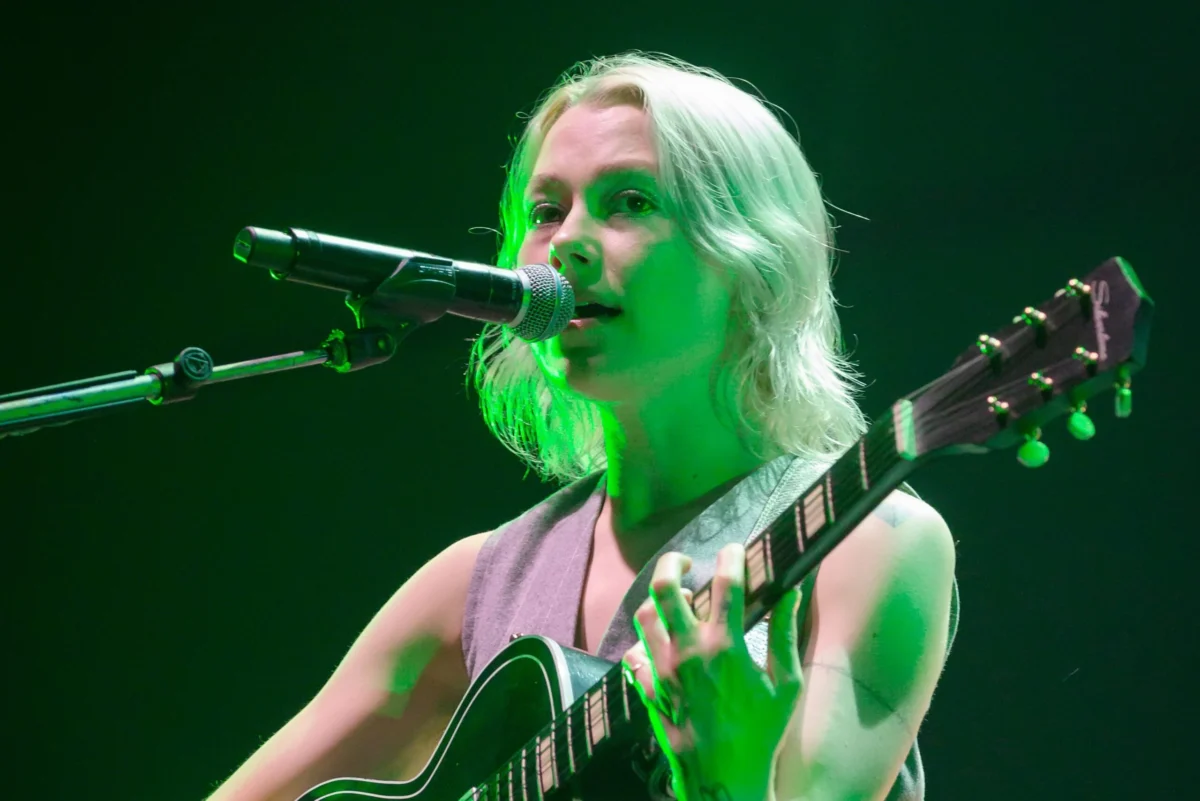
In an era defined by the glow of smartphone screens and the relentless drive to document every waking second for social media, Madison Square Garden—the “World’s Most Famous Arena”—recently played host to a radical experiment in presence. On Thursday night, 18,000 fans gathered for a special acoustic performance by Phoebe Bridgers, but they did so under a strict, unprecedented mandate: the concert was to be a strictly internet-free, device-free zone.
As Bridgers took the stage, she surveyed the sea of fans who had willingly surrendered their connectivity at the door. “It’s weird not having a phone, isn’t it?” she remarked, a playful smirk dancing on her lips. “I love it. I appreciate you allowing this to be an internet-free zone.”
The show, a $1-per-ticket benefit for the Community Justice Exchange’s Immigration Bond Freedom Fund, sponsored by Tidal, was not merely a concert; it was a defiant pushback against the performative nature of modern fandom. By stripping away the ability to record, stream, or post, Bridgers created a rare, ephemeral experience—a fleeting moment of art that existed only for those in the room.
The Logistical Feat: Orchestrating Silence in a Sea of Connectivity
The logistics of enforcing a total digital blackout at an arena as massive as Madison Square Garden were daunting. When the show was announced on Monday, the venue posted a stern, unequivocal statement: "Device Free Show." The policy was comprehensive, encompassing cellphones, cameras, tablets, laptops, smartwatches, and even Bluetooth-enabled headphones.
Upon arrival, attendees were required to place their devices into Yondr pouches—locking bags that remain in the user’s possession but can only be opened at designated unlocking stations in the lobby. For those accustomed to having the world at their fingertips, the transition was jarring yet surprisingly seamless. Staffers worked with clockwork precision, marking pouches with seat numbers and ushering thousands through security checkpoints without the usual bottlenecks.
The enforcement went beyond mere hardware. Even members of the press were barred from using pens and paper, a move reportedly aimed at preventing the leakage of inaccurate transcriptions of new, unreleased lyrics. While the policy might have struck some as precious or even overbearing, the result was a triumph of event management. The air in the arena felt different—palpably lighter, devoid of the ambient anxiety that accompanies the "must-post" culture of the Instagram age.
Chronology of a Rec Room Revival
The stage design set the tone for the night. Eschewing the massive LED displays and pyrotechnics typically associated with an arena show, Bridgers opted for the intimacy of a 1970s suburban rec room. A circular stage was outfitted with a couch draped in a patterned knit blanket, flanked by vintage lamps, a boxy television set, lava lamps, and flickering candles.

The performance began with a series of fan favorites: "Motion Sickness," "Waiting Room," "Kyoto," and "Moon Song." However, the true weight of the evening rested on the seven consecutive new tracks Bridgers debuted. By performing unreleased material in a non-recorded environment, she reclaimed the "road-testing" tradition of the past—an era where songs evolved in the public consciousness through live performance rather than through leaked snippets on TikTok.
The musicality was stripped back, focusing on Bridgers’ acoustic guitar work and the delicate textures of a Mellotron keyboard. The only percussion came from guitarist Christian Lee Hutson’s foot-pedal bass drum, providing a heartbeat to the quiet, introspective set. The grainy, low-fidelity broadcast of the show onto the arena’s scoreboard screens further cemented the retro aesthetic, lending the evening the nostalgic, hazy quality of a "Stranger Things" sequence.
As the night progressed, the audience mirrored the intimacy of the stage. In a poignant, unplanned moment, as Bridgers delivered an emotionally raw ballad, hundreds of fans lit cigarette lighters—a classic, tactile gesture that felt strikingly poignant in the absence of the ubiquitous, cold glow of smartphone flashlights.
Supporting Data: Art and Advocacy
The show’s mission extended far beyond the aesthetic of "digital detox." The partnership with the Community Justice Exchange’s Immigration Bond Freedom Fund highlighted Bridgers’ ongoing commitment to social justice. The fund provides critical bail money for individuals detained by ICE, a cause Bridgers addressed with characteristic bluntness during the set.
“I fucking hate ICE agents,” she declared, earning one of the night’s loudest cheers.
The sponsorship by Tidal—which Bridgers publicly praised for its artist-centric royalty models—provided the financial backbone for the $1-per-ticket pricing. This economic model allowed for a more democratic distribution of seats, ensuring that the audience was comprised of genuine fans rather than those simply willing to pay the highest premium for a seat.
Throughout the night, Bridgers maintained a conversational, almost confessional rapport with the crowd. She shared anecdotes about her upbringing, her complicated relationship with her late father, and her disdain for "defective parents." She also teased a forthcoming tour, promising dates by Friday morning, and navigated the transition from acoustic vulnerability to the evening’s only true rock explosion: the frantic, cathartic finale of "I Know the End."

Implications for the Future of Live Music
The success of the Madison Square Garden "unplugged" show carries significant implications for the future of touring. While similar policies have been implemented in smaller venues, the scale of this event proves that "phone-free" is a viable model for stadium-level artists.
In the wake of recent trends where artists like Justin Bieber and Olivia Rodrigo have prioritized fan-centric, high-privacy environments, the industry is clearly shifting. The desire for a "sacred" space—one where the artist and the audience share an experience that belongs exclusively to the present moment—is growing.
For many in the audience, the primary takeaway was not the new songs themselves, but the realization of what has been lost in the digital age. By removing the urge to capture, the audience was forced to listen. They were forced to watch, to react in real-time, and to engage with the artist rather than the screen.
Bridgers’ MSG experiment marks a new peak in the modern concert experience. It challenged the audience to be present, and in return, it provided a level of intimacy that a smartphone lens could never hope to capture. As the lights finally came up and the Yondr pouches were unlocked, there was a palpable sense of shared history among the crowd—a reminder that some of the best moments in life are the ones that exist only in memory, unshared and unedited by the digital world.
As one observer noted, the only regret of the evening was not that the phones were locked away, but that this level of intentional presence hasn’t been the standard all along. If Phoebe Bridgers can turn the most plugged-in arena in the world into a quiet, 1970s rec room for a night, the future of live music might just be looking a little more analog—and a lot more human.











No comments yet. Be the first to join the conversation!