Nana
Nana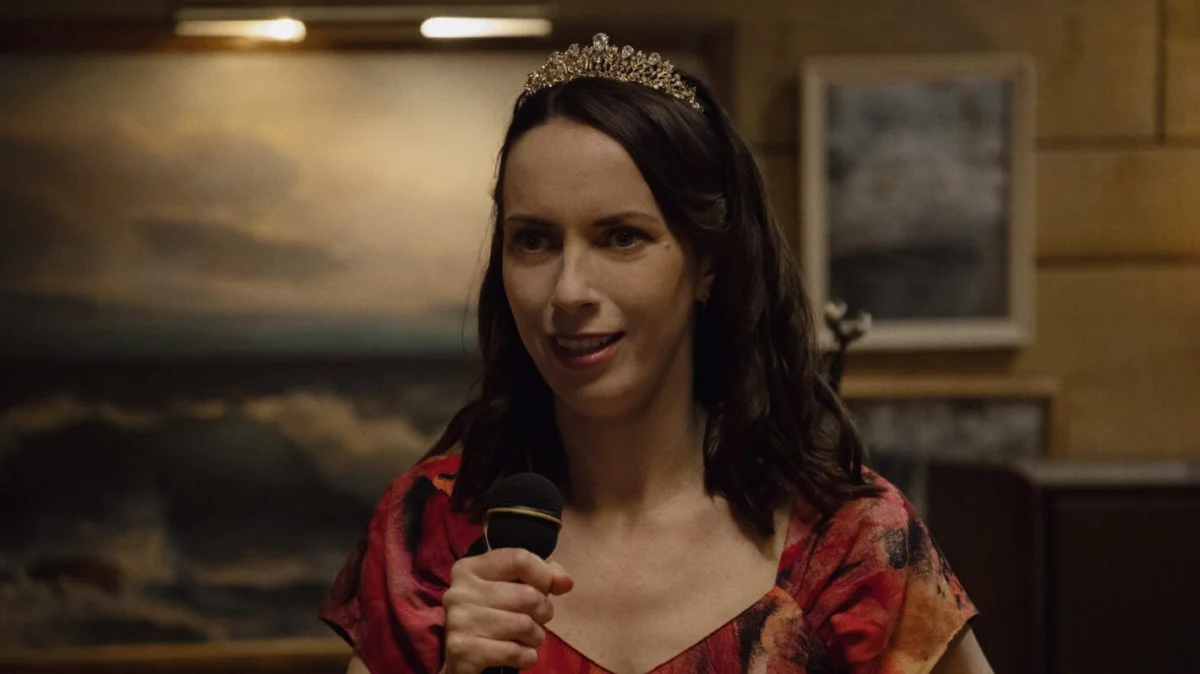
The television landscape is currently mourning a quiet, albeit temporary, tragedy: the conclusion of Widow’s Bay. While the series has secured a coveted second-season renewal and is widely projected to dominate the upcoming awards circuit, the industry sentiment is one of profound reluctance to let go. Shows that manage to balance surgical precision in craft, genuine narrative surprise, and an infectious sense of fun are rare commodities. As the credits rolled on the show’s masterful final episode, a recurring question began to circulate among critics and viewers alike: how does one fill the vacuum left by a show that felt like a singular event?
The brilliance of Widow’s Bay lies in its deceptively simple architecture. On its surface, the series functions as a meticulous anthology of horror tropes and Lovecraftian concepts. However, beneath the genre-pastiche exterior, it possesses a tonal consistency that is difficult to replicate. By deconstructing the series into its constituent elements—small-town isolation, the corruption of faith, folk-horror aesthetics, and absurdist humor—we can assemble a comprehensive watchlist designed to sustain the appetite of even the most discerning horror aficionado.
The Foundations of Dread: Stephen King and the Small-Town Blueprint
It is no secret that the works of Stephen King served as a spiritual north star for the creators of Widow’s Bay. To understand the show’s DNA, one must look toward the Maine-based storyteller’s most effective adaptations.
Storm of the Century (1999)
While many associate King’s television ventures with hit-or-miss adaptations, Storm of the Century remains an criminally underrated masterpiece. Written as an original screenplay by King rather than a novel adaptation, this three-part miniseries functions as a structural mirror to Widow’s Bay. Set against the backdrop of an impending blizzard on Little Tall Island, the narrative introduces a malevolent stranger whose arrival forces the insular community into a series of impossible moral compromises. It avoids the common pitfall of CGI-heavy, underwhelming climaxes, opting instead for a character-driven tension that mirrors the slow-burn dread of Widow’s Bay.
In The Mouth of Madness (1995)
John Carpenter’s meta-horror classic serves as a thematic companion to the show’s exploration of fictionalized reality. The film follows an insurance investigator looking into a missing horror novelist, only to find himself trapped in a town that is literally being written into existence. The sense of being wrapped in a "warm, spooky blanket" of horror tropes is precisely what Widow’s Bay delivered week after week, making this a mandatory watch for those who appreciate the meta-textual nature of the genre.
The Intersection of Faith and Isolation
A recurring motif in Widow’s Bay is the fragility of communal belief systems when confronted with the inexplicable. Two series, in particular, explore this intersection with chilling success.
Midnight Mass (2021)
Though not a direct adaptation of a King work, Mike Flanagan’s Midnight Mass is often cited as the spiritual successor to the best of King’s small-town lore. The series tracks a young priest who arrives at a secluded island community, sparking a renaissance of faith that slowly descends into a nightmare of corrupted divinity. Hamish Linklater’s career-defining performance in this series arguably set the template for the standout character work seen in Widow’s Bay. It is a profound examination of the monsters we create in the name of salvation.
Bodkin (2024)
Moving toward the investigative side of the spectrum, Netflix’s Bodkin provides a comedic yet unsettling look at the "outsider" perspective in a small, tight-knit town. When a team of podcasters arrives in a quaint Irish village, their search for truth peels back layers of dark, local history. Its ability to pivot between witty, dry humor and genuine, atmospheric menace makes it a natural successor for fans who enjoyed the lighter, banter-heavy moments of Widow’s Bay.
Folk Horror and the Architecture of the Absurd
The "folk horror" subgenre, characterized by ancient curses and the clash between modern sensibilities and pagan tradition, is central to the identity of Widow’s Bay.
Ravenous (1999)
For those who marveled at the flashback sequences and the historical weight of Widow’s Bay, Antonia Bird’s Ravenous is a essential piece of period-horror cinema. Set during the Mexican-American War, the film follows a group of soldiers forced to confront a cannibalistic curse. Its tone is a delicate tightrope walk between grim, visceral horror and dark comedy, capturing that same "absurdist downward spiral" that defines the most memorable decisions made by characters in Widow’s Bay.
The Devonsville Terror (1983)
For the viewer who prefers the obscure, The Devonsville Terror is a cult gem. Featuring a legendary performance by Donald Pleasance, the film deals with a New England town still reeling from the historical fallout of a witch hunt. While the production values are decidedly "rough around the edges," the film’s atmosphere—saturated in autumnal, small-town malaise—is immaculate. It offers a scathing, subtle critique of patriarchal power dynamics disguised as a supernatural thriller.
Comedic Relief: When the Monsters Are the Punchline
The success of Widow’s Bay was largely due to its refusal to take itself entirely seriously. It recognized that fear is often heightened by the sheer absurdity of the situation.
Tucker and Dale vs. Evil (2011)
This film is a masterclass in subverting the "teens in the woods" trope. By positioning two kind-hearted, misunderstood hillbillies as the protagonists in a scenario where a group of judgmental college students keep accidentally killing themselves, the film achieves a level of hilarity that remains unmatched in the genre. It is the perfect antidote for a viewer coming off the high-tension drama of Widow’s Bay.
Grabbers (2012)
Despite a title that may cause hesitation, Grabbers is a creature-feature triumph. The premise is brilliantly simple: an alien invasion hits a small Irish village, and the only defense against the monsters is to stay perpetually, dangerously drunk. Its commitment to pure, unadulterated fun while maintaining a consistent internal logic makes it a perfect companion piece to the more lighthearted episodes of Widow’s Bay.
Wellington Paranormal (2018–2022)
Created by Taika Waititi and Jemaine Clement, this series acts as a bureaucratic, deadpan mockumentary of the supernatural. Where Widow’s Bay leans into character drama, Wellington Paranormal leans into the mundane absurdity of police officers trying to fill out paperwork while battling demons. It is a show for those who find humor in the collision between the everyday and the occult.
The "Final Girl" Legacy: Character Archetypes
The character of Patricia, played by Kate O’Flynn, has emerged as a breakout fan favorite. Her development from a quirky, book-van-driving resident to a formidable "final girl" is one of the show’s greatest arcs.
Friday the 13th Part 2 (1981)
To appreciate the evolution of the final girl, one must revisit Ginny Field. Intelligent, resourceful, and fiercely resilient, she represents a subversion of the trope. Her survival skills and tactical mindset make her a perfect point of comparison for Patricia, grounding the character in a lineage of horror protagonists who do not just survive, but actively fight back.
Pearl (2022)
Conversely, for fans who enjoy the chaotic, slightly unhinged energy of Patricia’s dinner parties, Ti West’s Pearl is a must-watch. Mia Goth’s performance as the titular character is generational, capturing a specific type of yearning and madness that mirrors the glint in Patricia’s eyes when she feels the spotlight hitting her. Directed by Ti West—who helmed one of the most acclaimed episodes of Widow’s Bay—the film is a stylistic cousin to the show’s most dramatic moments.
Looking Ahead: The Cultural Impact of the Series
The industry’s reaction to Widow’s Bay underscores a shift in how audiences consume horror. No longer satisfied with simple jump-scares, viewers are demanding serialized storytelling that respects their intelligence. The show’s ability to weave together disparate horror subgenres into a cohesive, character-driven narrative has created a blueprint that will likely influence television production for years to come.
As we await the second season, this curated list serves as more than just a placeholder; it is a deep dive into the inspirations and tonal siblings that allowed Widow’s Bay to become the cultural touchstone it is today. Whether you are in the mood for the surrealist dread of Messiah of Evil or the sharp, witty subversions of Wellington Paranormal, the void left by the bay can be filled with stories that honor its legacy of craft, surprise, and unapologetic fun.

 Reynand Wu
 Asep Darmawan