Suro Senen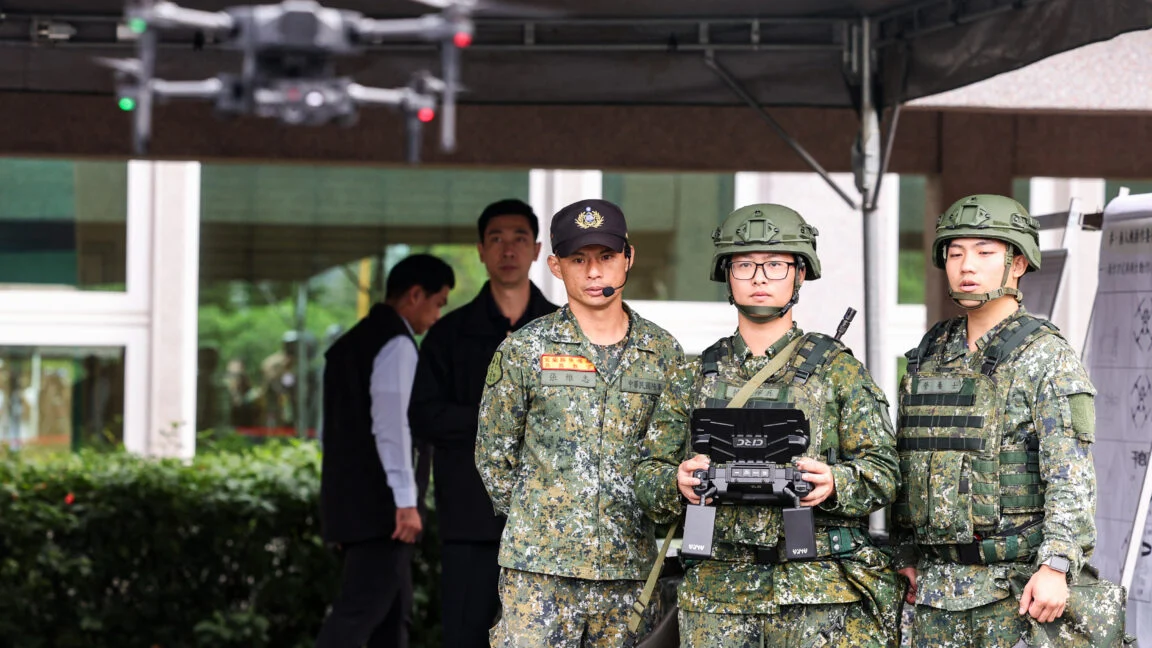
The global landscape of modern warfare is undergoing a tectonic shift. As the battlefields of Eastern Europe and the Middle East demonstrate the terrifying efficiency of low-cost, expendable aerial systems, a new power has emerged as the essential backbone of the global drone supply chain: Taiwan. Long known as the world’s semiconductor foundry, Taiwan is now rapidly pivoting its sophisticated manufacturing prowess toward the production of uncrewed aerial systems (UAS), effectively becoming the silent engine powering the defense strategies of the United States, Ukraine, and their allies.
The Rise of the Taiwanese Drone Industry
Last year marked a historic milestone for Taiwan’s defense industrial base when Thunder Tiger’s "Overkill" drones became the first from an Asian company to be certified for the Pentagon’s Blue Uncrewed Aircraft Systems (UAS) Cleared List. This certification is the gold standard for security and reliability, confirming that these platforms meet the stringent requirements for integration into US military operations.
The Overkill drones are small, first-person view (FPV) platforms—agile, highly maneuverable, and remarkably cost-effective. With a price point ranging between $3,000 and $5,000 per unit, these drones mirror the explosive FPV technology that has become the signature weapon of the conflict in Ukraine, where cheap, off-the-shelf components are routinely used to neutralize multi-million-dollar armored vehicles.
However, the ambition of Taiwanese manufacturers extends far beyond tactical FPVs. Thunder Tiger has begun production of larger, long-range kamikaze drones starting at approximately $30,000. These systems are based on the US Low-cost Uncrewed Combat Attack System (LUCAS) framework. The irony of this development is not lost on geopolitical analysts: the LUCAS drones are, in essence, reverse-engineered iterations of Iran’s Shahed-series loitering munitions, which have been deployed in massive quantities by Russia. By mastering this low-cost, high-impact architecture, Taiwan is signaling its ability to produce asymmetrical deterrents at scale.
Chronology of an Industrial Transformation
The rapid integration of Taiwanese drones into Western defense portfolios did not happen overnight. It is the result of a deliberate, multi-year strategy to decouple from adversarial supply chains and establish a robust, democratic manufacturing ecosystem.
- 2024–2025: Taiwanese firms begin aggressive R&D cycles, focusing on replacing components previously sourced from mainland China. The focus shifts toward "Trusted UAS" architectures.
- Late 2025: Reports emerge from the Taiwanese think tank DSET detailing the development of indigenous loitering munitions, such as those modeled on Israel’s Harpy system, by the National Chung-Shan Institute of Science and Technology (NCSIST).
- March 2026: Thunder Tiger achieves a significant logistical breakthrough by establishing a dedicated production facility in Ohio. This plant is capable of outputting over 60,000 drone motors annually, directly supporting the US defense industrial base.
- Mid-2026: Taiwanese components become ubiquitous in the European theater. Czechia and Poland emerge as primary importers of Taiwanese drone technology, which intelligence analysts suggest is frequently funneled into the Ukrainian supply chain to sustain their high attrition rates.
The Technical Ecosystem: Hardware Meets AI
The Taiwanese strategy is built on a clear division of labor: Taiwan provides the high-precision hardware, while Western partners provide the "brains." Taiwanese firms have focused their expertise on flight controllers, high-efficiency motors, and power-dense batteries—the physical building blocks of flight.
To solve the software puzzle, Taiwan’s NCSIST has engaged in strategic partnerships with industry heavyweights such as Anduril, Auterion, and Shield AI. These companies provide the AI-driven edge computing necessary to navigate GPS-denied environments and execute autonomous target recognition. For example, Thunder Tiger’s procurement of AI software from Auterion allows its fleet—which now includes not only aerial drones but also ground and maritime robots—to function as a cohesive, semi-autonomous swarm.
Supporting Data and Market Reach
The scope of Taiwan’s influence is quantified by its participation in the US Department of Defense’s $1 billion "Drone Dominance Program." According to DSET research, Thunder Tiger is currently supplying critical components to three distinct prime contractors participating in this initiative.
Furthermore, the scale of production is accelerating. By localizing motor production in the American heartland, Taiwanese firms are mitigating the risks of trans-Pacific supply chain disruptions. This shift is not merely commercial; it is a vital component of the US "Replicator" initiative, which aims to field thousands of attritable, autonomous systems to counter the numerical superiority of regional adversaries.
Official Responses and Strategic Rationale
Gene Su, general manager of Thunder Tiger, has been vocal about the necessity of this pivot. In an interview with IEEE Spectrum, Su highlighted that the establishment of the Ohio facility was not just an expansion of business, but a strategic alignment with the "friend-shoring" movement—a policy designed to ensure that critical defense technology remains within the orbit of allied nations.
The Taiwanese government, through institutions like NCSIST, has framed this development as a matter of national survival. By demonstrating that Taiwan can be an indispensable supplier of dual-use technology, the island nation has effectively transformed its economy into a "porcupine strategy" in digital form. The ability to churn out tens of thousands of drones is seen as a deterrent against potential aggression, as it demonstrates that Taiwan can sustain a prolonged conflict through high-volume domestic production.
Implications: The Future of Attrition Warfare
The implications of Taiwan’s rise as a drone manufacturing hub are profound for global security.
1. The Democratization of Precision
The transition from expensive, bespoke military hardware to mass-produced, software-defined drones is permanent. Taiwan’s ability to drive down the unit cost of combat-capable drones ensures that even smaller nations can project power in ways previously reserved for superpowers.
2. The End of Reliance on Adversarial Supply Chains
For years, the global drone market was dominated by low-cost Chinese imports. The "Blue UAS" certification process, supported by Taiwanese supply chains, creates a viable alternative. By proving that high-quality, secure components can be produced in democracies, Taiwan is effectively dismantling the monopoly held by competitors who might otherwise weaponize supply chain dependencies.
3. Accelerated Technological Cycles
The collaboration between Taiwanese hardware manufacturers and US software firms creates a rapid feedback loop. As combat data flows from Ukraine back to manufacturers in Taiwan and the US, the "time-to-market" for new capabilities—such as improved electronic warfare resistance or enhanced autonomy—has collapsed from years to months.
4. Geopolitical Tightrope
While the drone boom strengthens Taiwan’s economic and strategic ties to the West, it also places the island at the center of a technological arms race. Beijing views these developments with extreme scrutiny, recognizing that Taiwan is not just producing toys, but the future of its own defense posture.
Conclusion
The drone business boom in Taiwan is more than a successful industrial pivot; it is a recalibration of the global military balance. By marrying the precision of their manufacturing sector with the software sophistication of Western allies, Taiwanese companies have positioned themselves as the critical node in a new, distributed, and highly resilient defense architecture. As the world watches the skies over modern battlefields, it is becoming increasingly clear that the future of defense will be written in the code and circuits coming out of Taiwan’s high-tech corridors. The message to global observers is clear: the age of the drone is here, and the map of who builds them has been permanently redrawn.


 Ammar Sabilarrohman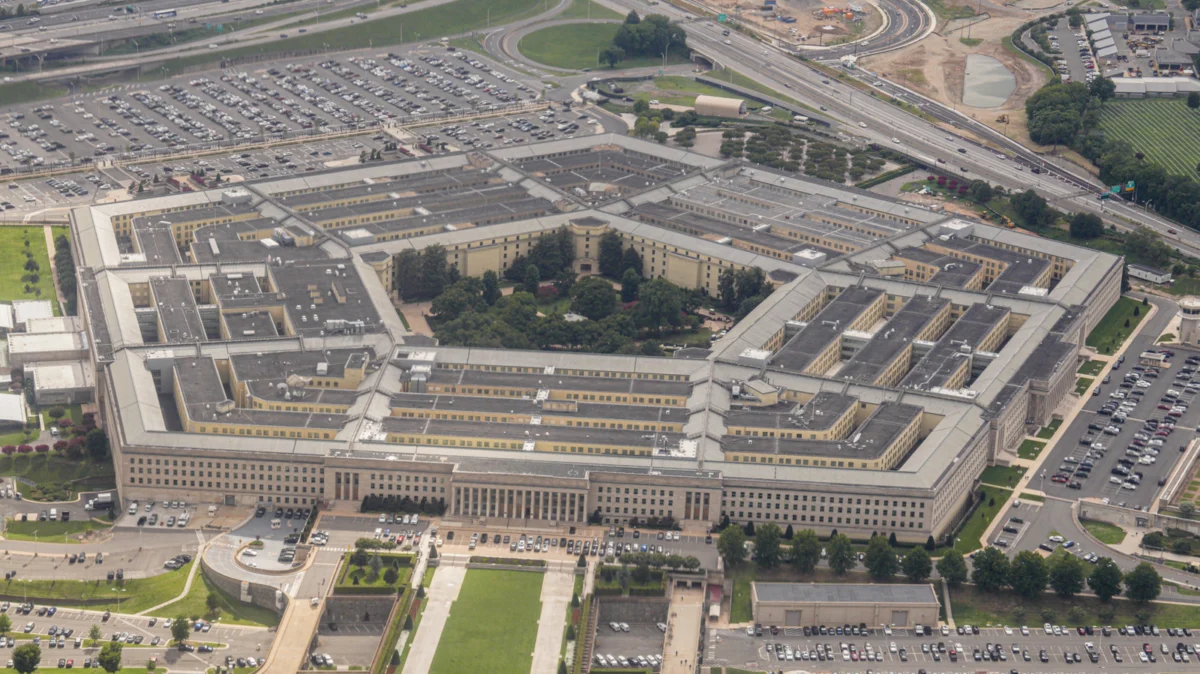
 Jia Lissa