Nana Wu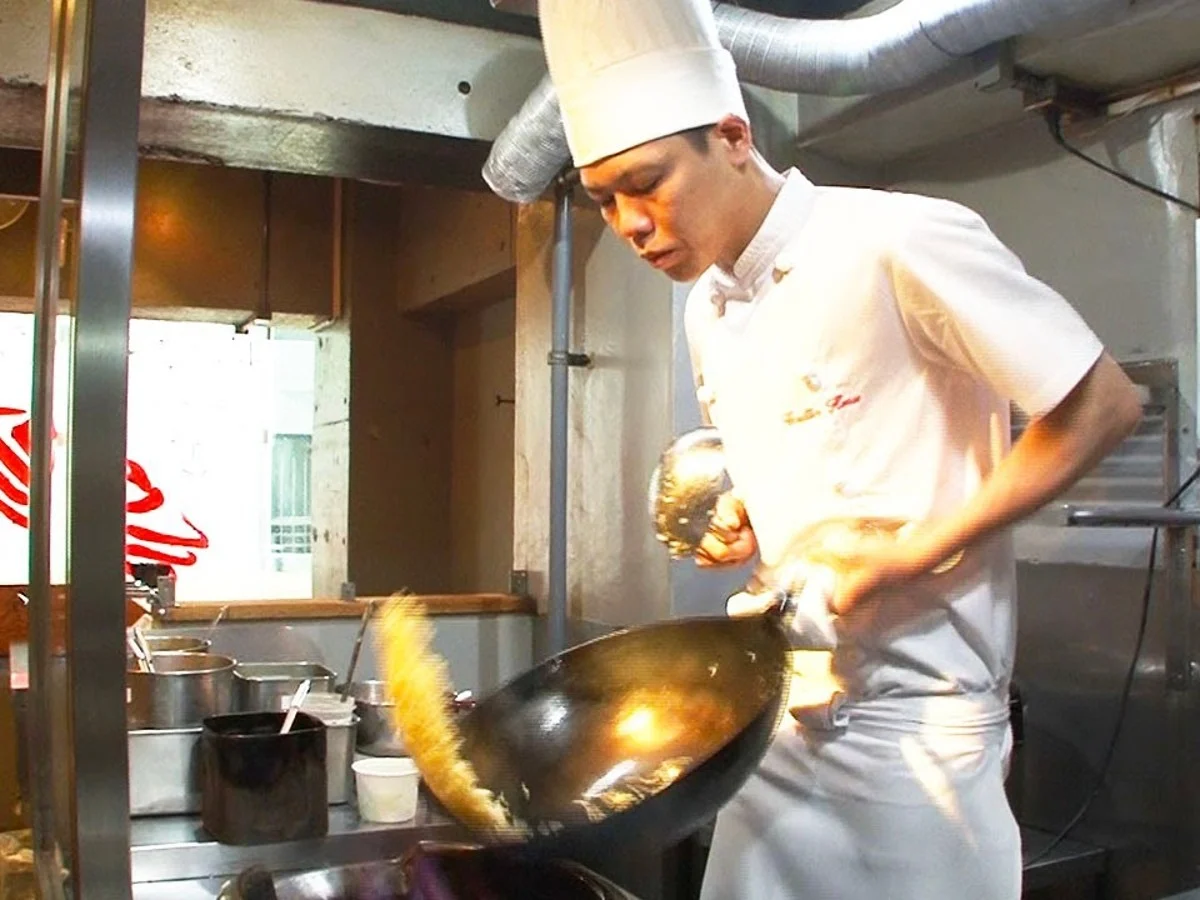
There is a distinct, rhythmic cadence to the professional kitchen—a symphony of sizzling oil, the sharp metallic clatter of spatulas against steel, and the muffled commands of a line crew in sync. While the average home cook views the preparation of a meal as a labor of love, for the elite culinary masters of Japan, cooking is an act of high-performance athleticism.
In the heart of Tokyo, this philosophy has reached its zenith at the Shibuya branch of Kani Chahan no Mise (Crab Fried Rice Restaurant). It is here that Takumi Murakami, a chef whose dexterity and speed have earned him the moniker "The God of Fried Rice," has redefined the boundaries of quick-service dining. Through a combination of decades-honed muscle memory and an almost meditative focus, Murakami has turned the humble dish of crab fried rice into a viral sensation, proving that even the most "everyday" food can be elevated into a spectacle of high art.
The Main Facts: A Masterclass in Efficiency
The core appeal of Kani Chahan no Mise lies in its singular, uncompromising dedication to crab fried rice. While many establishments offer expansive, sprawling menus, this institution doubles down on a specific craft. The star of the show is Takumi Murakami, whose preparation process has become the subject of intense fascination across digital platforms.
In a recent feature by the TV Tokyo program Uchimura no Tsuboru Douga, viewers were granted a rare, high-definition look at Murakami’s process. The challenge was simple yet daunting: prepare a signature crab fried rice dish from raw ingredients to final plating in under 50 seconds.
The resulting video, which has since amassed significant traffic online, captures Murakami in a state of flow. There is no frantic movement, no sweat, and no hesitation. Every flick of the wrist, every toss of the wok, and every garnishing movement is calculated to minimize friction. The result is a consistent, perfectly aerated, and steaming bowl of fried rice delivered in a timeframe that would leave most line cooks breathless.
A Chronology of Culinary Precision
To understand the phenomenon of Takumi Murakami, one must look at the timeline of his development and the broader cultural context of Japanese culinary obsession.
The Foundation (Pre-2020s)
Long before the cameras arrived, the Shibuya branch of Kani Chahan no Mise had built a quiet, formidable reputation among Tokyo’s working class. The restaurant’s business model was built on the premise that fried rice—a dish often relegated to a side item—should be the main event. Murakami’s tenure at the restaurant was marked by an obsession with "wok hei"—the "breath of the wok." This term refers to the smoky, complex flavor imparted to food when it is cooked at extremely high heat in a seasoned wok.
The Digital Discovery (2023–2024)
The tipping point for Murakami’s fame arrived when TV Tokyo producers, scouting for content that showcased the "hidden geniuses" of Japan’s service industry, identified the Shibuya shop. The broadcast of his 50-second preparation cycle served as a catalyst. Social media users across X (formerly Twitter) and YouTube began dissecting the video frame-by-frame.
Commentators began labeling him "The God of Fried Rice," a title previously reserved for legendary sushi masters or Michelin-starred ramen chefs. The video reached a global audience, transcending language barriers and highlighting the universal appeal of craftsmanship.
Current Status
Today, the restaurant experiences a steady influx of tourists and food enthusiasts who visit not just for the flavor, but to witness the performance. Murakami continues to operate at his standard pace, maintaining a level of consistency that is rare in the high-stress environment of a busy Shibuya kitchen.
Supporting Data: The Science of the Wok
What exactly separates a standard fried rice dish from the one served by Murakami? The supporting data lies in the physical mechanics of the wok.
- Thermodynamic Efficiency: A professional-grade wok burner provides significantly higher BTUs than a home stove. Murakami utilizes this to flash-sear ingredients, ensuring that the rice grains do not absorb excess moisture—the primary cause of "soggy" fried rice.
- The "Toss" Ratio: In the video, Murakami performs a specific number of tosses per second. This movement ensures that the egg is perfectly incorporated into the grains of rice without overcooking.
- Time-Motion Analysis:
- 0-10 seconds: Prep of the wok and oil.
- 10-25 seconds: Incorporation of egg and rice at peak temperature.
- 25-40 seconds: Addition of the signature crab meat and seasoning.
- 40-50 seconds: Plating and final presentation.
These metrics demonstrate that Murakami is not merely rushing; he is working within a highly optimized workflow. Each second is utilized for a specific chemical change in the food, such as the Maillard reaction, which gives the rice its golden, toasted depth.
Official Responses and Public Reception
The public reaction to Murakami’s work has been overwhelmingly positive, bordering on the reverent. On platforms like YouTube, where the video has been hosted, comments reflect a deep appreciation for the "craft" of the worker.
"This is the work of a god," one user noted, while another remarked, "His technique is beyond compare."
The management of Kani Chahan no Mise has been modest about the attention. In brief communications regarding the viral success of their Shibuya branch, they have emphasized that their goal remains unchanged: to provide a high-quality, hot, and delicious meal to their customers as efficiently as possible. They acknowledge that while the "performance" is a byproduct of the speed required to keep up with the lunch rush, the primary objective is the quality of the product.
Industry experts have also weighed in, noting that this type of kitchen performance is a hallmark of the Japanese "Shokunin" spirit—a term that denotes an artisan who is dedicated to the constant pursuit of perfection in their craft, regardless of the simplicity of the task.
The Broader Implications: Why We Watch
The obsession with Takumi Murakami’s fried rice is not just about a bowl of food. It represents a deeper cultural appreciation for "performance dining." In an era where automated kiosks and delivery apps are stripping the human element out of the food industry, seeing a human being perform a task with such high levels of skill and dexterity is deeply satisfying.
The Revival of the "Human Element"
As AI and robotics continue to advance in the restaurant sector, chefs like Murakami serve as a reminder of the irreplaceable nature of human intuition. A robot can be programmed to stir rice, but it cannot "feel" when the wok has reached the perfect temperature based on the sound of the sizzle or the visual texture of the grain.
Culinary Tourism in Tokyo
This viral success also highlights the shift in culinary tourism. Travelers are no longer just looking for the most expensive meal or the most exclusive reservation; they are looking for "authentic skills." The ability to watch a master at work is now a commodity in itself. The Shibuya location of Kani Chahan no Mise has essentially become a living museum of culinary technique, where the "exhibit" is the lunch rush.
The Standard for Future Chefs
Murakami has effectively raised the bar for what is expected in quick-service environments. By demonstrating that high speed and high quality are not mutually exclusive, he has set a new benchmark. Younger chefs entering the industry now have a tangible example of how mastery of one’s tools can transform a mundane job into a prestigious career.
Conclusion: The Art of the Everyday
Takumi Murakami’s mastery of the wok is a testament to the idea that there is no such thing as a "simple" dish when it is prepared with excellence. While the world may call him a "God of Fried Rice," his work ethic suggests he is simply a man who has mastered his domain.
For those traveling through Tokyo, the Shibuya location of Kani Chahan no Mise offers more than just a meal. It offers a glimpse into the rhythm of a master. While you likely won’t have to wait long for your order—given the efficiency of the kitchen—the experience of watching the process is one that lingers long after the plate is cleared. In a world that often moves too fast, Murakami shows us the beauty of moving with purpose, precision, and passion.


 Neng Nana
 Asro
Asro