Ammar Sabilarrohman
For decades, the Portland, Oregon-based Leatherman Tool Group has defined the standard for the modern multitool. Known for their iconic plier-based butterfly mechanism, Leatherman tools are staples in the kits of tradespeople, outdoor enthusiasts, and military personnel alike. While casual observers might judge the quality of a multitool by the sheer volume of gadgets packed into its chassis, seasoned users know that the true hierarchy of a Leatherman is dictated by something far more elemental: the steel in its blade.
In a market saturated with budget-friendly carbon alloys, Leatherman has recently pivoted toward a high-performance material that is reshaping expectations for portable utility: CPM MagnaCut. This move represents a significant departure from traditional manufacturing standards, signaling that the "super steel" revolution has finally arrived in the world of everyday carry.
The Hierarchy of Hardness: Decoding the Price Point
To the uninitiated, the price difference between a $100 Skeletool and a $250 flagship Arc model might seem arbitrary. However, within the industry, that price gap is largely a reflection of metallurgy.
Historically, Leatherman has relied on 420HC (High Carbon) stainless steel for the vast majority of its lineup. 420HC is a workhorse material: it is affordable, easy to sharpen, and exhibits high corrosion resistance. For the average user, it is more than sufficient. However, as users demand more from their tools—seeking longer edge retention and greater durability—the limitations of 420HC become apparent.
The jump to premium offerings, such as the Skeletool CX or RX, introduces 154CM steel. This material offers a noticeable step up in edge retention, justifying a $10 to $20 premium. But the true paradigm shift is found in the Leatherman Arc ($250) and the Wave Alpha ($200). These flagship tools feature CPM MagnaCut, a material previously reserved for custom, high-end pocket knives often retailing between $300 and $500. By integrating this aerospace-grade material into a production multitool, Leatherman is effectively closing the gap between a "tool" and a "professional-grade instrument."
Chronology of Innovation: From Basic Alloys to Super Steels
The evolution of Leatherman’s material science did not happen overnight. It is the result of a long-term trajectory aimed at balancing the "Iron Triangle" of metallurgy: toughness, edge retention, and corrosion resistance.
- The Early Years (Foundational Steel): Since the company’s inception, the focus was on accessibility and stainless utility. The use of 420HC allowed for mass production at a price point that made the multitool a household item.
- The Mid-Market Pivot: As the EDC (Everyday Carry) community grew in the 2010s, Leatherman responded by experimenting with 154CM. This marked the company’s first foray into "premium" alloys, catering to users who found that 420HC lost its sharpness too quickly during demanding daily tasks.
- The MagnaCut Era: Introduced as the latest chapter in their product development, the adoption of MagnaCut marks the first time Leatherman has utilized a steel specifically engineered to break the traditional trade-offs of knife manufacturing. It represents a technological leap, moving from standardized, off-the-shelf industrial steel to a proprietary, high-performance solution.
The Science of CPM MagnaCut: Why It Matters
To understand why MagnaCut is considered a "super steel," one must first look at the production process: Crucible Particle Metallurgy (CPM).
The CPM Process Explained
CPM is a trademarked manufacturing technique developed by Crucible Industries. Traditional steel production often results in uneven distribution of alloying elements as the metal cools. CPM, by contrast, atomizes molten steel into a fine powder. These uniform, spherical particles are then consolidated under extreme heat and pressure. The result is an incredibly dense, homogeneous material with a perfect grain microstructure. This consistency ensures that the blade performs identically from the tip to the heel.
The Metallurgical Sweet Spot
In traditional steelmaking, increasing hardness (to keep an edge sharp) usually makes the steel brittle, increasing the risk of chipping. Conversely, increasing toughness (to prevent breaking) usually forces a trade-off in corrosion resistance.
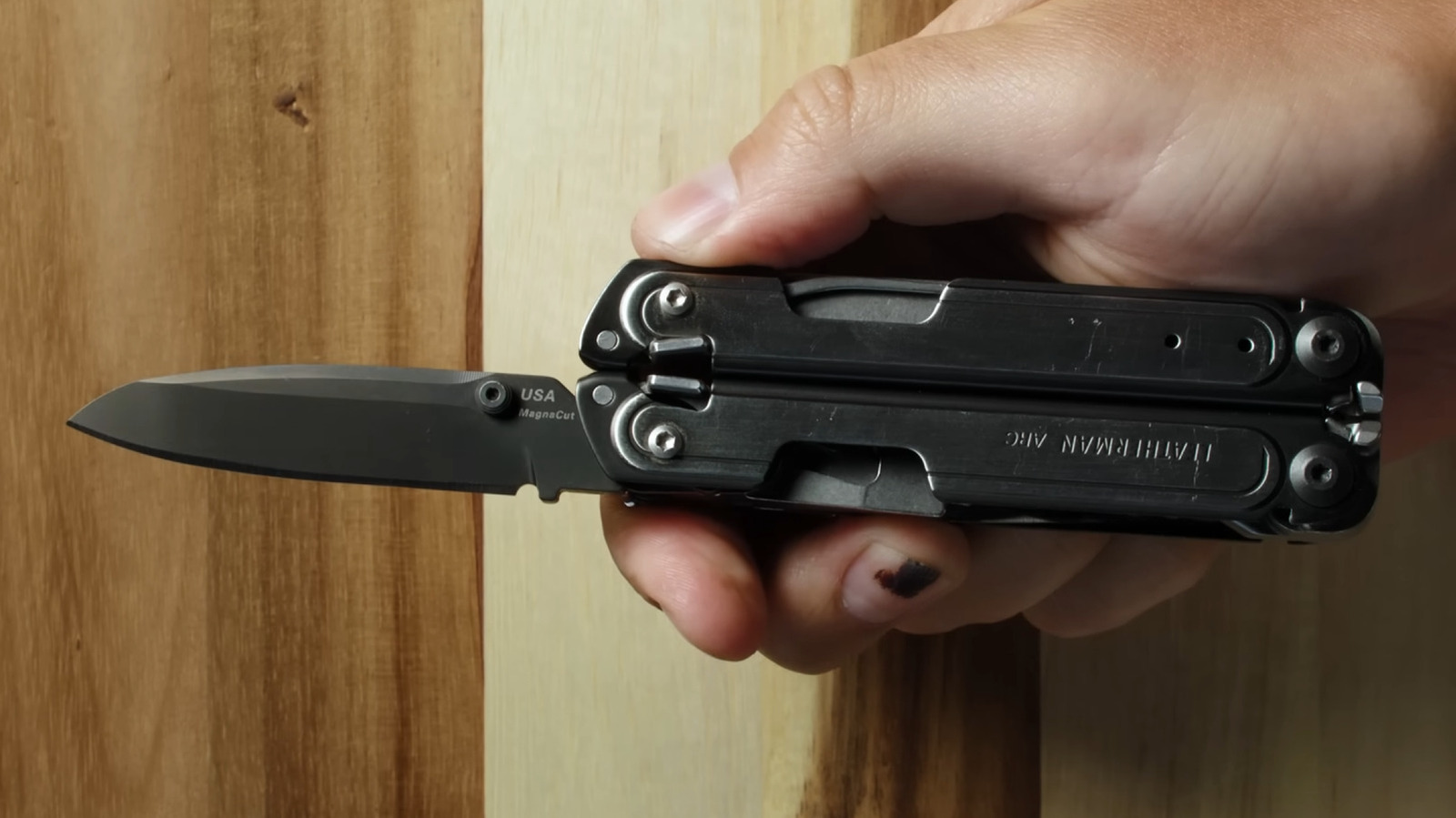
MagnaCut, developed by renowned metallurgist Larrin Thomas, solves this by rethinking the chemical composition. It hits the "Goldilocks zone" by:
- Optimizing Chromium: By lowering the chromium content slightly compared to some stainless steels, it prevents the formation of large, brittle chromium carbides.
- Vanadium and Niobium Integration: By replacing large carbides with smaller, harder vanadium and niobium carbides, the steel retains exceptional wear resistance without sacrificing toughness.
The implication for the end-user is profound: a blade that can be ground thinner for a more precise cut, stays sharp significantly longer than 420HC or 154CM, and resists rust even in harsh, humid environments.
Supporting Data: Comparative Performance Metrics
When measuring the efficacy of blade steel, experts rely on standardized testing protocols. While 420HC is excellent for ease of sharpening, it consistently falls behind in CATRA (Cutlery and Allied Trades Research Association) testing, which measures how much cardboard a blade can cut before losing its edge.
- Edge Retention: CPM MagnaCut exhibits significantly higher edge retention than 154CM. In real-world applications, this means a professional using a Leatherman Arc can go weeks without needing a stone, whereas a standard 420HC blade might require a touch-up after a few days of heavy box-cutting or material trimming.
- Toughness: The inherent toughness of MagnaCut is its most underrated feature. Because it is less prone to micro-chipping, it can withstand the lateral stresses common in multitool use—such as prying or twisting—that might cause a more brittle "super steel" (like CPM Rex 121) to snap.
- Corrosion Resistance: MagnaCut ranks among the highest in stainless performance, making it the ideal choice for maritime or outdoor use, where exposure to saltwater or rain is common.
Official Stances and Strategic Implications
Leatherman has remained relatively quiet regarding the specifics of their manufacturing partnerships, focusing instead on the user experience. However, the decision to invest in MagnaCut signals a broader strategy: the "premiumization" of the multitool.
By incorporating high-end materials, Leatherman is positioning its flagship tools not just as replacements for a toolbox, but as heirloom-quality items. This strategy addresses the growing competition from smaller, boutique knife manufacturers who have long touted the benefits of advanced metallurgy. By adopting these materials, Leatherman maintains its status as the industry leader, effectively setting the bar that competitors must now chase.
For the company, the implications are twofold. First, it justifies higher price points, allowing the brand to appeal to the "prosumer" market—users who are willing to pay for longevity and superior performance. Second, it reinforces the "Made in the USA" branding that is central to Leatherman’s identity. By using high-tech domestic steel, they maintain control over their supply chain while delivering a product that resonates with domestic manufacturing pride.
The Future of the Multitool
As we look toward the future, the integration of MagnaCut into the Leatherman ecosystem suggests that the "multitool of the future" will be characterized by extreme material efficiency. We are moving away from the era of "disposable" tools toward an era of hyper-optimized gear.
While 420HC will undoubtedly remain a staple for entry-level models—ensuring that the brand remains accessible to the average consumer—the inclusion of MagnaCut at the high end provides a clear roadmap for the industry. As the cost of these super steels potentially drops with wider adoption, it is highly likely that we will see these advanced materials trickle down into mid-tier models within the next decade.
Ultimately, the choice of steel is more than just a marketing bullet point; it is a fundamental design decision that dictates how a tool interacts with the world. By embracing the complex science of particle metallurgy, Leatherman has proven that even a tool as familiar as the folding pliers can still be reinvented. For the user, the result is a tool that is not only sharper and tougher but represents the absolute pinnacle of modern material science. Whether you are a professional electrician, an avid hiker, or a collector of fine gear, the shift toward MagnaCut is a clear indicator that the humble multitool is evolving into something far more capable than ever before.


 Sagoh
Sagoh
 Raul Delapena Setiawan