Raul Delapena Setiawan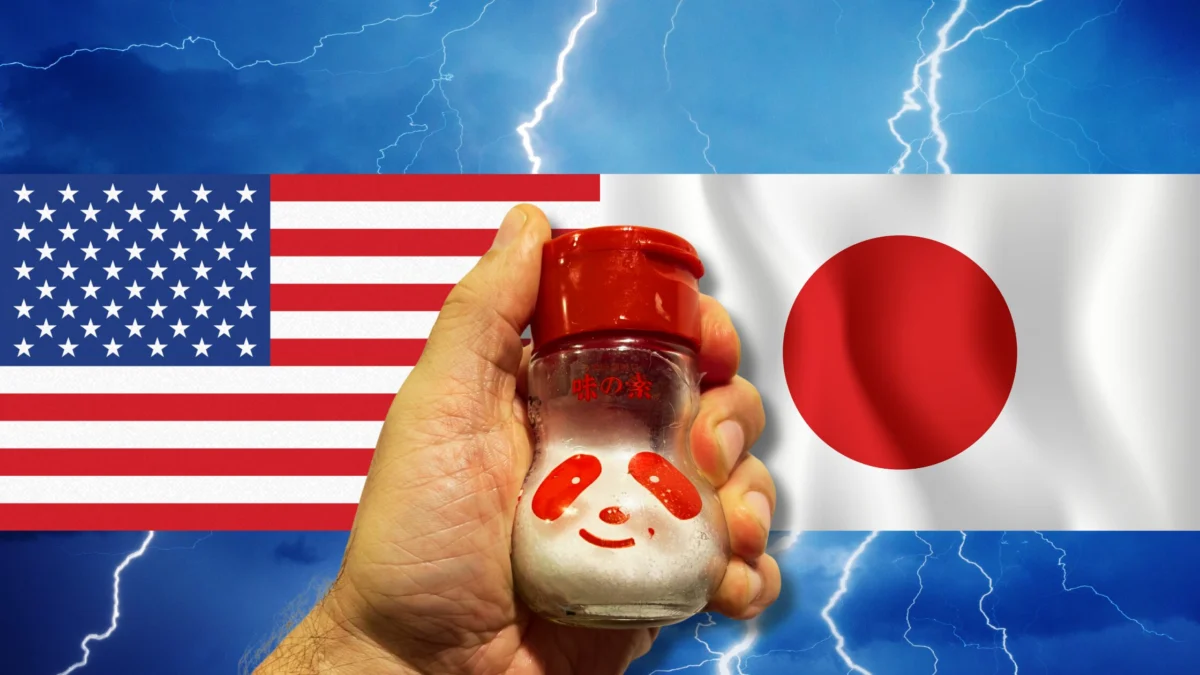
In the high-stakes world of Japanese social media, few figures command as much attention—or as much controversy—as Ryūji. With a staggering 5.6 million subscribers on his YouTube channel, Buzz Recipe, Ryūji has cemented his status as Japan’s preeminent home-cooking influencer. Often likened to a culinary Marie Kondo for his ability to declutter the complexities of gourmet cooking into accessible, rapid-fire tutorials, Ryūji’s brand is built on a foundation of otsumami—small, savory dishes designed to be paired with alcohol.
However, the "Buzz" in his channel title takes on a literal meaning. Ryūji frequently films his segments while consuming alcohol, often appearing visibly inebriated by the time the dish hits the plate. While his boisterous personality and easy-to-follow instructions have earned him a massive following, his habits have sparked a parallel conversation regarding his well-being. Ryūji has candidly noted that he often begins filming as early as 1:00 p.m. with a drink already in hand, leading to public speculation about the nature of his relationship with alcohol. Yet, it is not his drinking that has drawn the most virulent ire from his detractors; it is his unapologetic, heavy-handed use of monosodium glutamate (MSG), known in Japan as Aji-no-moto (The Root of Taste).
A Chronology of Controversy: From Culinary Innovation to Pariah
The history of MSG is a tale of scientific triumph followed by a slow descent into cultural stigmatization.
1908: The Birth of Umami
The journey began in 1908 when Japanese chemist Ikeda Kikunae sought to address what he perceived as a lack of depth in the average Japanese diet. Drawing on his training in Germany—the global epicenter of organic chemistry at the time—Ikeda successfully isolated 30 grams of glutamic acid from 12 kilograms of kelp (konbu). He dubbed this savory, mouth-watering flavor umami and secured patents for the production process in Japan, the United States, England, and France.
1909–1937: Marketing the "Root of Taste"
In 1909, industrialist Suzuki Saburosuke partnered with Ikeda to commercialize the discovery as Aji-no-moto. The product initially struggled to gain a foothold among professional chefs. The company pivoted its strategy, marketing the substance as a hygienic, "civilized" kitchen staple directly to Japanese housewives. In a display of aggressive 20th-century marketing, Ajinomoto mailed free samples and instructional cookbooks to every high school female graduate in Japan between 1922 and 1937, effectively embedding the ingredient into the national palate.
1930s–1940s: American Adoption
During this era, the United States became one of the largest importers of Ajinomoto, second only to Japan and Taiwan. Major industrial food manufacturers, including Campbell’s, relied heavily on the seasoning to elevate the flavor profiles of their mass-produced canned goods.
1968: The "Chinese Restaurant Syndrome"
The turning point for MSG in the West arrived in 1968, when a letter to the New England Journal of Medicine speculated that MSG in Chinese food caused headaches and numbness. While the scientific community eventually largely debunked these claims, the damage to the ingredient’s reputation was catastrophic, fueling xenophobic undertones that persist today.
The Modern Backlash: Japan’s Mutenka Movement
While the Western world wrestled with the "Chinese Restaurant Syndrome" myth, Japan developed its own unique resistance to MSG. This stems from the mutenka (anti-additive) movement, which emerged in the mid-20th century. Following several high-profile food poisoning scandals in the 1950s and 60s, a deep-seated distrust of processed food additives took root in the Japanese consciousness.
This movement, which often leans into pseudo-scientific conspiracy theories, has targeted Ajinomoto as the face of "unnatural" consumption. Critics of Ryūji have gone as far as labeling him a "murderer" for his liberal use of the seasoning. In 2023, the tension reached a boiling point, prompting Ryūji to release a book specifically designed to dismantle the arguments of his MSG-hating detractors.
![[Insider] Japan Invented MSG. Why Do Even Some Japanese Call It “Poison”?](https://media.unseen-japan.com/wp-content/uploads/2026/06/Ajinomoto-controversy-1.jpg)
"Everyone who says MSG is bad for you is, without exception, anti-vaccine," Ryūji remarked in a defiant tone. "Why is that?" His stance highlights a broader trend: the intersection of nutritional misinformation and wider cultural skepticism toward modern scientific advancements.
Supporting Data: A Global Powerhouse
Despite the vocal opposition from the mutenka movement, the Ajinomoto Group remains a juggernaut of the global food industry. Today, their products are available in over 130 countries. While China currently stands as the world leader in annual tonnage of MSG consumption, Ajinomoto remains the dominant brand, commanding a massive international presence.
For the fiscal year ending in March 2025, the company reported consolidated revenue of approximately ¥1.53 trillion (roughly $9.6 billion). This financial reality underscores a critical irony: while online influencers and activists debate the morality of a pinch of white powder, the global food supply chain continues to rely on it as a fundamental tool for flavor enhancement.
The Dual Nature of Culinary Stigma
The current discourse surrounding MSG in Japan was recently reinvigorated by a video from Japanese YouTuber Pajime, who explored how the substance became stigmatized abroad. The contrast between Western and Eastern perspectives is stark. In the United States, MSG was perfectly acceptable—even desired—until it became inextricably linked with immigrant communities. The skepticism in the U.S. fits into a broader, uncomfortable tradition of Americans embracing the aesthetics of foreign cuisine while simultaneously demeaning the source as "alien" or "unsafe."
In Japan, the stigma is framed through the lens of "purity." The mutenka movement positions the rejection of MSG as a return to traditional, ancestral values. However, as food historians have noted, the irony of this position is that the very "traditional" kelp-based dashi that the mutenka movement champions is essentially a natural source of the exact same glutamic acid that they vilify in its refined form.
Implications for the Future
The battle over Ryūji’s kitchen is, in many ways, a microcosm of the modern "information war." When culinary choices become moralized, the line between dietary preference and identity politics begins to blur.
For the scientific community, the consensus remains clear: MSG is safe for the vast majority of the population, and it is a powerful tool for reducing sodium intake while maintaining flavor. Yet, as the vitriol directed at Ryūji proves, science is often secondary to cultural narrative.
Whether one views Ryūji as a bold defender of culinary science or a reckless purveyor of chemical additives, his influence is undeniable. He represents a new generation of creators who refuse to be intimidated by the digital mob, choosing instead to confront the stigma head-on. As global food systems continue to evolve, the "Umami Wars" will likely persist, serving as a reminder that what we choose to put on our plates is rarely just about taste—it is about history, perception, and the stories we choose to believe about the world around us.
As Ryūji continues his journey, fueled by his signature highballs and his trusty bottle of Aji-no-moto, he remains a polarizing beacon in the culinary world, proving that in the digital age, a simple recipe can be the catalyst for a much larger, more complex conversation about the future of food.


 Neng Nana
 Asro
Asro