Raul Delapena Setiawan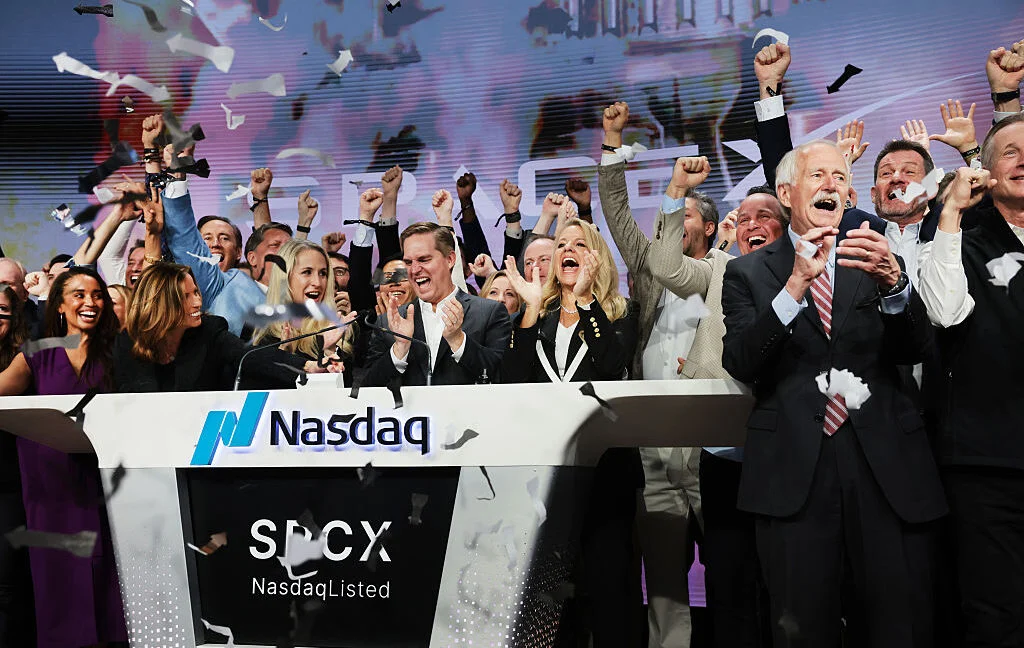
In a revelation that strikes at the intersection of private equity, national security, and the rapidly commercializing space sector, newly unsealed court documents have exposed a complex web of foreign capital flowing into SpaceX during its years as a private enterprise. Among the entities that acquired early stakes in Elon Musk’s aerospace giant were individuals and firms with direct, documented ties to the Chinese military-industrial complex and the Qatari royal family.
The records, obtained by ProPublica through a hard-fought legal battle in Delaware, pull back the curtain on a decade of secretive funding. While SpaceX has become the backbone of U.S. national security space architecture—launching high-stakes spy satellites and critical military hardware for the Pentagon—it simultaneously relied on financial intermediaries to solicit capital from overseas, including from regions where geopolitical tensions with Washington are at an all-time high.
A Complex Web: The Tomales Bay Connection
The primary conduit for these investments was Tomales Bay Capital, a firm led by financier Iqbaljit Kahlon. Kahlon, who enjoyed a proximity to SpaceX’s leadership that bordered on institutional, acted as a gatekeeper. He famously boasted in 2021 to potential Chinese investors of his ability to grant them "special access" to the company, including visits to SpaceX facilities and private audiences with its Chief Financial Officer, Bret Johnsen.
The newly unsealed ledger, which details thousands of transactions between 2018 and 2021, reveals that while the individual investments were modest—ranging from $800,000 to $40 million—they represented a significant strategic reach by foreign actors into the heart of American aerospace innovation.
Chronology of Capital: From Shadowy Funds to Trillion-Dollar Valuation
The influx of capital occurred during a critical growth phase for SpaceX, as it transitioned from a venture-backed startup to a dominant global force.
- 2017–2020: The "Bracket Capital" era. Investment firms with offices in London and Qatar, managing money tied to the Qatari royal family, funneled approximately $48 million into SpaceX.
- 2018–2021: The Tomales Bay surge. Iqbaljit Kahlon begins aggressively packaging SpaceX equity into funds, soliciting high-net-worth individuals and corporate entities across mainland China, Hong Kong, and Russia.
- 2020: A critical year for oversight. Entities linked to David Su, co-founder of the Beijing-based venture firm MPCi, inject $15 million into a SpaceX-focused fund. During this same window, Delaware LLCs like "HAL9001 Partners Fund I" emerge, backed by figures with ties to Russian oligarchic finance.
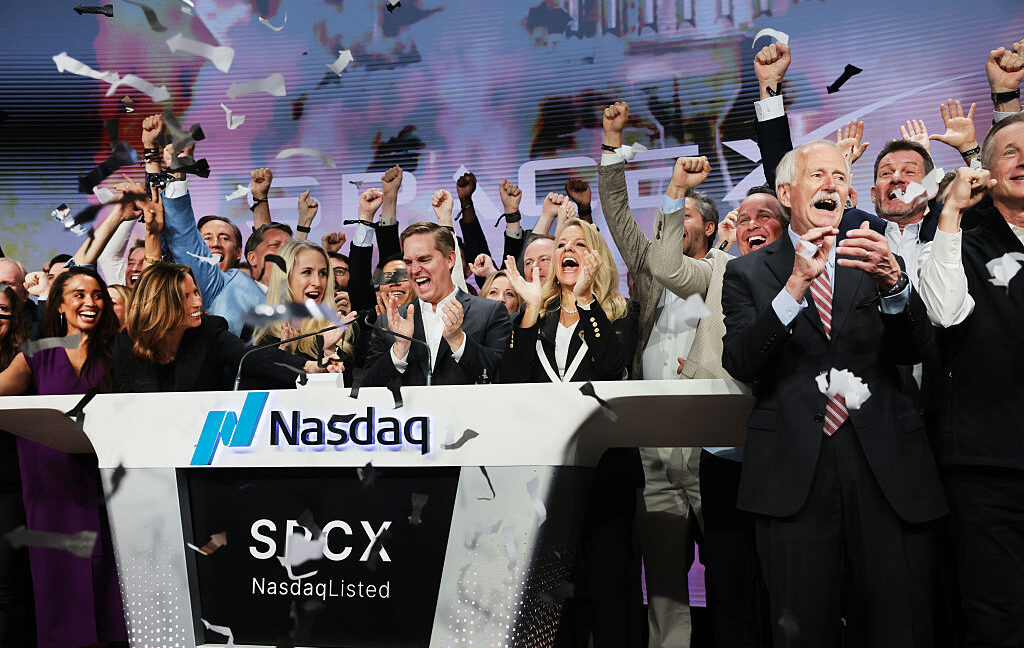
- 2025–2026: The IPO Watershed. SpaceX launches the largest initial public offering in history. As the company prepares for the move to public markets, the regulatory pressure intensifies. SpaceX formally bars investors from China and Hong Kong from participating in the IPO, citing "regulatory and compliance risks."
The Case of David Su and MPCi
Perhaps the most troubling entry on the Tomales Bay ledger is the involvement of David Su. An entity owned by Su, the co-founder of the prominent Beijing venture capital firm MPCi, invested $15 million in a SpaceX fund in 2020.
While MPCi has attempted to distance Su from his firm’s Chinese operations—characterizing him as a Singaporean citizen responsible only for "US dollar funds"—the reality of his portfolio suggests a conflict of interest. Su’s firm has been a high-profile backer of several Chinese satellite companies that are direct competitors to SpaceX.
More concerningly, at least two of the companies in the MPCi portfolio have faced severe sanctions from the U.S. Treasury Department. These firms were accused of providing support to the Russian Wagner Group and, in one instance, assisting Iranian forces in attacks against U.S. military personnel. Furthermore, the Chinese Ministry of Science and Technology has publicly identified Su’s firm as a key partner in state-backed initiatives to advance China’s aerospace capabilities.
Supporting Data: The Hidden Ledger
The ledger provides a rare quantitative look at the "offshore" strategy employed by SpaceX to mitigate domestic scrutiny. By routing these investments through the Cayman Islands or U.S.-based shell entities, the true identity of the capital source remained obscured from the public and, in many cases, from standard regulatory oversight.
The list includes:
- The Politically Connected: Notable individuals such as Indian politician Abhishek Singhvi and former U.S. Secretary of Education Betsy DeVos appear on the ledger, highlighting the eclectic and elite nature of SpaceX’s cap table.
- The Anonymous: Dozens of shell companies, such as HAL9001 Partners Fund I, exist solely as vehicles for capital. In the case of HAL9001, the incorporation papers were signed by Roman Sobachevskiy, a venture capitalist whose previous business dealings have intersected with U.S. sanctions against Russian oligarchs.
- The Qatari Link: The presence of "AM FIG Cayman Limited," with a registered address in Doha, suggests that the Qatari royal family maintained a quiet but substantial interest in the firm, further complicating the geopolitical footprint of SpaceX’s ownership.
Official Responses and Defensive Posture
In the face of these revelations, the involved parties have adopted a unified strategy of denial regarding the transfer of sensitive information.
A spokesperson for Tomales Bay Capital insisted that the investors were "passive limited partners" who received nothing more than quarterly financial valuations. Ryan Stonerock, a lawyer representing the firm, stated: "The vast majority, if not all, of the investors included on the unsealed Tomales Bay investor list are not citizens of any foreign adversary… and certainly none of them are agents of Russia or China."
MPCi issued a similar statement, asserting that Su "has not received any nonpublic information of SpaceX."
SpaceX itself has remained silent, declining to address specific questions regarding its historical vetting processes or the nature of its relationship with Tomales Bay Capital.

Implications: The National Security Paradox
The fundamental question remains: Did these investors gain access to the proprietary technology or strategic planning that makes SpaceX the envy of the global aerospace industry?
Sarah Bauerle Danzman, an Indiana University professor and expert on foreign investment, notes that the danger is not necessarily a "smoking gun" of data theft, but the potential for conflict. "If an investor has conflicts of interest with other companies in China—if they could feed that information to competitors—it could be a national security concern," Danzman explained.
The implications are far-reaching. SpaceX is no longer just a private company building rockets; it is a critical component of the U.S. defense apparatus. By allowing entities linked to foreign adversaries to hold even small percentages of equity, the company created a situation where the line between private profit and national security was permanently blurred.
Furthermore, the "offshore strategy" used to facilitate these investments points to a systemic weakness in how the U.S. government monitors the flow of capital into sensitive, dual-use industries. While SpaceX ultimately acted to ban Chinese and Hong Kong investors from its IPO, the fact that these entities were already "in the tent" for years suggests that the damage, if any, to the integrity of U.S. aerospace technology may have already been done.
As SpaceX enters its new era as a public company, the focus will likely shift toward greater transparency. However, the legacy of the Tomales Bay ledger serves as a stark reminder that in the world of high-stakes aerospace, the most dangerous assets are not just the rockets on the pad, but the hidden hands that funded their development.

 Laily UPN
 Azzam Bilal Chamdy