Raul Delapena Setiawan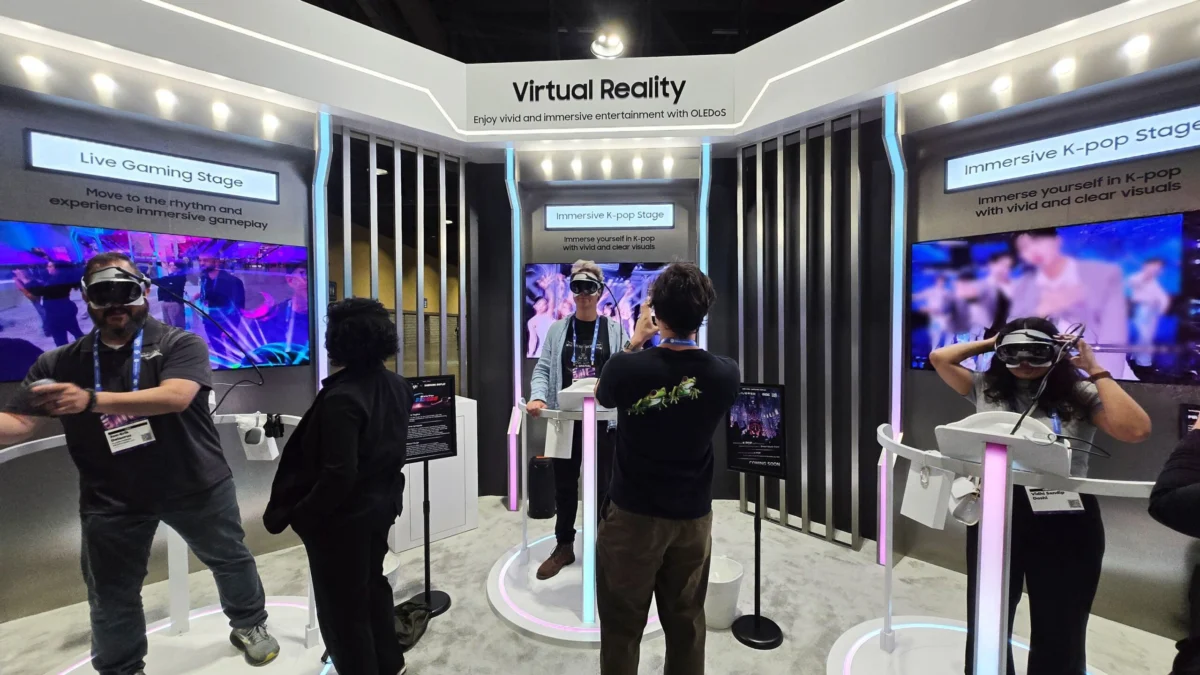
At the Augmented World Expo (AWE) 2026, the battle for the future of Extended Reality (XR) is being fought on a scale measured in mere inches. While competitors debate software ecosystems and ergonomic chassis designs, Samsung Display has effectively shifted the conversation toward the foundational physics of light and vision. By unveiling a suite of advanced RGB OLEDoS (OLED on Silicon) panels, the company is signaling that the path to truly immersive, "all-day" wearable XR—a goal that has eluded the industry for years—depends on a radical rethinking of the display stack.
The centerpiece of Samsung’s AWE showcase is a 1.3-inch RGB OLEDoS panel capable of a staggering 40,000 nits of brightness. This is not merely an iterative improvement; it is a technological leap designed to overcome the "brutal" constraints of modern XR hardware. In a field where developers are constantly fighting the laws of thermodynamics, weight, and battery efficiency, Samsung’s latest display architecture offers a glimpse into a world where high-fidelity virtual overlays can finally compete with the brilliance of the physical sun.
The Core Facts: A Shift Toward RGB OLEDoS
For years, the XR industry has grappled with the limitations of display technology. Most current high-end headsets utilize white OLED panels combined with color filters to produce images. While effective, this structure inherently loses light efficiency, requiring more power and generating more heat—the two enemies of a slim, lightweight wearable.

Samsung Display’s move to RGB OLEDoS (Red, Green, Blue OLED on Silicon) changes the calculus. By depositing the OLED material directly onto a silicon wafer and eliminating the need for a color filter, the company achieves superior light efficiency and color saturation. The result is a panel that can produce 40,000 nits without requiring an exponentially larger battery or a more aggressive cooling system.
At their "Big Dipper" installation at AWE, Samsung presented a comparative demo. In a pitch-black room, seven panels were displayed side-by-side. Only two featured the high-brightness RGB OLEDoS tech. The visual discrepancy was stark: the RGB panels rendered deep blacks and searing highlights with a level of clarity that made the standard alternatives look washed out and sluggish. It was a clear message to industry partners: if you want to build the "next" headset, this is the canvas you need.
Chronology: The Road to 40,000 Nits
The journey to this moment has been characterized by a quiet, persistent refinement of microdisplay technology.

- Early 2024: Industry speculation intensified regarding Samsung’s internal "Galaxy XR" project, with leaks suggesting that the company was prioritizing display efficiency as the key to solving the "bulkiness" problem of current headsets.
- Late 2025: Samsung officially confirmed the development of its XR platform, focusing on a multi-tier approach: premium headsets for heavy-duty mixed reality and lightweight AI glasses for daily, ambient computing.
- Early 2026: Leading up to AWE, supply chain reports indicated that Samsung Display was ramping up pilot production for RGB OLEDoS, signaling to investors that these components were nearing commercial readiness.
- June 2026 (AWE USA): The official unveiling of the 1.3-inch 40,000-nit panel and the 0.62-inch variant for smart glasses. This marked the public transition from theoretical research to prototype demonstration.
Supporting Data: Why Brightness Is the Bottleneck
The skepticism surrounding XR has always been rooted in the "awkward factor." Current devices are often front-heavy, prone to overheating, and possess limited battery life. Samsung’s engineering team has identified that the display is the primary culprit in this chain of hardware compromises.
To project a bright, clear image through the complex lenses required for AR, the light source must be exceptionally intense. If the display is dim, the optics (which naturally absorb some light) result in a murky, low-contrast image. If you boost the backlight on a standard display, you create a thermal runaway.
Samsung’s data highlights three critical advantages of their new RGB OLEDoS architecture:

- Optical Efficiency: By removing the color filter, the light path is streamlined. More of the light generated by the OLED reaches the user’s eye.
- Thermal Management: Because the panel is more efficient, it generates less heat for the same amount of brightness, allowing designers to utilize smaller, lighter, or even passive cooling solutions.
- Form Factor Freedom: A smaller display stack allows for a lower profile in the headset chassis, directly addressing the "bulky" look that has hindered consumer adoption.
The company’s 0.62-inch prototype, specifically designed for AR glasses, illustrates this best. By shrinking the panel size, Samsung enables a glasses-style form factor that can overlay navigation, real-time language translation, and weather data onto a real-world backdrop without turning the wearer into a billboard.
Official Perspectives and Industry Implications
While Samsung has been forthcoming about the technical specs of these displays, they have remained characteristically cautious regarding the business side of the announcement. During AWE, representatives emphasized that the showcase is a demonstration of potential rather than a product launch.
"Our goal is to provide the building blocks that allow our partners to dream bigger," a spokesperson noted, though they stopped short of confirming specific customers or product timelines.

The silence regarding commercial partnerships is telling. The XR market is currently a high-stakes arena featuring giants like Meta, Apple, and Google, all of whom are in a race to define the next computing platform. Samsung’s move to act as a Tier-1 supplier for these technologies suggests they are positioning themselves not just as a hardware manufacturer for their own brand, but as the essential infrastructure provider for the entire XR industry.
The Broader Vision: Beyond the Headset
Samsung’s AWE booth was not limited to OLEDoS. The company also showcased two other technologies that suggest a long-term vision for spatial computing:
- The Stretchable Display: A screen that can physically rise and deform from a flat surface. While this feels like science fiction, it points toward a future where user interfaces are not confined to rigid, rectangular planes.
- Light Field Displays: Perhaps the most intriguing component of the showcase, these displays create 3D visuals that the naked eye can perceive as having depth, entirely removing the need for a headset.
These demos suggest that Samsung is looking at the "post-screen" era. If OLEDoS is the answer for the next five years of wearable headsets, Light Field and Stretchable displays represent the next fifteen.

Implications: Can Samsung Change the XR Narrative?
The success of the XR industry has been stalled by a persistent gap between the "wow" factor of initial demos and the "why" factor of daily usage. Most consumers find current headsets to be too heavy, too isolating, or too aesthetically jarring to wear for more than a few minutes.
Samsung Display’s bet is that this is not a failure of imagination, but a failure of physics. By providing a brighter, smaller, and more efficient display, they are handing developers the keys to a more "human" form factor.
If these panels can indeed move from the laboratory to mass production, the implications are massive. A device that looks like a pair of stylish glasses but provides the clarity of a high-end monitor would fundamentally shift how we interact with information. We would move from "looking at" our devices to "looking through" them at the world.

However, the "AWE flex" comes with a caveat: technology is only one part of the equation. To truly unlock the potential of these panels, Samsung will need to see them integrated into devices that are not only comfortable but supported by a rich, intuitive software ecosystem.
As we look toward the latter half of 2026 and into 2027, the real test will be whether Samsung can scale these innovations. If they can, the days of the bulky, uncomfortable VR headset may be numbered, replaced by a generation of hardware that is, for the first time, as invisible as it is powerful. The future of XR is no longer about the software; it is about the light that hits your eye, and Samsung is clearly aiming to be the one to provide it.

 Azzam Bilal Chamdy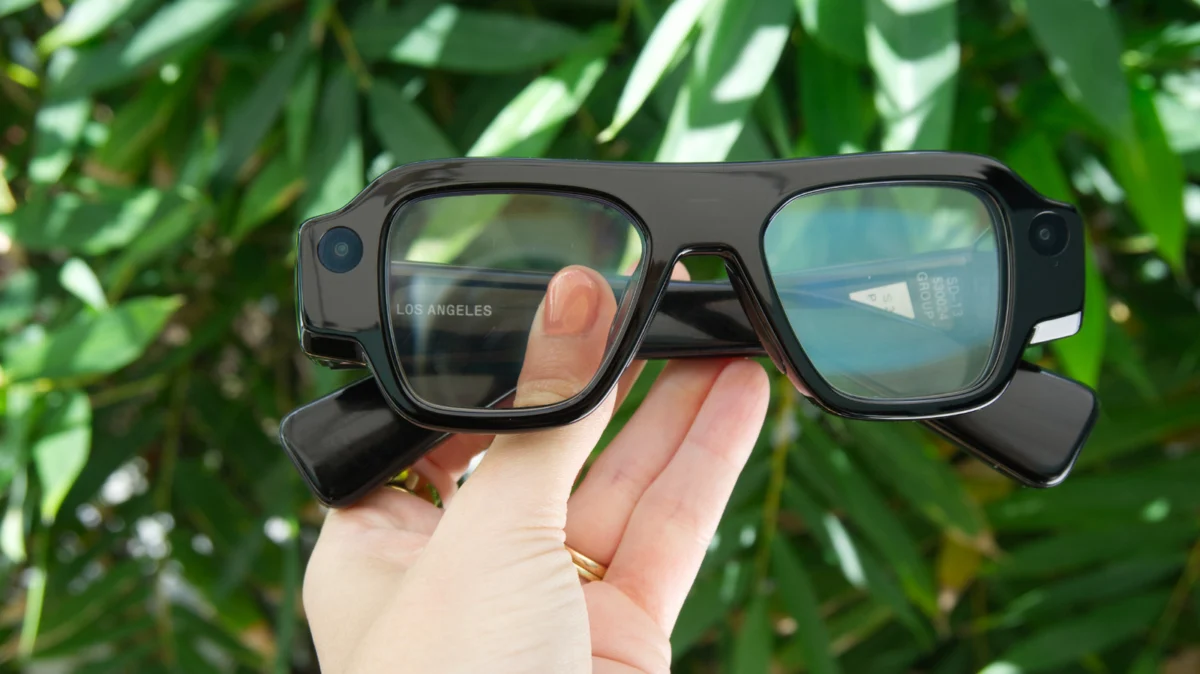
 Jia Lissa