Asro
Asro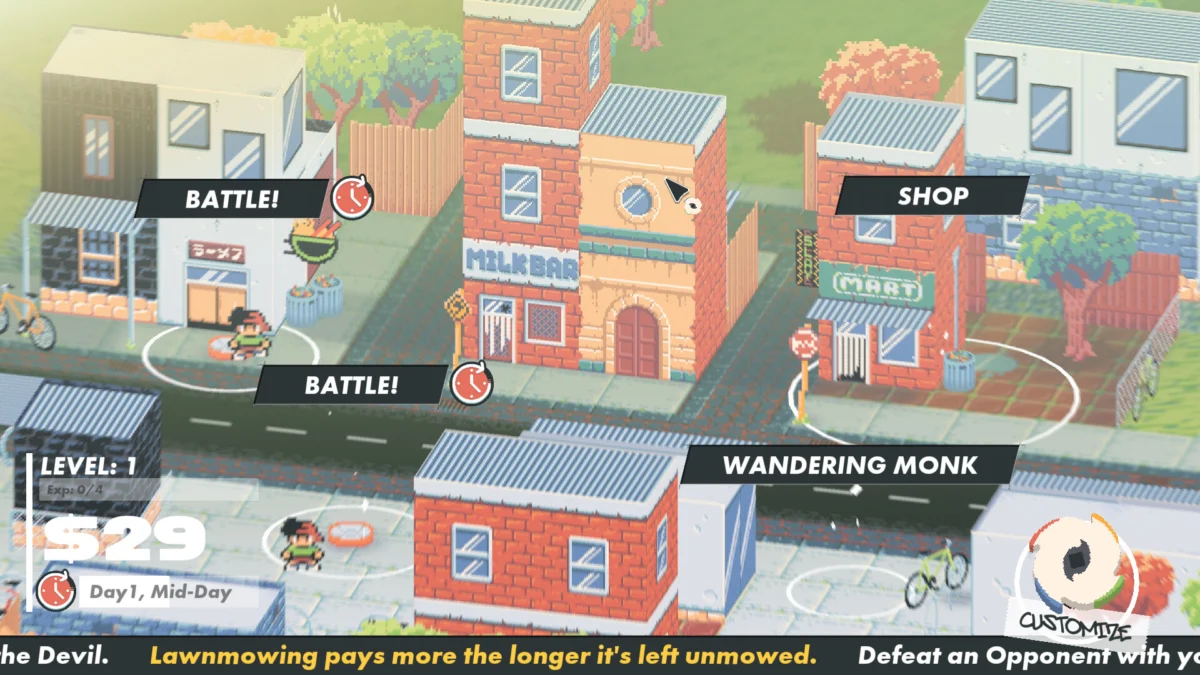
There are rare moments in the indie gaming landscape where a title immediately captures the imagination, triggering that elusive “this is my kind of game” sensation. Slayblade, the latest project from developer Oscar Brittain (Henry’s House), is one such title. By blending the high-stakes, kinetic energy of early 2000s competitive spinning-top battles with the addictive, iterative loop of a modern roguelite, Slayblade manages to carve out a niche that feels both nostalgic and refreshingly innovative. However, while the foundation is undeniably strong, the current build suggests a project that is still finding its equilibrium between raw potential and final-polish execution.
The Core Concept: A Retro-Futuristic Roguelite
At its heart, Slayblade is a love letter to the Y2K era—a time defined by Saturday morning cartoons, plastic collectible toys, and the birth of competitive arena-based hobbies. The game transports players into a stylized, miniature city where the primary currency of status is the performance of one’s customized blade.
The gameplay loop is deceptively simple yet mechanically dense. Players navigate a top-down, lo-fi world reminiscent of the PlayStation 1 era, characterized by vibrant, hand-drawn character portraits and colorful, chunky environments. The goal is to build the ultimate, tournament-ready blade by scavenging parts, earning currency through odd jobs, and challenging rival competitors in high-speed, collision-based arena battles.
A Mechanical Breakdown: Physics and Customization
The brilliance of Slayblade lies in its accessibility. The entire control scheme is mapped to the mouse, allowing for intuitive, precision movement. Battles function on a momentum-based physics engine: the combatant with higher relative speed during a collision deals damage, while the slower entity sustains it.

This dynamic creates a constant push-and-pull rhythm. Throughout the arena, players can collide with spawning boxes that provide temporary buffs, status effects, or passive modifiers. These "pick-ups" add a layer of emergent strategy; one moment you might be focusing on a speed-heavy build, and the next, you are forced to pivot your strategy as an unexpected defensive buff changes the flow of the encounter.
The customization suite is arguably the game’s most robust feature. With over 60 distinct parts available—split between top, body, and bottom components—the potential for synergy is vast. Whether you are optimizing for weight to act as an immovable object or sacrificing stability for raw kinetic energy, the game rewards experimentation. This modular design is the backbone of its roguelite structure, ensuring that no two runs feel identical.
Chronology of the Experience
For those diving into the current demo, the experience follows a distinct, albeit truncated, path:
- The Tutorial Phase: Players are introduced to the core movement mechanics and the basic principles of "spinning to win."
- The Exploration/Grind: Players engage with the game’s world, participating in side activities such as the charmingly mundane lawn-mowing minigame, which serves as a clever way to earn income for part upgrades.
- The Competition: Players test their builds against a series of increasingly difficult rivals. This includes standard matches and "illegal" high-stakes battles that carry higher risk but offer superior rewards.
- The Premature Finale: The demo concludes, often right as the player reaches the precipice of the main tournament bracket, leaving a sense of "what could have been."
Supporting Data and Technical Observations
While the mechanical loop is sound, technical analysis of the demo reveals several friction points that will be critical for the developer to address ahead of the full release.

The Camera and User Interface
One of the most immediate issues is the camera system. The game utilizes a panning mechanism that tracks the action across the map. While the artistic intent is to provide a wide-angle view of the battle, the result is frequently clunky. The camera often struggles to keep pace with rapid-fire collisions, leading to moments where the player loses track of their blade’s position—a fatal flaw in a game predicated on momentum and precision.
Tutorialization and Onboarding
The game suffers from a lack of clarity regarding its deeper systems. While the mouse-only controls are elegant, the nuances of how different parts interact with one another are left largely to the player to decipher through trial and error. For a game that relies on complex build-crafting, a more comprehensive codex or an in-game tutorial system would significantly lower the barrier to entry for newcomers.
The Tournament Disconnect
The most glaring issue is the narrative and structural pacing. The game constantly teases the “big tournament,” positioning it as the ultimate goal for the player’s progression. However, by cutting the demo off before this event, the developers inadvertently highlight the lack of a satisfying climax. Players are left with a collection of parts and a high-speed blade but no arena in which to prove their dominance.
Implications for the Genre
Slayblade represents a growing trend in the indie scene: the "niche-ification" of roguelite mechanics. By applying the "run-based" progression system to a premise as specific as spinning-top battles, Oscar Brittain is tapping into a demographic that values micro-management and build-variety over massive, sprawling open worlds.

The success of this title will depend heavily on the feedback loop between the community and the developer. If the final product can expand the tournament structure, polish the camera responsiveness, and provide a more intuitive introduction to its deeper systems, Slayblade has the potential to become a cult classic.
Looking Forward: A Path to Success
Despite the current limitations, the excitement surrounding Slayblade is palpable. The aesthetic—which hits that perfect sweet spot of Y2K nostalgia—combined with the inherently satisfying nature of its physics-based combat, gives the game a unique identity in a saturated market.
To bridge the gap between this promising demo and a successful launch, the following refinements are recommended:
- Expanded Content: The addition of more diverse arenas and a wider array of opponent archetypes would help alleviate the repetitive feeling that sets in after several runs.
- Camera Refinement: Implementing a more responsive or perhaps optional dynamic camera mode would do wonders for the game’s accessibility.
- The Tournament Payoff: Ensuring that the full game offers a multi-stage tournament arc that feels truly challenging will be vital to justifying the player’s time spent in the "grind" phases of the game.
Final Verdict
Slayblade is not yet the definitive, day-one purchase that its premise promises, but it is an exceptionally strong foundation. It is a testament to the idea that even the simplest concepts—like a spinning top hitting another spinning top—can be elevated into a compelling, modern gaming experience through the right application of roguelite design.

As it stands, Slayblade is a title that should be on every indie enthusiast’s radar. Whether it ultimately delivers on its vast potential will depend on the developer’s ability to refine the rough edges and flesh out the tournament experience. For now, we wait to see if this blade can truly cut through the competition upon its full release.



 Muslim