Dwi Wanna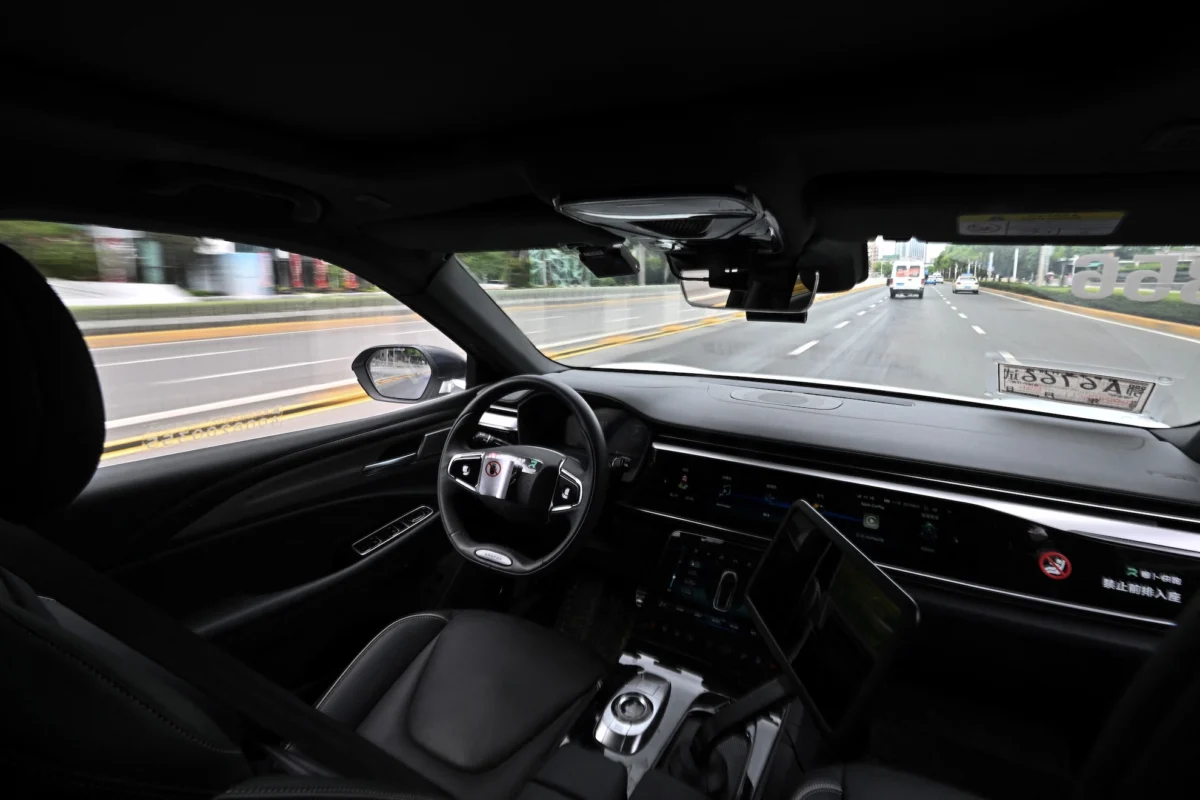
Welcome back to TechCrunch Mobility, your central hub for the most critical news and analytical insights regarding the future of global transportation. As we observe Juneteenth—a vital U.S. federal holiday marking the end of slavery—we take a moment to reflect on the progress of technological freedom and the complex, data-driven machinery powering the next generation of movement.
For over a decade, the "self-driving car race" was characterized by hyperbole, secretive testing, and a distinct lack of accountability. During the industry’s early era, capital flowed into the sector based on curated demos rather than verifiable substance. Today, that fog is finally lifting as transparency and rigorous benchmarking begin to take center stage.
The New Frontier: Quantifying Autonomy
For years, observers were left to wonder: Who is actually winning? Without a standardized metric, the debate remained purely speculative. The advisory and research startup Autnmy AI is now attempting to resolve this ambiguity. By leveraging a generative AI platform, they have launched the Road to Autonomy Index, a system that provides real-time rankings of autonomous vehicle (AV) companies.
Rather than relying on opaque marketing claims, the Index aggregates data from global public databases, including SEC filings, state and federal reports, and public exchanges. Every 12 hours, the system updates its rankings across four distinct categories: robotaxis, autonomous licensing companies, autonomous trucking, and delivery robotics.
Transparency in the Age of Algorithms
A critical concern in the era of generative AI is data provenance. Rob Grant, co-founder of Autnmy AI, emphasizes that their platform avoids "scraping" in the traditional, unethical sense. Instead, the index relies on publicly available information or data licensed through formal agreements. This commitment to verifiable data sources is essential for establishing the credibility required to hold multi-billion-dollar companies accountable.

The initial results of the Index have already challenged industry assumptions. A notable takeaway is the rapid advancement of Chinese firms. As of the latest update, the robotaxi leader is not a Silicon Valley titan, but China’s Baidu with its Apollo Go program. While Waymo holds a strong secondary position, the top five is rounded out by fellow Chinese players Pony.ai and WeRide, with Tesla currently sitting in the fifth spot.
Chronology of an Expanding Fleet: The Texas Snapshot
Monitoring the growth of these fleets is crucial for understanding the transition from experimental testing to commercial viability. Recent data from the Texas automated vehicle tracker reveals that the state remains a critical battleground for major players.
May 28 to Present: A Surge in Registered Units
The numbers reflect a concerted push by industry leaders to scale their operations in the Lone Star State:
- Waymo: Now holds 620 registered autonomous vehicles, up from 577 in late May (a 7.5% increase).
- Tesla: Has seen the most aggressive growth, with 69 registered vehicles, a 64% jump from the 42 reported last month.
- Zoox: Now registers 43 vehicles, up from 35.
It is vital, however, to distinguish between registration and commercial operation. For instance, while Zoox continues to expand its physical footprint, it remains restricted by federal regulations. The company still requires a specific exemption from federal authorities to charge for rides, keeping its current fleet limited to non-commercial testing. Meanwhile, other players like Avride, Nuro, and MOIA (a Volkswagen subsidiary) have maintained their fleets at 317, 47, and 12 vehicles, respectively.
Strategic Shifts and Corporate Alliances
The landscape of the autonomous industry is undergoing a period of intense consolidation and partnership-building.

Major Industry Deals
- Logistics Automation: Cargofy has secured $11 million in a Series A round, signaling continued investor interest in AI-driven freight optimization.
- Global Market Expansion: Singapore’s Carro has acquired the Australian platform CarPlace, marking its entry into its eighth global market.
- Freight Partnerships: Gatik has entered into a multi-year agreement with PepsiCo. While financial terms remain private, the deployment of driverless trucks across Arkansas, Arizona, and Texas highlights the practical, short-haul applications where AV technology is finding its most immediate success.
- Battery Innovation: QuantumScape is partnering with Honda R&D to accelerate the development of solid-state battery technology, a prerequisite for longer-range, safer electric autonomous vehicles.
- Robotaxi Alliances: Stellantis, Wayve, and Uber have announced a joint effort to develop and deploy next-generation driverless robotaxis, showing that legacy automakers are increasingly reliant on software-first startups.
- Data Infrastructure: The unglamorous but essential work of labeling robot training data has attracted significant capital, with XDOF raising $70 million from blue-chip investors including a16z and Thrive Capital.
Real-World Incidents and Official Responses
The reality of autonomous driving is often tested on public roads, where hardware meets human unpredictability.
Recently, footage surfaced from Dallas showing an Avride robotaxi being struck by a human-driven vehicle that had run a stop sign. While no injuries were reported, the incident underscores the ongoing challenge of "mixed-traffic" environments. Avride representatives confirmed that they are reviewing the data to refine their processes, though they declined to provide granular details on the safety operator’s performance during the collision.
The "Workaround" Culture
Technology is only as strong as its safety monitors. In China, reports have emerged of Tesla owners utilizing "tiny plastic heads"—3D-printed or fashioned objects—to circumvent the vehicle’s driver-distraction monitoring system. Such workarounds expose the ongoing "cat-and-mouse" game between software safeguards and user behavior.
Similarly, in San Francisco, confusion erupted over a Tesla spotted with an "authorized limousine" permit. SFO officials were quick to clarify that while the vehicle is permitted for traditional human-driven limousine services, it has not been granted any authorization for autonomous operations at the airport.
Implications for the Future
The industry is reaching a critical inflection point where "testing" is giving way to "operation."

The Shift Toward Operator Status
Mobileye, previously known primarily as a hardware and software supplier, is now pivotally positioning itself as a robotaxi operator. CEO Amnon Shashua’s long-standing thesis—that the path to passenger autonomy must be paved through robotaxi services—is now being echoed by other major players. Uber, for instance, is moving full steam ahead with plans to launch a premium robotaxi service in Houston by 2027, leveraging its partnerships with Lucid and Nuro.
The Challenges of Scaling
However, the road to full deployment is far from smooth. Waymo recently issued a recall for nearly 4,000 of its robotaxis following reports of the vehicles entering closed highway construction zones. While the company has pulled its fleet from freeways to address the software glitch, the fact that the fix is still "under development" highlights the technical volatility that remains inherent in these systems.
Final Thoughts
As we move through 2026, the era of "demo-only" autonomy is effectively over. We are entering a phase of rigorous, data-backed competition. Whether it is through the analytical lens of the Autnmy AI Index or the operational realities of massive fleet recalls and municipal permit negotiations, one thing is clear: the future of transportation is being written in real-time, in public, and under the watchful eye of a global regulatory framework.
For those of us tracking these developments, the next twelve months will be pivotal. As companies like Mobileye, Uber, and Waymo continue to test the limits of their systems, the metrics—not the marketing—will ultimately determine who captures the future of mobility.
Do you have a tip for the TechCrunch Mobility team? Reach out to Kirsten Korosec at [email protected] or contact us via Signal at kkorosec.07. For logistics and freight-related inquiries, contact Sean O’Kane at [email protected].

 Asep Darmawan
 Nana Muazin