Siti Muinah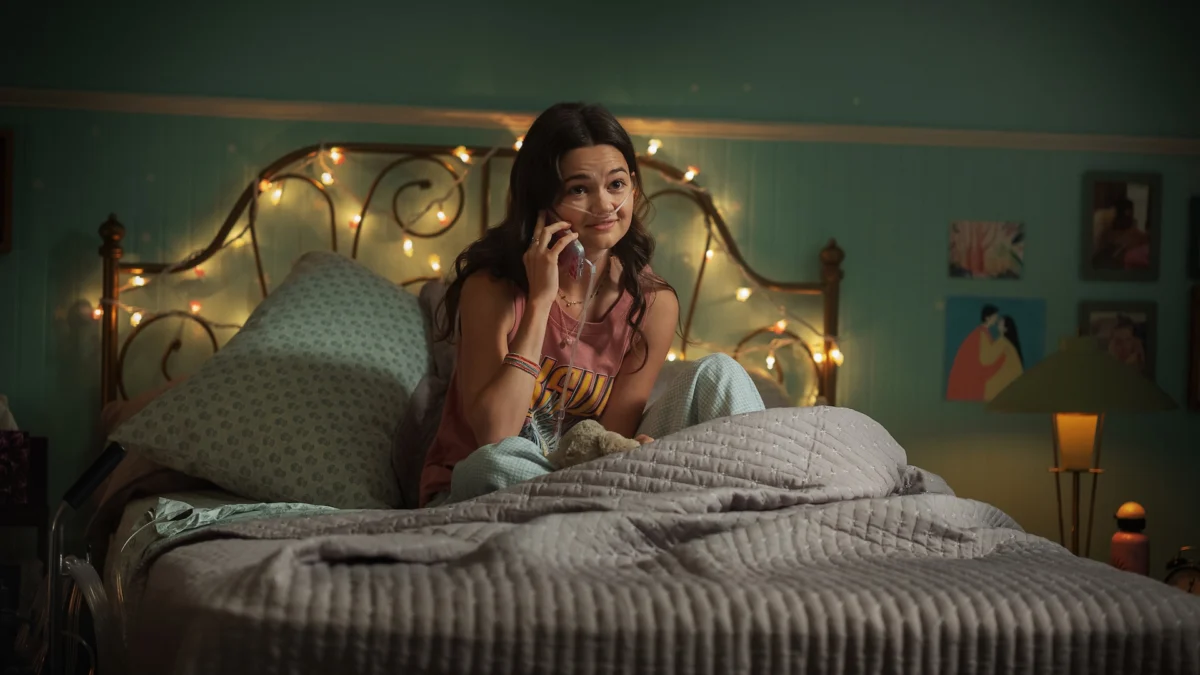
By Nyla Gilbert | June 22, 2026
In the landscape of modern romantic dramas, few films manage to balance the jagged, unpolished edges of bereavement with the effervescent hope of new beginnings. Netflix’s latest release, Voicemails for Isabelle, achieves this delicate equilibrium. It is a film that refuses to treat grief as a plot point to be resolved, but rather as a permanent, evolving companion. Starring Zoey Deutch and Nick Robinson, the film has quickly become a cultural touchstone for its raw, vulnerable exploration of how we communicate with the ghosts we leave behind.
The Core Narrative: A Connection Beyond the Veil
At the heart of the film is Jill (Zoey Deutch), a San Francisco-based prep cook with aspirations of culinary independence. Her world is anchored by her younger sister, Isabelle (Ciara Bravo), who lives in Austin, Texas. Due to a severe, chronic struggle with cystic fibrosis, Isabelle is confined to her home, making Jill her primary tether to the outside world. Their relationship is depicted through a series of intimate, often chaotic, and humorous voicemails—a lifeline that keeps both women tethered to sanity.
The narrative pivot occurs when Isabelle passes away. In her profound isolation, Jill continues to call her sister’s old phone number, leaving audio diaries of her daily struggles, her professional failures, and her quiet moments of despair. Unbeknownst to her, the phone number has been reassigned to Wes (Nick Robinson), a pragmatic Austin real estate agent. What begins as a digital intrusion evolves into a complex, accidental romance that challenges both characters to confront their pasts.
Chronology of a Healing Journey
The structure of Voicemails for Isabelle mirrors the non-linear nature of the grieving process. Director and screenwriter Leah McKendrick meticulously crafts a timeline that allows the audience to understand the depth of the sisters’ bond before the tragedy occurs.
- The Foundation (Pre-Loss): Through flashbacks and early scenes, we witness the symbiotic relationship between Jill and Isabelle. Isabelle is not presented as a tragic prop; she is vibrant, witty, and fiercely independent despite her physical limitations. These scenes establish her as a fully realized individual, ensuring that her eventual absence is felt as a tangible void.
- The Digital Ghost: Following Isabelle’s death, the film shifts into a melancholic rhythm. Jill’s continued voicemails serve as a narrative device that allows the viewer to bypass traditional exposition. Instead, we hear the unfiltered stream of consciousness of a grieving sister.
- The Intersection: The introduction of Wes creates a friction point. Initially, the confusion surrounding the voicemails provides a comedic, almost "screwball" relief. However, the film quickly pivots into a grounded study of how two wounded people can find solace in one another without forcing a "cure" for their respective grief.
- The Synthesis: The climax of the film does not involve a grand, cinematic revelation. Instead, it centers on the realization that healing is not about forgetting or moving on, but about integrating the memory of the lost into the architecture of one’s future.
The Creative Genesis: From Real-Life Voicemails to Screen
The film’s authenticity is no accident. Leah McKendrick, the mastermind behind the project, drew heavily from her personal history. As she pursued her writing career in Los Angeles while her sister, Olivia, remained in New York, the two relied on long, meandering voicemails to bridge the distance created by time zones and busy schedules.
"The voicemails were my anchor during the darkest chapters of my life," McKendrick noted in interviews. While her sister is alive and well, the practice of speaking into a void provided a template for the film. By shifting the premise to a terminal loss, McKendrick transforms a personal habit of connection into a masterful storytelling tool. She forces the audience to confront the reality that, in the digital age, our voices often outlive our presence.
Supporting Data: Why This Story Resonates
Cultural analysts have noted that Voicemails for Isabelle arrives at a time when audiences are increasingly seeking "soft" media—content that prioritizes emotional intelligence and internal growth over external conflict.
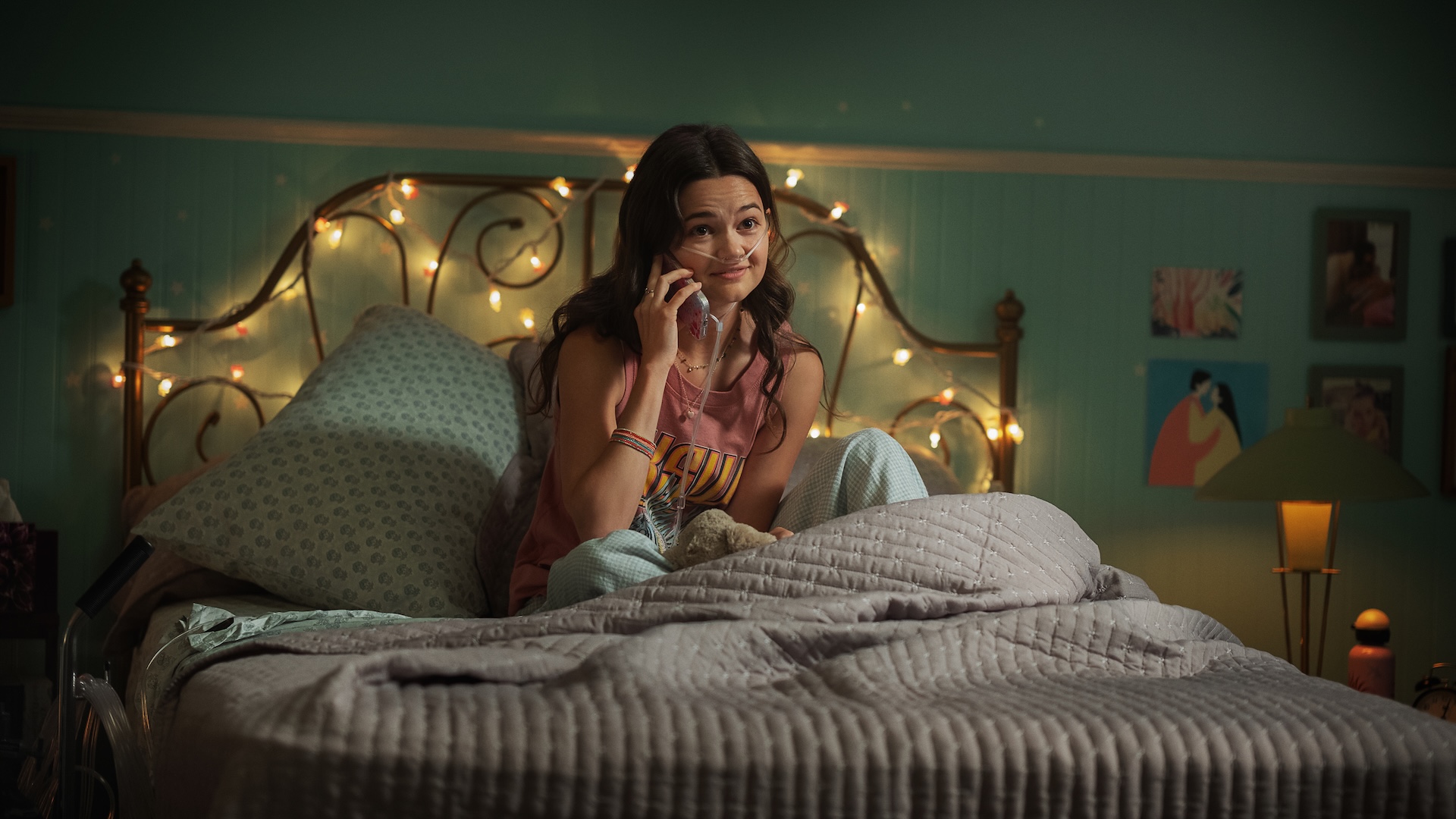
- The "Vlog" Aesthetic: Critics have highlighted the film’s unique visual language. Many sequences, particularly those featuring Jill talking to her phone, mimic the intimacy of modern vlogging. This technique breaks the fourth wall, making the viewer feel like a confidant rather than a passive observer.
- The Chemistry of Vulnerability: The performances of Deutch and Robinson are being lauded for their restraint. Rather than relying on high-octane drama, the chemistry is built on small, "micro-moments"—a shared look, a hesitant silence, or the act of cooking a dish that triggers a memory of a lost parent.
- The Reality of Grief: By depicting grief as non-linear, the film avoids the tropes of the "grief-stricken hero" who suddenly finds happiness. Wes, for instance, carries his own loss—the death of his mother—in a way that is subtle but persistent. His reluctance to dwell on his past makes his connection with Jill even more poignant when he finally shares a memory of his mother through a recipe.
Official Perspectives and Critical Reception
The film has garnered significant praise for its refusal to treat the romance as a "fix" for Jill’s grief. In a recent press release, the production team emphasized that the relationship between Jill and Wes is a parallel journey, not a hierarchy of healing.
"We wanted to show that you don’t have to be ‘fixed’ to be worthy of love," noted lead actress Zoey Deutch. "Jill and Wes are both broken in their own ways, and their love comes from an acknowledgement of those cracks, not an attempt to glue them shut."
Critics have pointed to the film’s nuanced handling of chronic illness as well. Isabelle’s character is never defined solely by her cystic fibrosis; she is defined by her humor, her cynicism, and her role as a sounding board. This humanization ensures that her death is felt as a loss of a person, rather than a loss of a medical narrative.
Implications: The Legacy of Our Digital Footprints
Perhaps the most compelling aspect of Voicemails for Isabelle is its implication regarding our digital legacies. In an era where we leave behind thousands of texts, emails, and voicemails, the film asks: What happens to the digital spaces we occupy when we are gone?
The film posits that these digital artifacts are not merely data, but vessels of human experience. When Jill continues to call Isabelle, she is not merely talking to a phone; she is engaging in a ritual of remembrance. The fact that a stranger (Wes) ends up on the other end of that line creates a fascinating ethical and emotional tension. It forces the audience to consider the sanctity of our digital memories and the ways in which we, as a society, might learn to respect the "grief-spaces" of others.
Conclusion: A Heartfelt Letter to Healing
Ultimately, Voicemails for Isabelle transcends the boundaries of the romantic comedy-drama genre. It is a meditation on the persistence of love. By the time the credits roll, the audience is left with a profound, if melancholic, realization: the people we lose do not disappear. They continue to shape us through the echoes of their advice, the remnants of their humor, and the lessons they taught us about how to endure.
The film suggests that the "voicemails" of our lives—those little pieces of ourselves we leave for others—never truly expire. They are simply waiting to be heard, even if by someone we never expected. Voicemails for Isabelle is, at its core, a gentle reminder that while grief may never leave us, it can be carried with grace, transforming from a heavy burden into a quiet, enduring warmth.
Voicemails for Isabelle is currently available for streaming on Netflix.


 Muslim