Rifan Muazin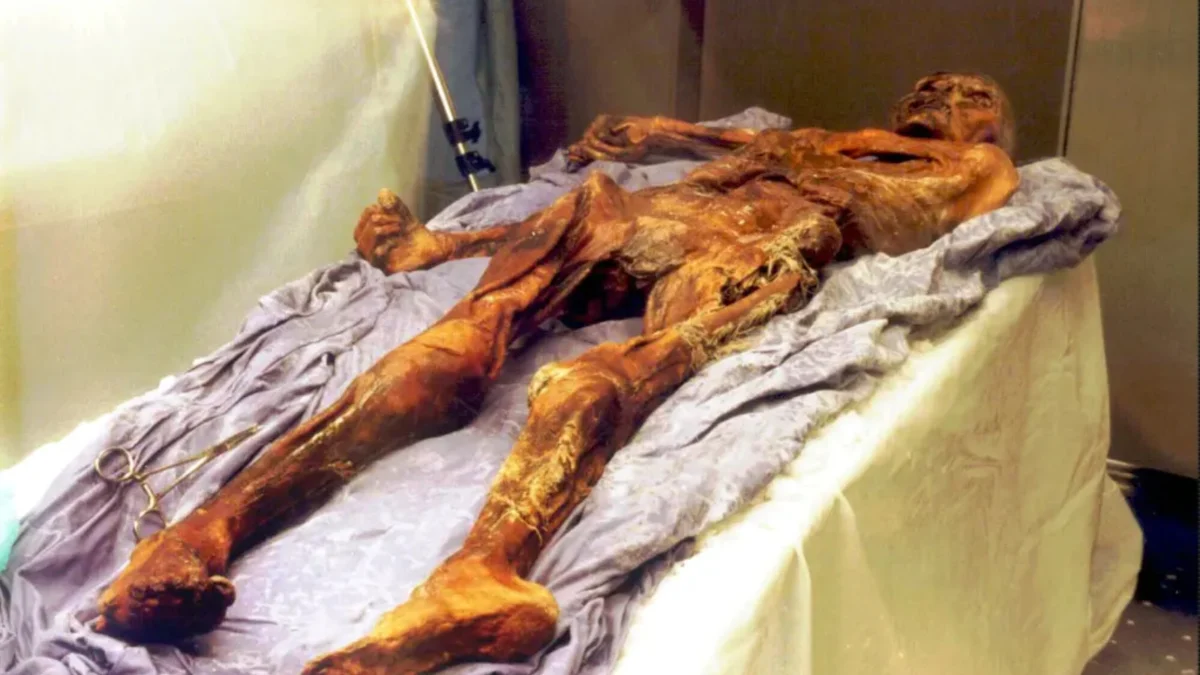
More than three decades after his dramatic discovery in the thawing glaciers of the Ötztal Alps, Ötzi the Iceman continues to challenge our understanding of prehistoric life. While he is famously known as the best-preserved copper-age mummy in history, recent scientific breakthroughs have shifted the narrative from viewing him as a static archaeological relic to recognizing him as a vibrant, albeit frozen, biological archive. Researchers at the South Tyrol Museum of Archaeology in Bolzano, Italy, have announced the discovery of “signs of life” within the 5,300-year-old corpse, identifying ancient, cold-adapted yeasts and unique bacterial traces that have survived since the Chalcolithic period.
The Main Facts: A Living Microbiome
The discovery centers on the analysis of Ötzi’s gut microbiome—a complex ecosystem of microorganisms that once resided within his digestive tract. By employing advanced metagenomic sequencing, scientists have identified specific strains of yeast and bacteria that deviate significantly from the microbial profile of the modern human.
These microorganisms, having been encased in ice shortly after Ötzi’s death around 3300 BC, remained in a state of suspended animation. The findings reveal that these microbes are not mere contaminants introduced by the environment; rather, they are "cold-adapted" survivors. Some of these biological markers appear to have originated from Ötzi’s own body during his lifetime, providing a direct window into the diet, health, and physiological state of a man who lived long before the construction of the Great Pyramids of Giza.
Chronology of a Scientific Odyssey
To understand the magnitude of this discovery, one must look at the timeline of Ötzi’s journey into the modern scientific spotlight:
- September 19, 1991: Two German hikers, Erika and Helmut Simon, stumble upon a body protruding from the ice at the Tisenjoch pass in the Ötztal Alps, near the border between Austria and Italy. Initially mistaken for a mountaineer who had perished in the 20th century, the discovery would soon be revealed as an archaeological find of the millennium.
- 1992–2000: Initial forensic investigations establish that the "Iceman" lived approximately 5,300 years ago. Scientists determine he died from an arrow wound to the shoulder, confirming a violent end.
- 2010–2015: Advances in DNA sequencing allow researchers to map Ötzi’s full genome, revealing insights into his physical appearance—brown eyes, dark hair, and a genetic predisposition for cardiovascular disease.
- 2026 (June): Researchers successfully cultivate ancient yeast strains harvested from the mummy’s belongings. In a move that bridged the gap between history and gastronomy, scientists used the yeast to bake a loaf of sourdough bread, which was described as surprisingly palatable.
- Late June 2026: The announcement of living microbial traces inside his gut microbiome marks the current frontier of Ötzi research, proving that his biological legacy extends far beyond his bones and skin.
Supporting Data: The Biological Blueprint
The significance of the recent findings lies in the rarity of the preservation. Unlike traditional mummies found in arid climates, which undergo significant dehydration and chemical decomposition, Ötzi was "flash-frozen" in a glacier. This environment acted as a natural deep-freeze, preserving not just his physical tissues but the microbial communities that were essential to his survival.
The Yeast Connection
The yeast identified in the study belongs to a class of microorganisms capable of surviving extreme alpine conditions. Study co-author Frank Maixner, a leading researcher at Eurac Research, has noted that these yeasts have "accompanied Ötzi on his long journey through the millennia." The successful cultivation of this yeast—previously used to bake bread—proves that these organisms retained their metabolic potential despite five millennia of dormancy.
Bacterial Signatures
The bacterial traces discovered in his intestines provide evidence of a fiber-rich, high-protein diet consistent with a hunter-gatherer lifestyle supplemented by early agricultural practices. Researchers have identified markers associated with the breakdown of complex carbohydrates, suggesting that Ötzi’s gut was perfectly adapted to the rugged, high-altitude terrain he traversed. Crucially, these strains are absent in modern human intestines, highlighting how much our own microbiomes have shifted in response to industrialization and dietary changes over the last five millennia.
Official Responses and Peer Review
The international scientific community has reacted with a mix of awe and cautious optimism. Dr. Maixner and his team have emphasized that while these microbes are ancient, they provide a "baseline" for human biology.
"We are essentially looking at the ‘original’ human microbiome before the advent of modern antibiotics, processed foods, and global migration," says one anonymous contributor to the study. "It is a snapshot of the human condition in its most primordial, unadulterated state."

The South Tyrol Museum of Archaeology has utilized these findings to bolster their ongoing preservation efforts. By maintaining the mummy at a precise temperature of -6 degrees Celsius (21 degrees Fahrenheit) and a humidity level of 98%, the museum ensures that the delicate balance of these ancient microbes remains stable. The museum curators have expressed that the discovery is a testament to the "infinite utility" of the Iceman as a scientific subject.
Implications: Why It Matters
The discovery of "life" within a 5,300-year-old mummy has profound implications for several fields of study:
1. Evolutionary Biology and Medicine
By comparing Ötzi’s microbiome to modern samples, scientists can better understand the "disappearing microbiome" phenomenon. Many experts believe that modern humans have lost significant microbial diversity, which may be linked to the rise of autoimmune diseases and metabolic disorders. Ötzi serves as a "control group" for human health, offering a look at what the human gut looked like before the Neolithic Revolution fully transformed our biology.
2. Astrobiology and Extremophiles
The ability of these bacteria to survive for thousands of years in ice has caught the attention of astrobiologists. If life can remain viable within a human host frozen in a glacier for 5,000 years, the possibility of finding dormant life forms on Mars or the icy moons of Jupiter—such as Europa or Enceladus—becomes more plausible. Ötzi is, in effect, a terrestrial model for the search for extraterrestrial life.
3. Historical Re-contextualization
The realization that Ötzi is not just a corpse, but a living biological laboratory, forces us to re-evaluate our ethical approach to ancient remains. Every time researchers sample the mummy, they are potentially disrupting an ecosystem that has existed since the Bronze Age. This discovery sets a new standard for non-invasive analysis, ensuring that future studies prioritize the preservation of this unique biological time capsule.
Looking Forward: The Secrets Yet to Be Unlocked
As we look beyond 2026, the potential for further discovery remains high. Researchers are currently exploring whether the bacterial DNA can be used to synthesize new types of antibiotics or enzymes that could have modern medical applications.
Furthermore, the persistent nature of the microbes suggests that Ötzi still has much to tell us about the climate of the Alps at the time of his death. Changes in the microbial population over the course of the glacier’s history may act as a proxy for environmental shifts, providing a new dimension to our understanding of climate history.
More than 30 years after his discovery, Ötzi the Iceman continues to defy the finality of death. He remains the world’s most enduring link to our ancestors, a man who, in his own way, is still very much alive—at least in the eyes of the scientists who continue to listen to the microscopic stories he has carried through the ice. As research progresses, we are reminded that history is rarely dead; it is simply waiting for the right technology to wake it up.


 Pevita Pearce
 Lina Hope