Evan Lee Salim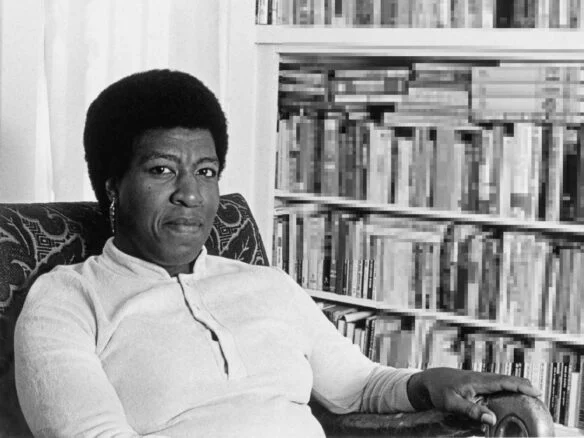
The publishing industry, once considered a bastion of intellectual debate, is currently navigating a period of profound volatility. From the rise of "sensitivity readers" and the fear of digital "cancel culture" to the celebration of genre legends and the intersection of science fiction with real-world material science, the literary world is undergoing a tectonic shift. As scholars and authors grapple with these changes, it is clear that the mechanisms by which we curate, consume, and preserve our stories are being rewritten in real-time.
The Rise of the Sensitivity Reader: Navigating the "Sensitivity Era"
The modern publishing landscape has seen a surge in the use of sensitivity readers—a trend that began to coalesce around 2016. What started as a niche practice—notably when author Jodi Picoult engaged specialists to ensure an authentic portrayal of a Black nurse in her novel Small Great Things—has since evolved into a systemic fixture.
Early adopters were often praised for their efforts, with publications like The Guardian and Current Affairs framing the practice as a necessary step toward an "enlightened" industry. However, the paradigm has shifted. Today, the practice has moved from occasional consultation to mandatory policy. Some imprints, such as Harlequin, have integrated sensitivity readers into their permanent staff. Others, like the indie publisher Riptide, have instituted rigorous requirements, mandating that any author writing outside their own identity must have their manuscripts vetted by multiple sensitivity readers. In children’s publishing, this process has become so pervasive that it is now essentially a routine component of the editorial workflow.
The Critique of the "Sensitivity Era"
In his recent study, That Book Is Dangerous! How Moral Panic, Social Media, and the Culture Wars Are Remaking Publishing, scholar Adam Szetela offers a searing critique of this development. Based on anonymous interviews with dozens of industry insiders—including authors, agents, and executives at the "Big Five" publishing houses—Szetela posits that the rise of sensitivity readers is driven primarily by corporate anxiety.
Publishing executives, he argues, are paralyzed by the fear that a book on their list might trigger an internet-based "outrage cycle." Szetela warns that this "Sensitivity Era" has had a counterintuitive, negative effect on literature. By prioritizing racial essentialism and rigid identity-based gatekeeping, the industry is losing the ability to craft nuanced characters who embody the complexities of American life across varying class, educational, and cultural backgrounds.
A Chronology of Digital Outrage
The impact of social media on the book world cannot be overstated. Since 2019, the industry has witnessed a series of "degradation ceremonies" where authors find their work—and their reputations—under siege before their books even reach the shelves.

- 2019: The Blood Heir Controversy: Amélie Wen Zhao’s debut novel became the target of a massive social-media campaign. The primary grievance centered on jacket copy that suggested a world where "oppression is blind to skin color." Following a public outcry, which included high-profile criticism from fellow YA authors, Zhao issued a public apology, and her publisher delayed the release to facilitate significant revisions.
- 2019: The A Place for Wolves Cancellation: Shortly after the Zhao incident, author Kosoko Jackson faced his own firestorm. Following criticism on Twitter and Goodreads regarding his portrayal of a villainous Albanian Muslim character during the Kosovo War, the book was pulled entirely.
- 2025: The Sparrow and Vine Withdrawal: The cycle continued last year when Sophie Lark’s romance novel was withdrawn by its publisher. Readers on Goodreads were incensed by a character who displayed rudeness toward farm workers and expressed political views deemed unacceptable. The nuance of the author’s intent—creating a "flawed character" meant to be viewed with skepticism—was lost in a digital climate where literary analysis is frequently reduced to keyword policing.
Insights from the Literary Elite: A Q&A with Ruth Ozeki
While the industry struggles with its internal policing, authors like Ruth Ozeki continue to reflect on the nature of reading and the physical sanctity of the book. In a recent New York Times profile accompanying her new collection, The Typing Lady, Ozeki discussed her evolution as a reader.
From her childhood, where she attempted to consume dense, adult texts like Norman Mailer’s Ancient Evenings—only to be surprised by its "hallucinatory" content—to her modern preference for audiobooks, Ozeki highlights the intimate relationship between the reader and the text. Her reverence for the tactile experience of reading is best captured by her devotion to her Hermes 3000 typewriter, a tool she bought specifically for the character in her latest work. Ozeki also touched on the bittersweet nature of the book trade, noting the "book-shaming" that occurs when one attempts to sell a beloved collection to a discerning used bookstore buyer, only to have most of the titles rejected.
Legacy and Impact: Celebrating Octavia Butler
June 22 marked the birthday of Octavia Butler (1947–2006), a luminary whose influence on science fiction remains unparalleled. Butler’s work is a masterclass in biological inquiry, social commentary, and human resilience. As contributor Paul Weimer notes, Butler’s ability to force readers into uncomfortable, transformative spaces is her greatest strength.
Her short story "Bloodchild," which explores the parasitic nature of alien breeding cycles, remains as visceral and "traumatizing" today as it was upon its release in the mid-80s. Yet, it is this very ability to provoke that solidified her status as one of the greatest writers of the 20th century. Her Parable series remains alarmingly relevant to modern societal anxieties, while "Speech Sounds" demonstrates her unparalleled skill in worldbuilding within a short-story format. Butler’s legacy serves as a reminder that the best literature does not merely reflect our comfort zones; it challenges, dissects, and ultimately expands them.
Science Fiction Meets Reality: The "Ultra-Black" Innovation
In a fascinating convergence of fiction and reality, the "ultra-black" ship from Douglas Adams’ The Hitch-hiker’s Guide to the Galaxy—a vessel so dark that light seemingly falls into it—has moved closer to reality.
Researchers in Shanghai have developed a new industrial coating based on carbon nanotubes that absorbs 99.9% of incident light. Published in the journal Matter & Light, this development represents a significant leap in material science. While industrial in its application, the innovation echoes the thematic concerns of speculative fiction, where the boundaries between the impossible and the achievable are constantly being redrawn.

Looking Forward: Technology and Storytelling
The industry continues to look toward the intersection of technology and narrative. On October 23, audiences will see the cinematic adaptation of Kazuo Ishiguro’s Klara and the Sun. Directed by Taika Waititi and starring Jenna Ortega, the film explores the role of an "Artificial Friend" in a dystopian landscape. The story promises to address themes of loyalty, loss, and the nature of the human spirit—a fitting counterpoint to the current discourse on the "Sensitivity Era."
Implications for the Future of Publishing
The current climate presents a paradox. While technological advancements allow for more creative expression and distribution, the sociopolitical pressures within the industry threaten to stifle the very voices they claim to protect. The reliance on sensitivity readers and the susceptibility to digital moral panics suggest a publishing environment that is currently risk-averse.
However, the enduring legacy of authors like Octavia Butler and the continued demand for deep, complex narratives—such as those explored by Ruth Ozeki—indicate that the appetite for challenging, nuanced literature remains strong. As the industry moves forward, the question remains: will publishers continue to prioritize the mitigation of digital risk, or will they return to the fundamental mission of literature—the bold, unvarnished exploration of the human condition?
For now, the battle over the written word remains, much like the pages of a book, a place where history is being written in real-time, one chapter of uncertainty at a time.

 Laily UPN
 Iffa Jayyana