Jia Lissa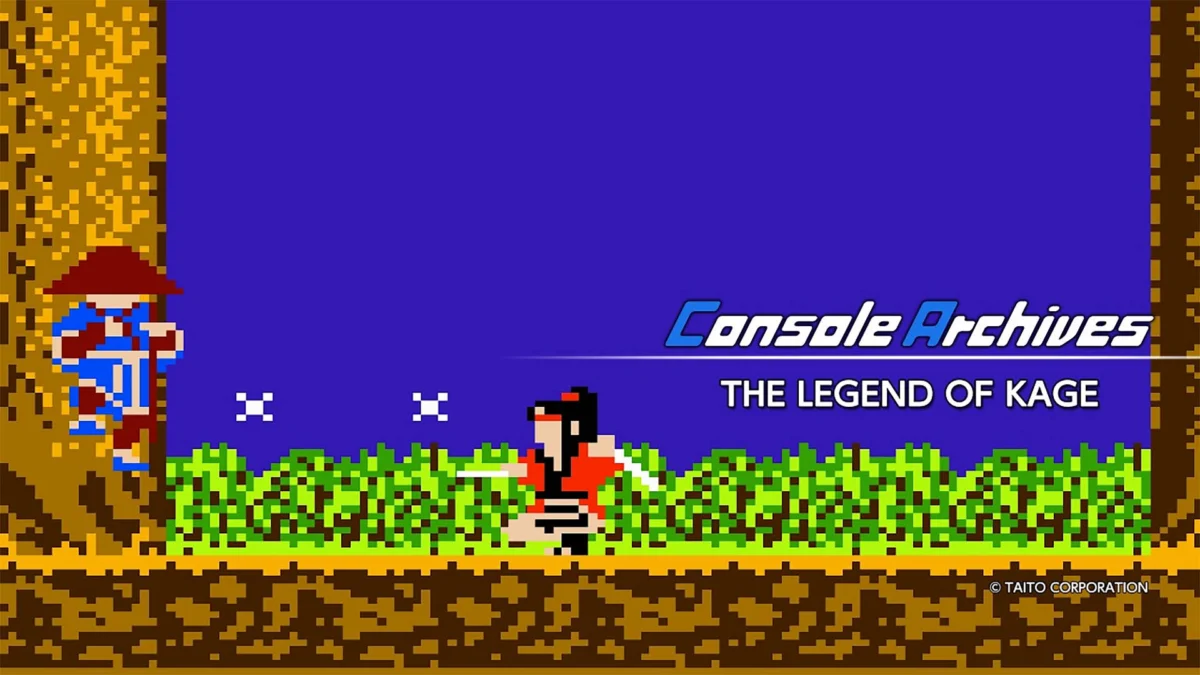
In a move that continues its ongoing mission to preserve the golden age of electronic entertainment, Hamster Corporation has officially announced the latest addition to its Console Archives series: the 1986 action-platforming cult classic, The Legend of Kage. Developed originally by the legendary Taito Corporation, this high-octane ninja odyssey is scheduled to arrive on the Nintendo Switch 2 and PlayStation 5 on June 18th, offering a pristine, faithful emulation for both nostalgic veterans and a new generation of players.
The Core Mission: Rescuing Kirihime
The Legend of Kage is a quintessential product of the 1980s arcade and home console aesthetic, emphasizing blistering speed, verticality, and an unforgiving difficulty curve. The narrative is as straightforward as it is urgent: players step into the tabi boots of "Kage," an Iga ninja tasked with the perilous mission of rescuing "Kirihime," a princess kidnapped by the sinister forces of the demon realm.
The gameplay loop is a test of reflexes. Armed with a katana and a limitless supply of shuriken, players must navigate dense forests and storm the villain’s fortress. The game is defined by its fluid movement—Kage can leap to incredible heights, clinging to trees and defying gravity to ambush enemies. The challenge lies in the sheer volume of projectiles and adversaries thrown at the player, requiring precise timing and spatial awareness. By bringing this title to the Switch 2 and PS5, Hamster Corporation ensures that the original mechanical intensity of the 8-bit era is preserved with perfect fidelity.
A Chronology of a Ninja Legend
To understand the significance of The Legend of Kage, one must look at the landscape of the mid-1980s. Taito, already a titan of the industry thanks to Space Invaders, was looking to diversify its portfolio by tapping into the burgeoning fascination with Japanese folklore and shinobi culture.
1985: The Arcade Origin
The Legend of Kage first debuted in arcades in 1985. It was a visual spectacle for its time, featuring expansive, multi-scrolling backgrounds and a color palette that pushed the limits of the hardware. The arcade version garnered significant attention for its "jump" mechanics, which allowed the protagonist to reach the tops of trees—a feature that felt revolutionary compared to the static, ground-based platformers of the time.
1986: The Home Console Transition
Following the arcade success, Taito ported the game to various 8-bit home consoles in 1986. This was the version that solidified the game’s status as a household name. While the home version had to make compromises in graphical fidelity and sprite count, it introduced the game to a wider audience, cementing the "run-and-gun" ninja subgenre.
2026: The Console Archives Preservation
Fast forward forty years, and the gaming landscape has shifted toward digital preservation. Hamster Corporation’s Console Archives series serves as a digital library, ensuring that these historical artifacts do not fade into obscurity. By releasing this title on modern hardware like the Switch 2 and PS5, Hamster provides players with "save state" features and controller mapping that make these punishing 8-bit titles more accessible to modern audiences while retaining the integrity of the original code.
Supporting Data: Why The Legend of Kage Matters
The enduring popularity of The Legend of Kage is not merely a result of nostalgia; it is a masterclass in minimalist game design.
1. The "Flow State" Mechanic:
Unlike many platformers of the era that required slow, methodical movement, The Legend of Kage encouraged a frenetic, non-stop pace. This "flow state" is a precursor to modern fast-paced action titles like Katana ZERO or Ghostrunner.
2. Verticality as a Strategy:
The ability to jump to the top of the screen wasn’t just a gimmick; it was a core tactical choice. Players had to decide whether to engage enemies on the ground or utilize the trees to flank their opponents. This verticality set a design template that countless developers would later emulate.

3. Economic Impact of Taito’s Library:
Taito’s portfolio remains a gold mine of intellectual property. The Legend of Kage represents the "Ninja Boom" of the 80s, a trend that significantly boosted the sales of home consoles during the mid-decade market recovery. Its inclusion in the Console Archives highlights the commercial viability of retro titles in an era dominated by live-service games.
Official Responses and Industry Context
The gaming community has responded with enthusiasm to the announcement, primarily because Hamster Corporation has built a reputation for accuracy. Unlike some developers who attempt to "remaster" or "reimagine" classic games—often altering the intended feel of the controls—Hamster focuses on the "Console Archives" mandate: to reproduce the experience exactly as it felt when players first blew the dust out of their cartridges.
"Our goal is not to change the game, but to change the environment," a representative for Hamster Corporation noted in a press release. "By moving these titles to the Switch 2 and PS5, we are bringing the history of gaming to the living rooms of the next generation. The challenge of The Legend of Kage is part of its identity, and we have ensured that the input latency is minimized to provide the most authentic experience possible."
Industry analysts point out that this trend of "curated retro" is a response to the "digital rot" that threatens older titles. As online stores for legacy consoles like the Wii U or the original PS3 close, preservation efforts like those of Hamster Corporation become vital for maintaining the history of the medium.
Implications: The Future of Retro Preservation
The release of The Legend of Kage on high-end hardware like the PlayStation 5 and the Nintendo Switch 2 is emblematic of a larger industry shift. We are moving away from the "disposable media" era and toward a model where classic titles are treated as digital heritage.
Accessibility vs. Authenticity
One of the major discussions surrounding this release is the balance between accessibility and authenticity. By allowing players to use modern controllers, Hamster Corporation is lowering the barrier to entry. However, the game remains "hard" by modern standards. Critics often argue that modern players are used to hand-holding, whereas The Legend of Kage requires patience, pattern recognition, and mechanical discipline.
The Role of Niche Publishers
Publishers like Hamster are filling a gap that major studios often ignore. While companies like Capcom or Nintendo occasionally release "Classic Collections," they often focus on their flagship IPs like Mario or Mega Man. By focusing on the "Niche" and the "Arcade Deep Cuts," Hamster provides a service that catalogs the breadth of gaming history, rather than just the highlights.
Looking Ahead
With The Legend of Kage launching this week, speculation is already mounting regarding what the Console Archives will tackle next. Fans of the 80s arcade era are hopeful that this release will open the door for other Taito gems to be revived. As the Switch 2 enters its lifecycle, the demand for high-quality, portable, and easily accessible retro games is expected to climb.
Conclusion
The Legend of Kage is more than just a trip down memory lane; it is a reminder of a time when games were built on tight loops, responsive controls, and a singular, driving goal. Whether you are a veteran who spent your childhood afternoons in the demon realm or a newcomer interested in the roots of the action-ninja genre, the June 18th release offers a perfect window into gaming’s past.
Hamster Corporation continues to prove that in the digital age, games do not have to die—they simply need a new platform to call home. As the princess waits in the villain’s castle, the call to action remains the same as it was in 1986: "Hurry to the princess!" The journey begins anew this week.


 Asro
Asro
 Muslim