Azzam Bilal Chamdy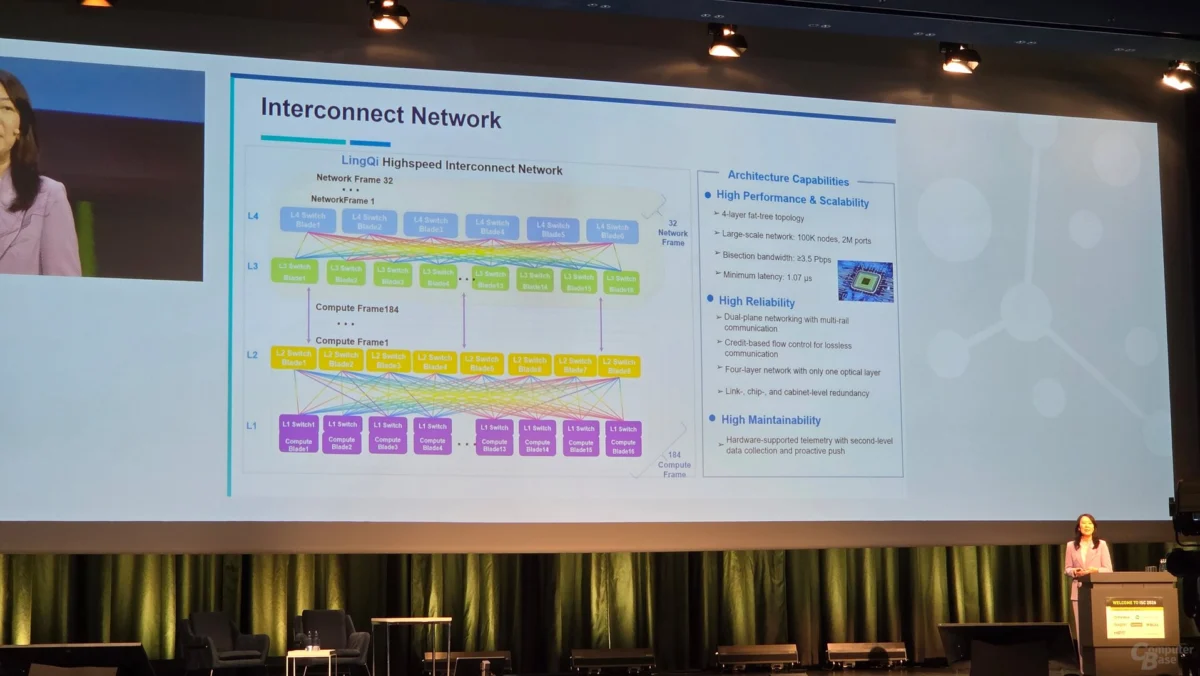
At the International Supercomputing Conference (ISC) 2026, the global high-performance computing (HPC) community witnessed a watershed moment. China, having been noticeably absent from the top tier of the TOP500 list in recent years, has staged a resounding comeback with "LineShine." Boasting an output of 2 ExaFLOPS, this machine has not only reclaimed the top spot but has also redefined the architectural possibilities for CPU-centric supercomputing.
The Core of the Beast: Architectural Innovations
The technical specifications of LineShine are as massive as its footprint. At its heart lies the "LX2" processor, a bespoke piece of engineering based on the Armv9 instruction set architecture (ISA). Each LX2 chip incorporates support for Scalable Matrix Extensions (SME) and Scalable Vector Extensions (SVE), ensuring that it can handle the intense mathematical workloads required for modern scientific simulation and artificial intelligence.
The architecture of the LX2 is a masterclass in chiplet integration. Each processor consists of two primary chiplets, each packing 152 cores, totaling 304 cores per socket. These are flanked by four dedicated I/O dies to manage data throughput and eight high-bandwidth memory (HBM) chips integrated directly onto the package.

The HBM configuration is particularly intriguing. With 32 GB of HBM capacity providing a staggering 4 TB/s of bandwidth, the system appears to utilize a proprietary implementation of HBM2e. By distributing 4 GB per HBM stack, the designers have optimized for extreme low-latency access. Furthermore, the system mirrors the "Flat" and "Cache" modes seen in Intel’s Sapphire Rapids Xeon Max series, allowing users to configure memory behavior based on their specific application needs. To augment this, each CPU chiplet is supported by an additional 128 GB of off-package DRAM, organized into four distinct NUMA (Non-Uniform Memory Access) domains.
Chronology: From Stealth Development to Global Reveal
The journey of LineShine to the top of the ISC 2026 rankings was characterized by long-term strategic silence. While the international community speculated about China’s next move, the machine was already taking shape.
- 2025: Construction of the system concluded, with the assembly process completed behind the scenes in Shenzhen.
- January 2026: LineShine officially entered the operational phase, beginning its first rounds of sustained computational tasks.
- April 2026: The system was unveiled in a low-profile announcement, largely kept under the radar to avoid prematurely triggering geopolitical scrutiny or competitive countermeasures.
- May 2026 (ISC 2026): The formal presentation at the ISC conference served as the grand "coming out party," where technical details were finally disclosed to a global audience.
Yutong Lu, the Chief Designer of LineShine and Director of the National Supercomputer Center in Shenzhen, acknowledged the immense difficulty of the project during her presentation. With a touch of understated candor, she remarked, "We had to overcome quite a few problems, as you can imagine." Her words hinted at the immense challenges of sourcing, manufacturing, and integrating these advanced chiplets under an increasingly constrained global semiconductor environment.

Supporting Data: Efficiency and Scaling
One of the most persistent criticisms of large-scale CPU-only supercomputers is their lack of energy efficiency compared to GPU-accelerated counterparts. However, LineShine challenges this narrative.
Consuming approximately 42.22 megawatts of power, LineShine achieves an efficiency rating of roughly 52.07 Gigaflops per watt. While this does not top the Green500 list, it is a remarkable figure for a machine of this scale. For context, the Intel-based "Aurora" system, which utilizes a hybrid CPU/GPU approach, requires 38.7 MW to reach 1 ExaFLOP. LineShine’s ability to hit 2 ExaFLOPS while remaining within a manageable power envelope demonstrates a highly optimized utilization of its Arm-based cores.
The scaling architecture is equally impressive. The system leverages 13,789,440 cores distributed across more than 10,000 nodes. This massive parallelization is managed through a custom-built, high-speed interconnect fabric supplemented by optical data pathways. To handle the thermal output of such a dense array, the engineers implemented a comprehensive liquid-cooling system, drawing design inspiration from leading Western HPC practices.

Official Responses and the Huawei Connection
Perhaps the most significant aspect of the ISC 2026 presentation was what remained unsaid. When asked about the involvement of Huawei—the most prominent player in China’s domestic high-end computing ecosystem—representatives remained tight-lipped.
In the corridors of the conference, however, the consensus was clear. While an official partnership was never confirmed, it was "bloomingly" suggested that Huawei was involved "somewhere" in the stack. This ambiguity is likely strategic. Given the current international trade restrictions, China is incentivized to maintain a level of ambiguity regarding its supply chain to prevent further sanctions or disruptions to its domestic hardware pipeline. By keeping the specific roles of suppliers vague, the National Supercomputer Center in Shenzhen maintains a degree of insulation for its partners.
Implications for Global HPC Competition
The success of LineShine has profound implications for the global technological landscape. First, it signals that China has effectively matured its semiconductor packaging capabilities. The ability to produce, test, and integrate massive numbers of chiplets into a stable, 10,000-node cluster indicates that the country’s domestic R&D is far more resilient than many Western analysts had previously forecasted.

Second, the reliance on the Armv9 architecture demonstrates a strategic pivot. By moving away from traditional x86-based dependencies, China is building a sovereign computational ecosystem. The integration of SVE and SME, which are essential for AI and scientific research, suggests that LineShine is not just a vanity project for the TOP500 list, but a tool intended to dominate research in fields like climate modeling, material science, and cryptanalysis.
Third, the "under-the-radar" deployment strategy suggests that China is no longer concerned with the performative nature of the HPC arms race. Instead, they are prioritizing the operational stability and domestic utility of these machines. LineShine is not just a demonstration of power; it is a working, functioning asset for the Chinese government and its research institutions.
Conclusion
The debut of LineShine at ISC 2026 marks the end of an era where Western nations could comfortably assume technological superiority in the HPC space. By achieving 2 ExaFLOPS with a CPU-centric architecture, China has proven that clever design and massive-scale integration can yield results that rival the most powerful hybrid systems in the world. As the global community digests these findings, the focus will undoubtedly shift toward the software and architectural trade-offs that allowed such a feat to occur. Whether this system represents a sustainable path forward or an isolated peak of achievement, one thing is certain: the race for exascale dominance has just entered its most competitive chapter yet.


 Nana Muazin