Basiran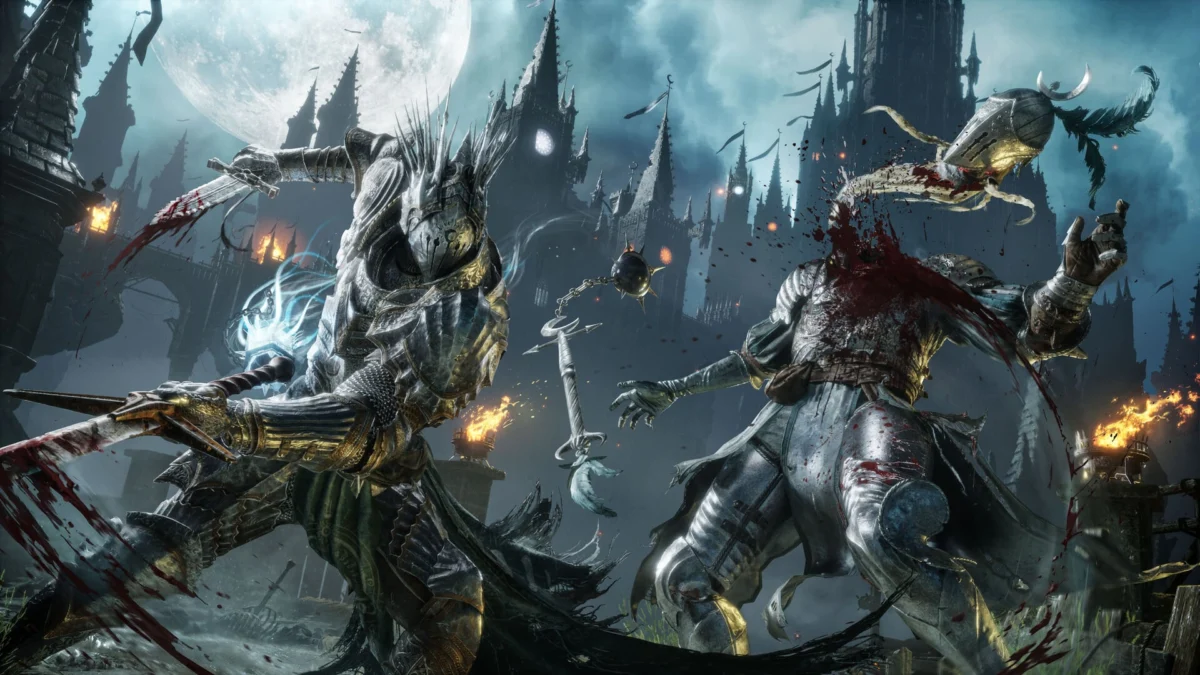
Warsaw, Poland – [Current Date] – In a significant announcement that reverberated through the gaming community, CI Games, the Poland-based publisher, and its development studio Hexworks have confirmed a delay for the highly anticipated Soulslike action RPG, Lords of the Fallen II. Originally slated for a Fall 2026 release, the game is now projected to launch in the first quarter of 2027. This strategic postponement, as articulated by CI Games founder and CEO Marek Tyminski, underscores a profound commitment to delivering a polished, high-quality experience while also navigating the intensely competitive landscape of the video game industry.
The sequel, which builds upon the critically acclaimed 2023 reboot of the franchise, is set to arrive on a comprehensive suite of platforms, including PlayStation 5, Xbox Series consoles, the eagerly awaited Switch 2, and PC via both Steam and the Epic Games Store. This broad platform availability signals the developers’ ambition to reach a wide audience, making the decision to delay all the more impactful, as it directly affects a significant portion of the global gaming populace eagerly awaiting its arrival. The stated reasons for the delay center on leveraging invaluable feedback from dedicated internal teams to refine and strengthen the overall gameplay experience, coupled with a calculated move to secure a more favorable release window away from the traditional holiday rush.
Main Facts: A Postponement for Perfection
The core of the recent announcement is the adjustment of Lords of the Fallen II‘s release schedule. Players who had marked Fall 2026 on their calendars must now look forward to an early 2027 launch. This shift represents more than just a date change; it reflects a development philosophy prioritizing quality and player satisfaction above all else. CI Games and Hexworks are not merely pushing back a deadline; they are extending the incubation period for a title they hope will define the next evolution of the Soulslike genre.
Lords of the Fallen II is poised to expand on the dark fantasy universe established by its predecessor, promising deeper lore, more intricate combat mechanics, and a more expansive world for players to explore and conquer. The game’s genre, Soulslike, itself sets a high bar for difficulty, atmosphere, and meticulous design, demanding an exceptional level of polish to meet player expectations. The decision to delay suggests that Hexworks, under the guidance of CI Games, is taking these demands seriously, aiming to meticulously craft every aspect of the game.
The platforms targeted for release — PlayStation 5, Xbox Series, Switch 2, and PC — highlight the game’s ambition for technical excellence across a diverse range of hardware. Developing for multiple current-generation consoles, alongside a next-generation Nintendo device, inherently adds layers of complexity, requiring extensive optimization and quality assurance. The additional development time afforded by the delay will undoubtedly be crucial for ensuring a smooth and consistent experience across all these varied ecosystems, preventing potential performance issues that could mar the game’s launch and long-term reception.
Ultimately, the main fact is a delay, but its underlying message is one of aspiration: to deliver a standout title that not only honors the legacy of the Lords of the Fallen franchise but also sets a new benchmark within the competitive Soulslike genre. The specifics provided by CI Games indicate a deliberate, well-considered decision rather than a reactive measure to unforeseen problems, aiming to transform anticipation into ultimate gratification.
Chronology: Tracing the Path of a Dark Fantasy Saga
The journey of Lords of the Fallen II is intertwined with the history and evolution of its franchise, a narrative that spans nearly a decade and reflects significant shifts in both game development and the gaming market.
The Genesis of a Soulslike Challenger (2014)
The Lords of the Fallen franchise first emerged in 2014 with the release of the original game, developed by CI Games in partnership with Deck13 Interactive. At a time when FromSoftware’s Dark Souls series was still solidifying its legendary status, Lords of the Fallen was an early entrant into the burgeoning Soulslike genre. It aimed to offer a more accessible, yet still challenging, dark fantasy action RPG experience. While it garnered a respectable following and was praised for its robust combat system and visual design, it also faced criticism for certain design choices and a perceived lack of originality when compared to its Japanese counterparts. Despite its mixed reception, the 2014 title laid the groundwork for a unique IP within the grim fantasy landscape, proving that there was an appetite for alternatives in the challenging RPG space.
The 2023 Reboot and Renewed Ambition
After several years, the franchise received a significant revitalization with the release of Lords of the Fallen in October 2023. Developed by Hexworks, an internal studio formed by CI Games specifically for this project, the 2023 title was less of a direct sequel and more of a comprehensive reboot, taking the core concepts of the original and elevating them to new heights. This iteration was met with substantially more positive critical and commercial success. Praised for its stunning visuals, innovative dual-realm mechanic (Axiom and Umbral), challenging boss fights, and deep lore, the 2023 Lords of the Fallen successfully re-established the series as a formidable contender in the Soulslike genre. It demonstrated Hexworks’ mastery of the genre’s nuances and CI Games’ commitment to investing in high-quality game development. The success of the reboot directly fueled the anticipation for a true successor.
Initial Announcement and Expectations for Lords of the Fallen II
Following the impressive performance of the 2023 reboot, expectations for a follow-up were naturally high. Lords of the Fallen II was officially announced, confirming that Hexworks would once again be at the helm, promising to build upon the successful foundation they had established. Initial reports and developer insights hinted at an even more ambitious project, aiming to expand the dual-realm mechanic, introduce more diverse environments, and deepen the narrative threads that captivated players in the previous installment. The Fall 2026 release window, though still distant at the time of its initial announcement, was met with enthusiasm, providing a tangible horizon for fans eager to return to the world of Mournstead. The excitement was palpable, fueled by the promise of an even grander vision and the proven track record of Hexworks’ capabilities.
The Path to Delay: A Calculated Adjustment
As development progressed, the inherent complexities of creating a large-scale Soulslike RPG became increasingly apparent. The meticulous attention to detail required for level design, combat balancing, enemy AI, and narrative integration in such a genre demands considerable time and iterative refinement. The decision to delay Lords of the Fallen II to Q1 2027 was not an impulsive one but rather the culmination of ongoing internal assessments. This path included continuous feedback loops from dedicated teams of "seasoned Souls-like veterans" – an acknowledgment of the specific expertise required to gauge and perfect such a game. By identifying "meaningful opportunities to further refine and strengthen the overall experience," CI Games and Hexworks opted for a strategic pivot, prioritizing the integrity and quality of the final product over adherence to an initial timeline. This decision aligns with a growing industry trend where developers choose to delay games to avoid crunch culture and ensure a more polished launch, ultimately benefiting both the development team and the end-users.
Supporting Data: Contextualizing the Delay
The delay of Lords of the Fallen II is not an isolated event but rather a decision informed by broader trends and realities within the video game industry, particularly within the demanding Soulslike genre and the competitive market landscape.
The Demanding Soulslike Landscape
The Soulslike genre, largely popularized and defined by FromSoftware’s Dark Souls, Bloodborne, and Elden Ring, has cultivated a highly discerning and passionate player base. These players expect not only immense challenge but also intricate world-building, precise combat mechanics, compelling enemy design, and deep replayability. Titles like Lies of P, Nioh, and Remnant II have successfully carved out their niches by adhering to these high standards. For a game like Lords of the Fallen II to truly stand out, it must not only meet these expectations but ideally exceed them.
The process of achieving this level of quality is inherently time-consuming. Balancing difficulty curves, ensuring fair but punishing combat, designing interconnected levels, and crafting a captivating, enigmatic narrative all require extensive iteration and testing. A minor imbalance in enemy stats or a slight lack of responsiveness in player controls can significantly detract from the core Soulslike experience. The additional time Hexworks has secured will likely be dedicated to fine-tuning these critical elements, ensuring that every encounter feels impactful, every exploration is rewarding, and the overall difficulty progression is expertly calibrated. This commitment to detail is vital for avoiding the pitfalls of a rushed release, which can lead to negative player reviews and a damaged reputation in a genre where initial impressions are paramount.
Market Competition and Strategic Release Windows
Marek Tyminski explicitly mentioned that the updated release window "strategically positions Lords of the Fallen II outside of a highly competitive holiday period." This is a crucial business consideration. The fall and holiday season (Q4: October, November, December) is historically the most crowded and competitive period for video game releases. It’s when industry giants typically launch their biggest titles, including annual franchises like Call of Duty and Assassin’s Creed, major first-party exclusives from Sony, Microsoft, and Nintendo, and other blockbuster AAA games vying for consumer attention and holiday gift purchases.
Launching a new, even highly anticipated, title amidst such a deluge can be challenging. Games can get lost in the noise, struggle to secure adequate marketing visibility, and face stiff competition for consumer wallets. Moving to Q1 (January, February, March) of 2027, while still capable of hosting significant releases, often provides more breathing room. January and February, in particular, can be quieter months, allowing a major title to capture more spotlight and sustained media coverage. This strategic timing can maximize initial sales, cultivate a stronger community, and allow the game to establish its presence without being immediately overshadowed by multiple concurrent blockbusters. It’s a calculated risk to delay revenue but aims for a higher, more sustainable return on investment in the long run by ensuring the game gets the "dedicated attention it deserves."
The Impact of Early Access and Player Feedback Mechanisms
The modern game development paradigm increasingly incorporates player feedback earlier and more extensively into the development cycle. While Lords of the Fallen II is not explicitly stated to have an early access program for the public, the mention of a "Gameplay Feedback Team" composed of "seasoned Souls-like veterans within our Launch Creative Team" highlights a sophisticated internal feedback mechanism. This approach signifies a proactive commitment to quality assurance from a player’s perspective.
Such dedicated teams act as proxy players, rigorously testing mechanics, exploring levels, and identifying areas for improvement that might be missed by developers too close to the project. Their "valuable ongoing input" can reveal subtle design flaws, suggest innovative improvements, or confirm what is already working well. While integrating this feedback can extend development timelines, it typically results in a more refined, balanced, and enjoyable final product. This emphasis on iteration and refinement based on expert player feedback is a hallmark of successful titles in complex genres and demonstrates CI Games’ dedication to meeting the high standards of the Soulslike community.
Technological Advancements and Next-Gen Demands
Developing for current-generation consoles (PS5, Xbox Series) and the anticipated Switch 2, alongside PC, presents a complex technological challenge. Each platform has unique architectures and capabilities that demand specific optimization. The PS5 and Xbox Series, with their powerful GPUs and SSDs, allow for unprecedented graphical fidelity and seamless world streaming. The Switch 2, while its exact specifications are yet to be fully revealed, is expected to represent a significant leap from its predecessor, requiring developers to adapt to new hardware capabilities and limitations.
The additional development time will be invaluable for optimizing performance across all these platforms. This includes ensuring stable frame rates, minimizing load times, resolving graphical glitches, and scaling visual assets appropriately without compromising the game’s artistic vision. The ambition of Lords of the Fallen II likely involves sprawling environments and complex visual effects, all of which require meticulous engineering to run smoothly on diverse hardware. A polished launch across all platforms is crucial for positive critical reception and player satisfaction, making the delay a justifiable investment in technical excellence.
Official Responses: Tyminski’s Vision for Excellence
Marek Tyminski’s full message regarding the delay offers a transparent and insightful look into the strategic rationale behind the decision. His statement is not merely an announcement but a declaration of commitment to quality and a testament to a meticulous development process.
Marek Tyminski’s Statement: A Deep Dive
"Lords of the Fallen II is now set for a Q1 2027 release window."
This opening sentence is direct and unambiguous, immediately conveying the core news. It sets the stage for the detailed explanation that follows, establishing the new timeframe for player anticipation.
"As development progresses, we have worked closely with the Gameplay Feedback Team, a dedicated group of seasoned Souls-like veterans within our Launch Creative Team. Their valuable ongoing input, combined with the team’s vision, has identified meaningful opportunities to further refine and strengthen the overall experience."
This is perhaps the most crucial part of Tyminski’s statement. It highlights a structured, professional approach to quality assurance. The "Gameplay Feedback Team" is not just any internal group; it’s composed of "seasoned Souls-like veterans." This signifies that the feedback is coming from individuals who deeply understand the genre’s intricacies, challenges, and player expectations. Their input is not merely about bug fixing but about identifying "meaningful opportunities to further refine and strengthen the overall experience"—implying a focus on elevating the game from good to exceptional, rather than merely addressing fundamental flaws. This suggests proactive enhancement rather than reactive problem-solving. It also balances this feedback with the "team’s vision," ensuring that the core creative direction remains intact while being informed by expert critique.
"These enhancements will benefit from additional integration, iteration, and polishing time, enabling the team to deliver the highest possible quality at launch."
Here, Tyminski elaborates on the practical implications of the feedback. "Integration" refers to weaving new or revised features seamlessly into the existing game structure. "Iteration" speaks to the cyclical process of refining mechanics, levels, and systems through repeated testing and adjustments. "Polishing time" is the critical final stage where rough edges are smoothed, bugs are squashed, performance is optimized, and the overall presentation is brought to a professional sheen. The ultimate goal, "to deliver the highest possible quality at launch," underscores a non-negotiable standard for the final product, directly addressing the expectations of a demanding player base.
"This updated release window also strategically positions Lords of the Fallen II outside of a highly competitive holiday period, ensuring the game receives the dedicated attention it deserves."
This sentence reveals the astute business strategy behind the delay. As discussed in the "Supporting Data" section, the holiday season is a battleground for major releases. By shifting to Q1 2027, CI Games aims to secure a more prominent position in the market, allowing Lords of the Fallen II to capture more media attention, retail visibility, and consumer focus without being overshadowed by numerous AAA blockbusters. It’s a move designed to maximize launch impact and long-term sales potential.
"The team remains fully energized by the strong response to our recent reveals and is deeply focused on delivering a standout dark fantasy action RPG and a worthy successor to the Lords of the Fallen franchise. We are grateful for the continued passion, feedback, and support from our community, and we look forward to sharing more updates in the coming months."
Tyminski concludes with a message of reassurance and gratitude. Acknowledging the "strong response to our recent reveals" confirms that public sentiment is positive, which helps to mitigate any potential disappointment from the delay. It also reinforces the team’s motivation. The commitment to delivering a "standout dark fantasy action RPG and a worthy successor" reiterates the high bar they’ve set for themselves, connecting the new title directly to the legacy of the successful 2023 reboot. Finally, expressing gratitude for community "passion, feedback, and support" is crucial for maintaining goodwill and managing expectations, promising "more updates in the coming months" to keep the hype alive.
Hexworks’ Perspective (Implied)
While Tyminski’s statement comes from the publisher, it implicitly reflects the ethos and dedication of Hexworks, the development studio. The very existence of a "Gameplay Feedback Team" and the decision to integrate their input speaks volumes about Hexworks’ iterative and quality-focused development culture. For a developer, the opportunity to have more time to polish and perfect their creation is often a welcome one, allowing them to fully realize their vision without the pressures of a rigid, immovable deadline. This delay can be seen as a vote of confidence from CI Games in Hexworks’ ability to leverage this additional time effectively, ultimately leading to a game that both the developers and players can be proud of. It allows Hexworks to live up to their own high standards, ensuring that their craftsmanship truly shines through in the final product.
Implications: Ripple Effects of a Strategic Delay
The decision to delay Lords of the Fallen II carries significant implications across various facets of the gaming industry, affecting the publisher, the developer, the player base, and the broader Soulslike genre.
For CI Games and Hexworks
- Financial Impact: Short-term, the delay means a postponement of revenue recognition from Lords of the Fallen II. This can affect quarterly financial reports and investor expectations. However, a highly polished game that receives strong critical acclaim and achieves higher sales due to its quality and strategic launch window can lead to significantly greater long-term revenue and profit. It’s an investment in the game’s ultimate commercial success and the franchise’s longevity. Avoiding a rushed launch also mitigates the risk of costly post-release patches and negative publicity that could further impact sales and development resources.
- Resource Management: The delay requires a reassessment of development timelines, marketing schedules, and potentially staffing plans. It provides Hexworks with valuable time to avoid "crunch" culture, which can lead to burnout and lower quality. This can improve team morale and foster a more sustainable development environment, which is crucial for retaining talent in a competitive industry.
- Brand Reputation: This decision reinforces CI Games’ commitment to quality, building on the positive reputation established by the 2023 Lords of the Fallen reboot. In an industry where rushed, buggy releases are frequently criticized, prioritizing polish over an arbitrary deadline is a strong message to both players and investors. It positions CI Games as a publisher that values player experience and product integrity.
For Players and the Community
- Managing Expectations: While delays can initially cause disappointment, most seasoned players understand and often appreciate that additional development time usually translates to a better game. Transparent communication, as provided by Tyminski, helps manage these expectations effectively. The community’s "passion, feedback, and support" are acknowledged, making them feel heard and valued.
- Anticipation Build-up: A longer wait, when managed correctly with consistent and meaningful updates (as promised by "sharing more updates in the coming months"), can paradoxically heighten anticipation. Strategic marketing reveals, gameplay deep dives, and lore expansions during the extended period can keep the game in the public consciousness and build excitement.
- Impact on Game Library: For players planning their gaming calendar, the shift frees up Fall 2026 for other releases but adds Lords of the Fallen II to what might become a competitive Q1 2027. However, given the nature of Soulslike games, which often require significant time investment, players are likely to dedicate themselves to a single major title during its launch period.
For the Soulslike Genre
- Setting a Standard: This delay, explicitly attributed to integrating feedback from "seasoned Souls-like veterans" to "refine and strengthen the overall experience," reinforces the extremely high quality bar within the genre. It sends a message to other developers that cutting corners on polish and iteration in a Soulslike game is a risky endeavor. It further legitimizes the genre’s demands for meticulous design and robust gameplay.
- Market Dynamics: The shift in release window subtly alters the competitive landscape for other developers. If other Soulslike or major action RPGs were eyeing Q1 2027, they now know Lords of the Fallen II will be there, potentially influencing their own release strategies.
The Road Ahead
With the new Q1 2027 release window, the focus now shifts to the ongoing development and subsequent marketing efforts. Players can anticipate a more structured release of information, likely including:
- Deeper Gameplay Showcases: More extensive demonstrations of combat, exploration, and the dual-realm mechanics.
- Lore and World-building Insights: Further revelations about the narrative, characters, and the dark fantasy universe.
- Technical Deep Dives: Information on graphical enhancements, performance optimization, and unique features for each platform.
- Beta or Demo Opportunities: Potentially, though not confirmed, a public beta or demo could be released closer to launch to gather wider player feedback and generate further hype.
The delay of Lords of the Fallen II is a calculated maneuver, a testament to CI Games’ and Hexworks’ dedication to delivering a standout product. It is a decision rooted in the pursuit of excellence and strategic market positioning, ultimately aiming to ensure that when players finally step back into the harrowing world of Mournstead, they are met with nothing less than a truly exceptional and memorable Soulslike experience. The wait may be longer, but the promise of a more refined and impactful journey makes it a wait worth enduring for fans of the dark fantasy genre.


 Lina Irawan
 Sagoh
Sagoh