Lina Hope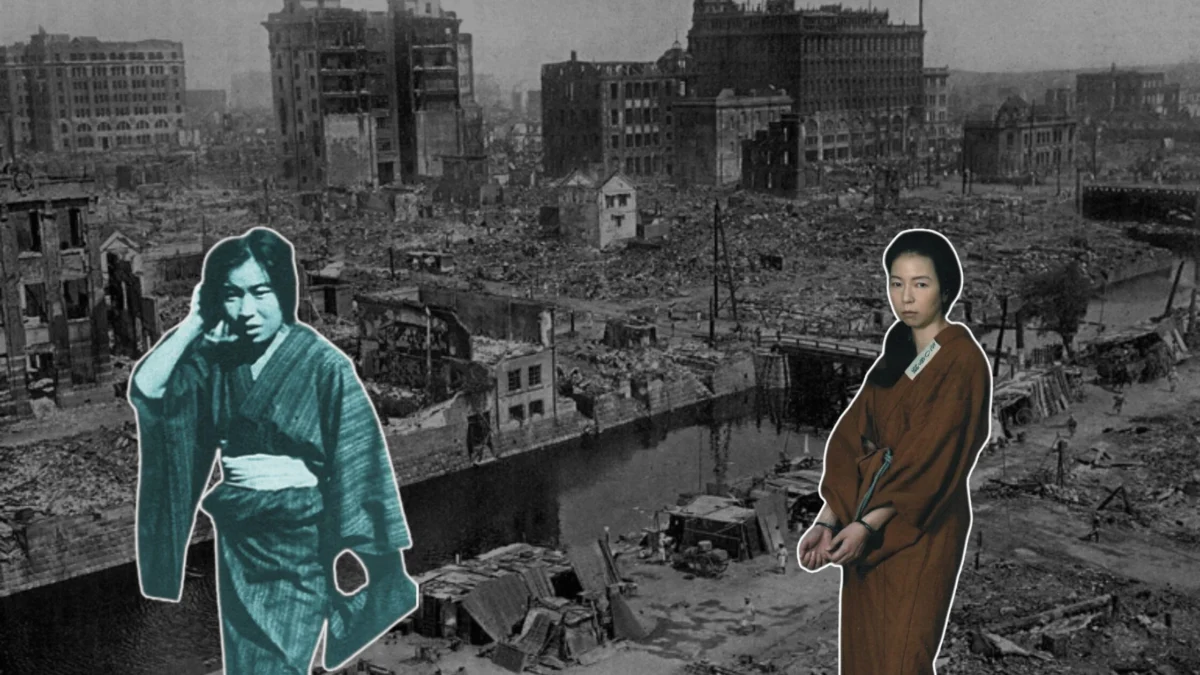
It is a fundamental truth of authoritarianism that the state demands not just obedience, but the total erasure of the individual’s moral agency. This is magnified a thousandfold when the state deifies its leader as a living god, as Imperial Japan did during the early 20th century. To challenge such a system is to court not merely punishment, but total annihilation.
Yet, Kaneko Fumiko (1903–1926) did exactly that. Born into the shadows of a rigid, exclusionary bureaucracy, she lived a life defined by resistance against an imperial apparatus that claimed ownership over her very existence. A century after her death, a resurgence of interest—spurred by a new biographical study and a feature film—is forcing a reckoning with her legacy. Scholars and artists are finally asking the questions that were silenced in 1926: Was her death a surrender, or was it the ultimate, final act of a woman who refused to let the state claim even her heartbeat?
The Ghost in the Machine: Mukoseki
To understand Kaneko’s rage, one must understand her invisibility. Born in Yokohama in 1903, she entered the world during the twilight of the Meiji Era, a period of rapid modernization and intense nationalistic consolidation. However, in the eyes of the law, Kaneko Fumiko did not exist.
Japan’s koseki (family registry) system, established in 1872, was the bedrock of the imperial state’s demographic control. It allowed the government to track, tax, and mobilize its subjects, turning the populace into a legible resource for economic growth and military expansion. Because her father, Saeki Bun’ichi, and her mother, Kiku, never formalized their marriage or registered their daughter’s birth, Kaneko became mukoseki—an unregistered individual.
In her seminal memoir, What Made Me This Way, Kaneko recounts the moment of realization. Her grandmother, explaining why she could not attend school like other children, told her she was "born, but not born." This state of legal non-existence was not merely a bureaucratic error; it was a profound alienation that stripped her of rights, protection, and identity. This initial trauma became the forge in which her radical politics were tempered. She did not merely despise the government; she identified it as a foundational structure of hypocrisy.
A Crucible of Colonialism
Kaneko’s childhood was marked by abandonment and poverty, but her worldview was crystallized by the brutal reality of Japanese colonial rule in Korea. In 1912, she was sent to live with her paternal grandmother’s family in Korea, then under total Japanese subjugation.
The Iwashita family were colonial settlers who built their livelihood on stolen land and the exploitation of Korean labor. Her grandmother’s contempt for the local population was visceral, and the young Kaneko was subjected to the same cycle of domestic abuse and degradation that the occupiers inflicted upon their subjects.
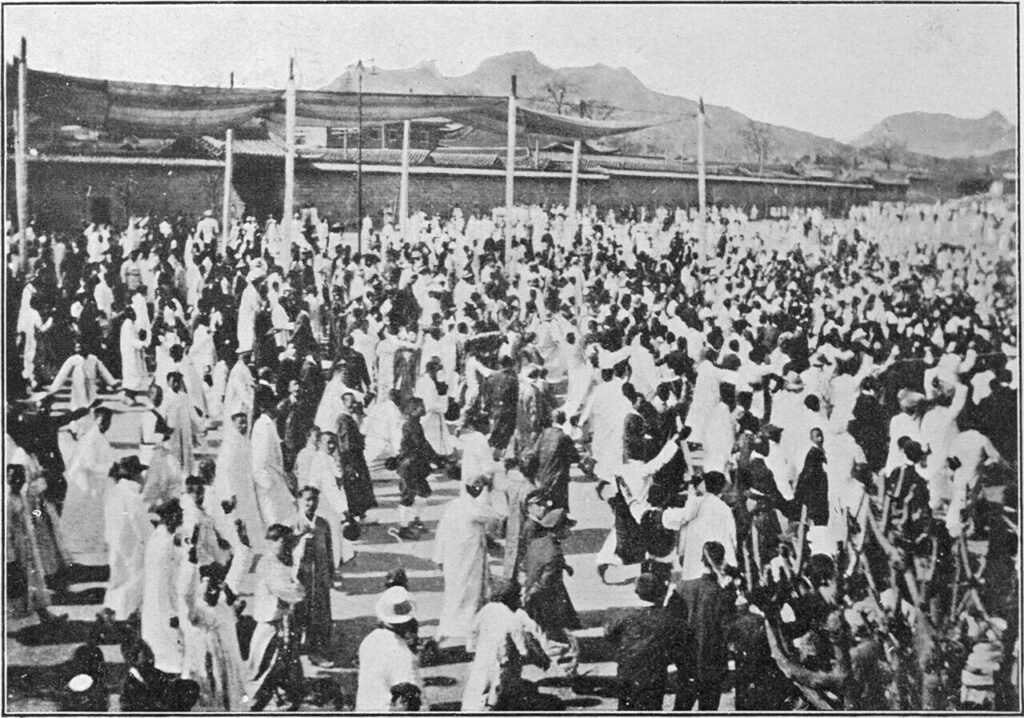
She witnessed firsthand the apparatus of the "dagger pointed at the heart of Japan"—a phrase used by strategist Yamagata Aritomo to justify the annexation of the Korean peninsula. Following the 1910 annexation, the Japanese Empire sought to systematically erase Korean culture. Kaneko watched the violence of this occupation from the inside. When the March 1st Movement of 1919 erupted, she stood on a hill and listened to the desperate, defiant cries of “Daehan Dongnip Manse!” (Long live Korean independence).
Unlike her family, who viewed the protestors as sub-human insurgents, Kaneko felt a profound kinship. She saw her own "unregistered" existence reflected in the plight of a colonized people. She later wrote, "When I think of the independence movement the Korean people were carrying out, an emotion welled up in my chest. I couldn’t dismiss their protest as other people’s business."
The Birth of the Futeisha
In 1920, at age 17, Kaneko returned to Japan, drifting toward the periphery of socialist and anarchist circles. In 1922, she met Pak Yeol, a Korean anarchist who had arrived in Tokyo in the wake of the March 1st uprising. Their partnership was less a romance and more a collision of two radical spirits.
Together, they founded the Futeisha, an anarchist collective whose name served as a biting, satirical reclamation of the slur futei-senjin ("insolent Koreans"). They began publishing a magazine dedicated to nihilism and the violent rejection of state power. Kaneko was clear about her mission: she was not interested in reform; she was interested in the total dismantling of the imperial system.
The Earthquake and the High Treason Charge
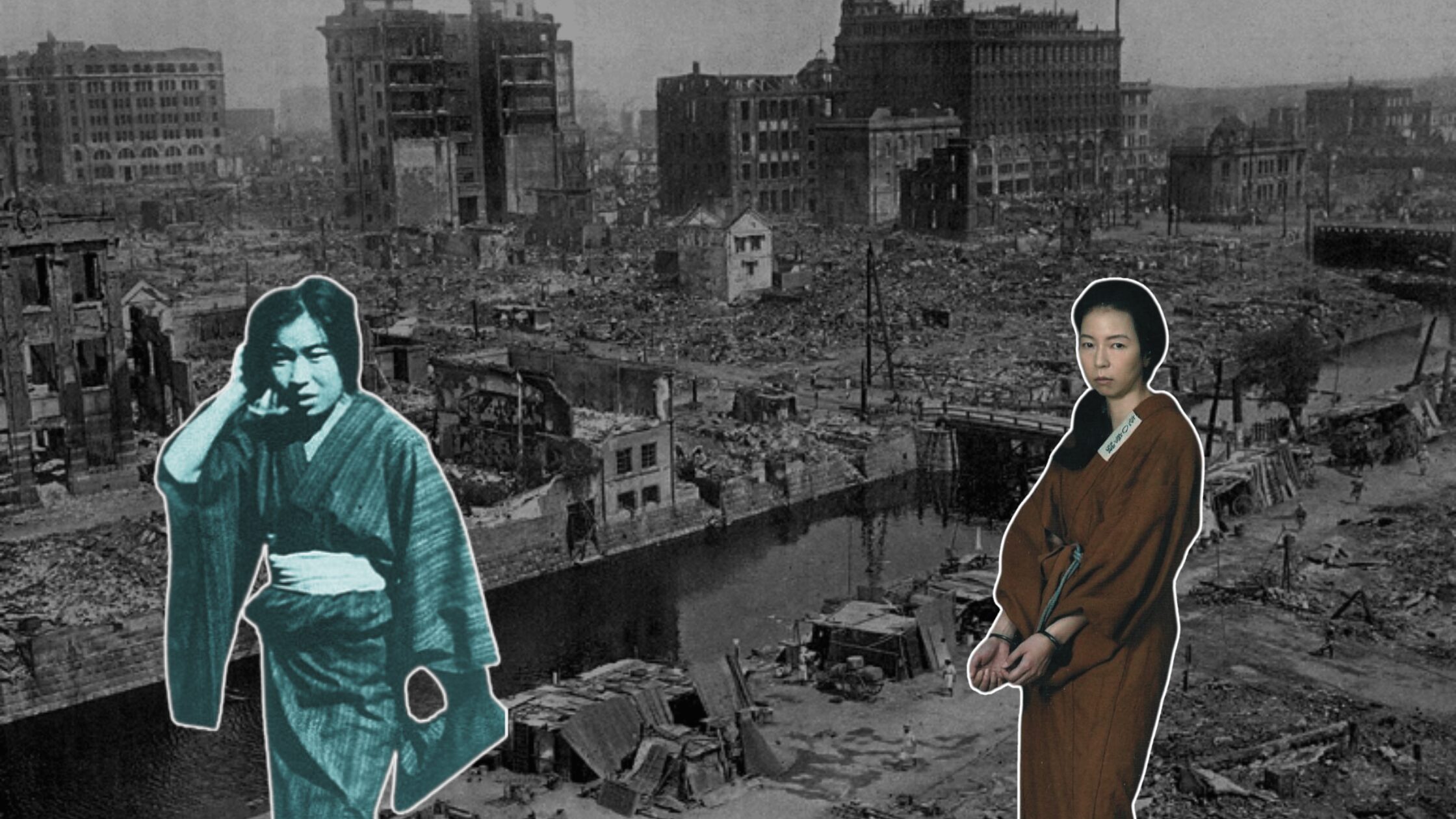
The year 1923 served as the catalyst for their destruction. Following the Great Kanto Earthquake, a wave of xenophobic paranoia swept through the ruins of Tokyo. Disinformation campaigns spread rumors that Koreans were poisoning wells and inciting riots, leading to the Kanto Massacre—a state-sanctioned slaughter of thousands of Koreans and Japanese socialists.
Amidst this carnage, the police arrested Kaneko and Pak. To divert attention from their own complicity in the massacre, the government charged the pair under Article 73, the charge of "High Treason" against the Imperial House. The state alleged they were planning to assassinate the future Emperor Hirohito during his wedding procession.
The case was a complete fabrication. There were no bombs, no weapons, and no actionable plans. The only "evidence" was a detective’s testimony that Pak had once stabbed a photograph of the Emperor with a knife. Despite the lack of substance, the trial became a theater for Kaneko’s dissent. She famously testified, "The Emperor is sick, so we aimed for the young master," openly mocking the divinity of the monarchy.
The Final Act: Refusing Clemency
On March 25, 1926, the Supreme Court sentenced Kaneko and Pak to death. The sentence was a political statement designed to terrorize the burgeoning anarchist movement. However, just days later, in a move of calculated imperial optics, the government commuted their sentences to life imprisonment. The clemency, authorized by the Regent Hirohito himself, was meant to display the "benevolence" of the Throne.
Pak Yeol accepted the commute, eventually surviving prison to witness the end of the war. Kaneko, however, treated the pardon as an insult. To accept the Emperor’s mercy was to accept the Emperor’s authority—the very thing she had spent her life trying to negate. She reportedly tore the document to pieces, refusing to play the role of the grateful subject.
On July 23, 1926, at the age of 23, Kaneko Fumiko was found dead in her prison cell, having taken her own life by hanging.
Legacy and Re-examination
A century later, the narrative of Kaneko Fumiko is being stripped of its state-sanctioned labels. Modern biographers, such as Yasumoto Takako, have begun to peel back the layers of her "vanity" and her radical intensity to reveal a human being who was pathologically committed to her own autonomy.
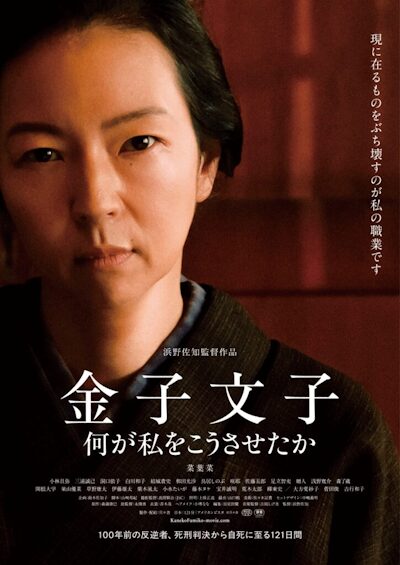
The 2026 film Kaneko Fumiko centers on the final 121 days of her life, structured around the eight tanka poems she wrote while awaiting execution. These poems serve as the bridge between her political fury and her internal landscape. In one, she writes of a blade of grass that, when plucked, "faintly weeps, ‘I want to live.’"
This duality defines her legacy: a woman who deeply loved the world and felt the tragedy of its oppression, but who found that the only way to "live" in a system that rendered her a non-entity was to choose the terms of her own death. By rejecting the Emperor’s clemency, she effectively seized the power of life and death away from the state, reclaiming her existence one final time.
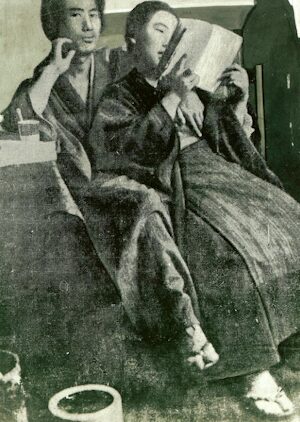
In the history of Imperial Japan, Kaneko Fumiko remains a haunting anomaly—a ghost who, through the sheer force of her refusal, became more real than the Empire that sought to erase her. Her life stands as a testament to the fact that when the state demands total surrender, the only true act of defiance is the preservation of one’s own, uncompromised soul.


 Neng Nana
 Asro
Asro