

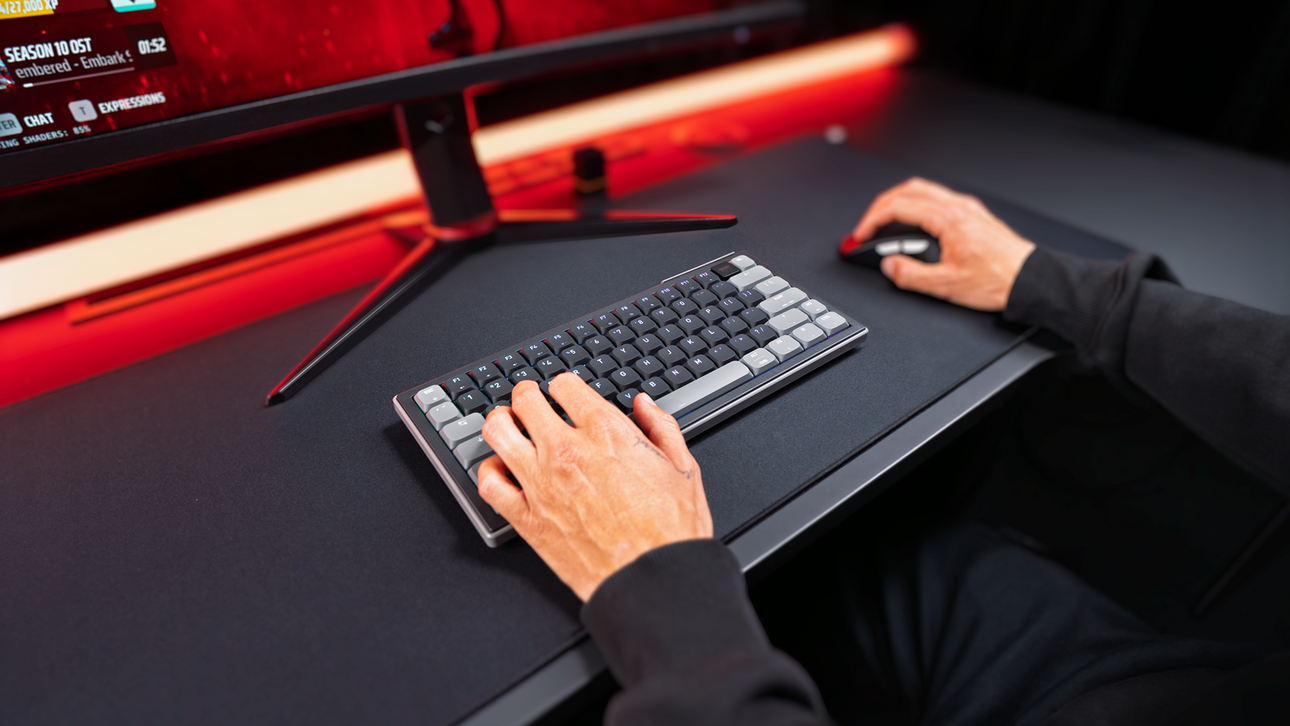
The landscape of high-performance gaming peripherals shifted significantly today at Computex 2026. Cherry XTRFY, the dedicated gaming division of the legendary switch manufacturer Cherry, officially unveiled its latest flagship keyboard: the K63W Pro. Positioned as the world’s first 8K Ultra-Wideband (UWB) gaming keyboard, the device represents a bold convergence of industrial engineering and bleeding-edge wireless transmission technology.
By integrating Ultra-Wideband technology—a method of wireless communication typically reserved for high-precision spatial tracking and secure data transmission—Cherry XTRFY is aiming to solve the "interference anxiety" that has long plagued wireless competitive gaming. With a sleek 70-percent form factor, a sophisticated gasket-mounted design, and an aggressive 8,000 Hz polling rate, the K63W Pro is not merely another peripheral; it is a declaration of war against the latency limitations of traditional 2.4GHz wireless setups.
The Core Specifications: A Technical Breakdown
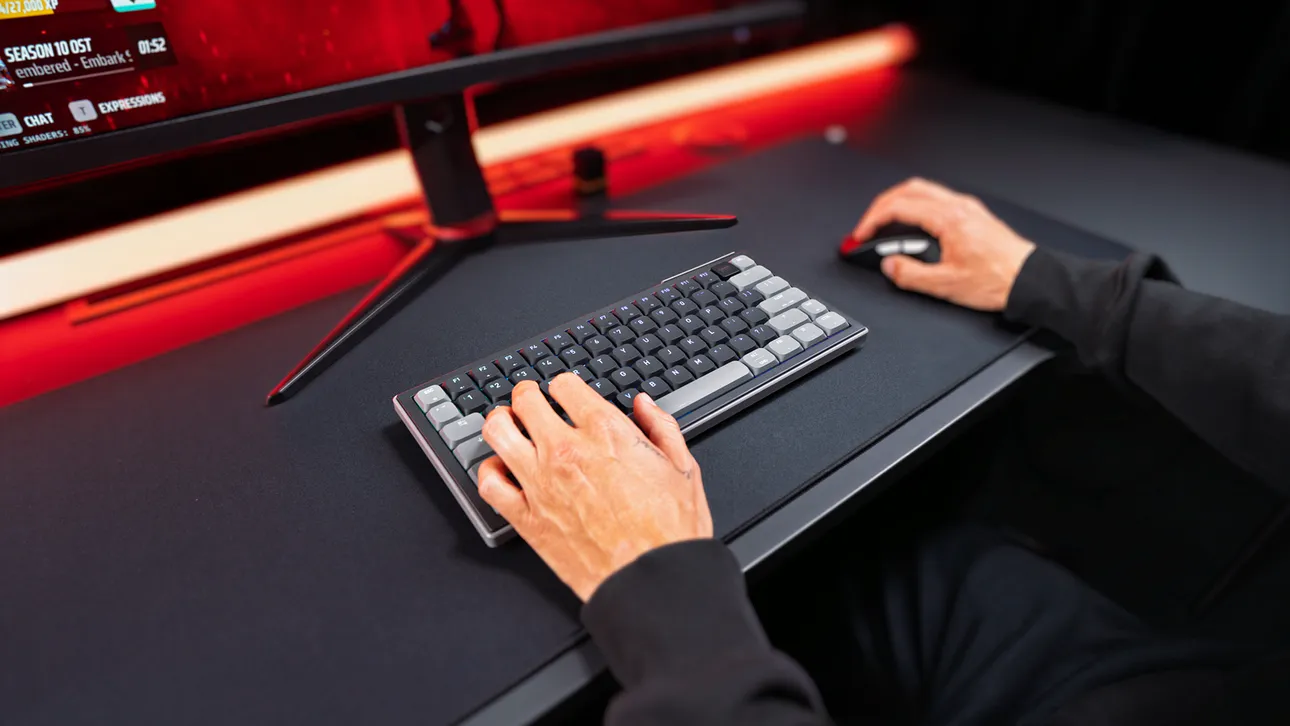
At the heart of the K63W Pro is a commitment to performance that borders on the excessive. The keyboard is built upon a 70-percent layout, a pragmatic middle ground that retains the essential function (F) row and dedicated arrow keys while shedding the navigation cluster to provide extra real estate for aggressive mouse flicks—a necessity for the modern esports professional.
Key Technical Pillars:
- Connectivity: 8,000 Hz Polling Rate (Wired and Wireless).
- Wireless Protocol: Ultra-Wideband (UWB) technology, designed for superior interference resistance.
- Switch Technology: Cherry MX Low Profile 2.0 switches.
- Construction: Gasket-mounted chassis for a refined acoustic and tactile profile.
- Battery Life: 6,000 mAh internal capacity, rated for up to 1,100 hours of usage (variable based on settings).
- Form Factor: 70-percent compact layout.
The decision to utilize Ultra-Wideband technology is perhaps the most significant differentiator. While standard 2.4GHz wireless is ubiquitous, it is also crowded, often suffering from signal congestion in households with multiple Wi-Fi devices, Bluetooth peripherals, and competing gaming gear. UWB operates across a wider spectrum with shorter, high-frequency pulses, theoretically offering a much more stable and lower-latency connection that is effectively immune to the "noise" created by other wireless traffic.
Chronology of Development and Launch
The road to the K63W Pro’s debut at Computex 2026 was marked by a strategic push toward wireless supremacy. Following the success of their earlier mechanical offerings, Cherry XTRFY spent the last 18 months refining their internal PCB designs to accommodate the high-throughput demands of 8,000 Hz polling.
- Q3 2025: Initial R&D prototypes focused on the integration of UWB modules into low-profile housings.
- Q1 2026: Finalization of the gasket-mount architecture to ensure the low-profile switches maintained a premium feel.
- June 2026 (Computex): Official global unveiling at the Cherry XTRFY booth in Taipei.
- July 2026: Commercial availability begins in the European market.
- August 2026: Scheduled release for the North American market.
For consumers, the staggered rollout highlights a focused effort to ensure supply chain stability, with the European launch serving as the primary test market for the new UWB technology before the wider U.S. release.
Data-Driven Performance: Is 8K Overkill?
In the current market, the race to 8,000 Hz polling has become the new "Megapixel War" of the peripheral world. Critics often argue that the human brain cannot perceive the difference between a 1,000 Hz report rate (1ms latency) and an 8,000 Hz rate (0.125ms latency). However, proponents—and professional gamers—argue that the benefit lies not just in speed, but in consistency.
By providing a 0.125ms update interval, the keyboard ensures that the time between a key press and the system register is minimized, reducing the "jitter" that can occur in high-framerate environments (such as 360Hz or 540Hz displays).
Furthermore, the battery efficiency remains a point of intense interest. The K63W Pro’s 6,000 mAh battery is substantial. While Cherry claims a maximum of 1,100 hours, users should temper expectations. If the keyboard is pushed to its maximum 8K polling rate with maximum RGB brightness, that figure will inevitably drop. However, the precedent set by industry competitors like Keychron, which has managed up to 660 hours on 8K wireless, suggests that current-generation microcontrollers are becoming exceptionally efficient at managing high-throughput data packets.
Official Perspectives: The Philosophy of "Feel"
Joakim Jansson, Director of Product Management at Cherry, emphasized during the press conference that the K63W Pro was designed to solve a dual problem: the performance gap in wireless and the "harsh" typing experience often associated with low-profile keyboards.
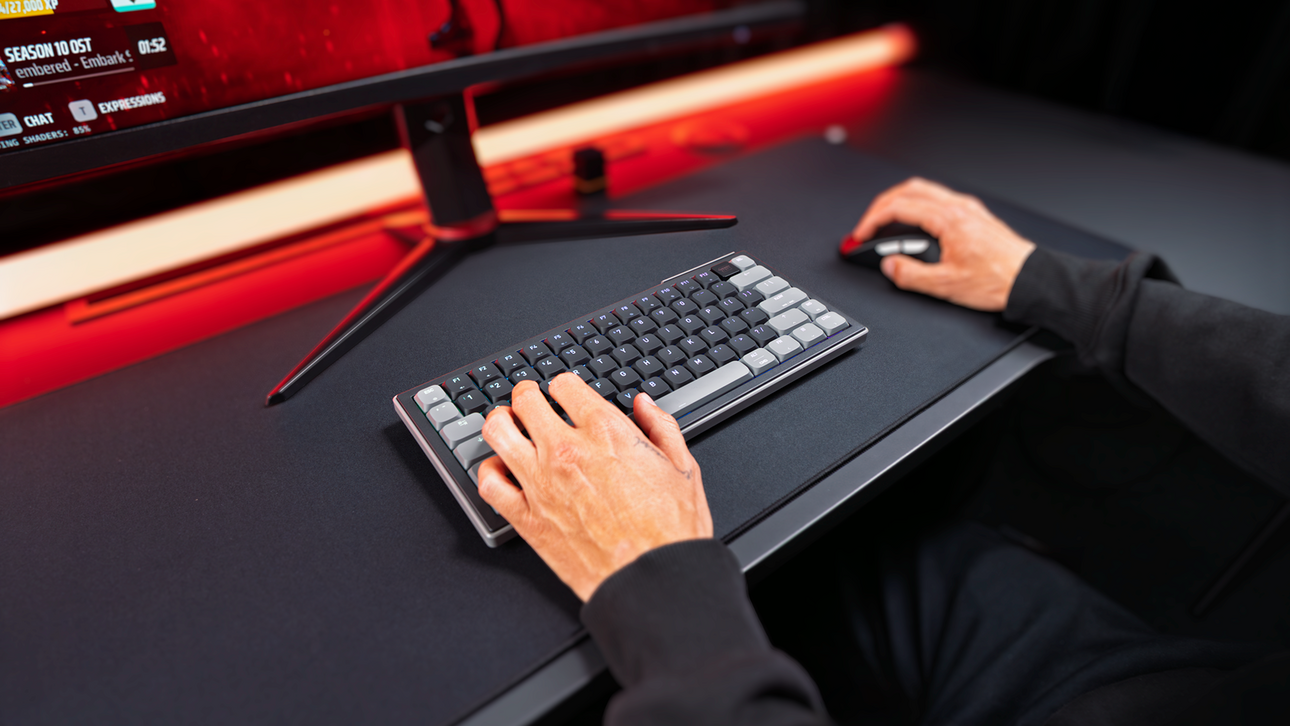
"With the K63W Pro, we wanted to evolve wireless gaming even further," Jansson stated. "Ultra-Wideband technology and 8K polling deliver extreme performance, while the carefully tuned gasket construction creates a typing feel you would never expect from a low-profile keyboard. The result is a keyboard built for both competitive gaming and hours of daily typing."
This focus on the "typing feel" is telling. Cherry understands that while gamers demand speed, they also demand quality. By opting for a gasket-mount system, the company is attempting to mitigate the vibration and "hollow" sound profile that often plagues thin, low-profile boards. By isolating the mounting plate from the chassis, they provide a cushioned, deeper sound that competes with much larger, enthusiast-grade keyboards.
Implications for the Gaming Peripheral Market
The release of the K63W Pro signals a broader trend: the complete obsolescence of wired-only competitive keyboards. As wireless technologies like UWB and advanced 2.4GHz proprietary protocols reach parity with (or exceed) wired performance, the cable is quickly becoming a relic of the past.
Market Impact:
- Standardization of High-Frequency Polling: With Cherry entering the 8K space, it is likely that mid-range keyboards will soon begin to adopt 2K or 4K polling as a baseline, pushing the industry standard upward.
- Wireless Congestion Management: The shift to UWB may force other manufacturers to pivot away from the standard 2.4GHz spectrum to avoid signal interference, potentially leading to a new era of "interference-proof" peripherals.
- Low-Profile Renaissance: The K63W Pro proves that "low-profile" no longer means "budget" or "compromised." By marrying low-profile switches with premium gasket construction, Cherry is elevating the status of thin keyboards for both productivity and professional gaming.
Conclusion: A New Standard?
As we look toward the July and August launch windows, the gaming community remains cautiously optimistic. At €179.99 and $169.99, the K63W Pro is positioned in the "premium" tier. It is not an impulse buy, but rather an investment for those who are serious about removing every possible millisecond of latency from their setup.
Whether or not the average gamer will notice the leap from traditional wireless to UWB-powered 8K performance remains to be seen. However, for the competitive player, the promise of a "clean" signal that won’t drop out or conflict with a wireless mouse, combined with the ergonomic benefits of a 70-percent layout, makes the K63W Pro a compelling, future-proof candidate for any high-end battle station. Cherry XTRFY has not just built a keyboard; they have set a new benchmark for what wireless connectivity should look like in the latter half of the decade.












No comments yet. Be the first to join the conversation!