Rifan Muazin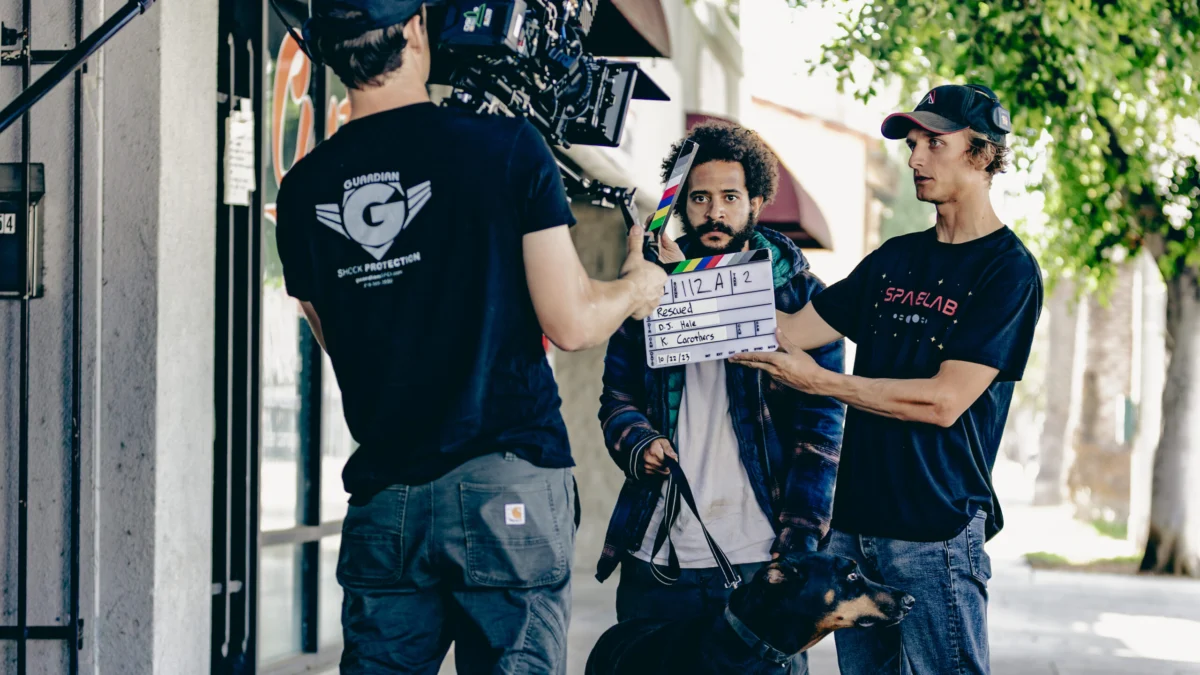
In the polished world of Hollywood, the myth of the independent filmmaker often centers on a singular, romanticized image: the visionary artist, a brilliant screenplay, and a community of believers coming together to bring a dream to life. Yet, for first-time feature filmmaker D.J. Hale, the reality of independent cinema was far removed from such fairy tales. It was a brutal, often harrowing journey defined by personal sacrifice, crippling financial instability, and an eleventh-hour act of loyalty that ultimately saved his debut feature, Rescued.
As Rescued prepares for its highly anticipated premiere at this year’s Dances with Films: Los Angeles festival, the film stands as a testament to the sheer willpower required to navigate the modern independent landscape. With Hale pulling double duty as writer, producer, director, editor, and lead actor—and joined by co-stars Lindsey Shaw, David DeLuise, and Elissa Kapneck—the film is more than just a debut; it is a battle scar rendered in high definition.
A Foundation of Hardship and Ambition
To understand the stakes of Rescued, one must understand the background of its creator. D.J. Hale does not hail from a position of industry privilege. His upbringing was marked by poverty, a transient life that saw him, his mother, and his sister living as vagabonds, moving from one temporary housing arrangement to another.
"My mother, my little sister, and myself have essentially been vagabonds most of my life," Hale recounts. "We bounced from friend to friend, family to family, the three of us and our dog confined to a room of whomever would take us in."
This lack of a financial safety net meant that when Hale moved to Los Angeles at 21 to pursue filmmaking, he arrived with no backing and no connections. By the time he penned the script for Rescued in 2022, he realized that the traditional avenues of studio support or angel investors were closed to him. The film would either be forged in the fires of his own desperation, or it would not exist at all.
The Chronology of a Production Crisis
The production of Rescued was never a smooth operation, but for a time, it maintained the illusion of stability. With a 26-day shooting schedule, the team began production with a mix of optimism and a fragile, self-assembled budget.

Hale’s financial strategy was a masterclass in high-stakes risk. He worked punishing, ten-hour days as a ride-share driver for Uber and Lyft, funneling every cent into the production. He maxed out credit cards, secured high-interest loans he had no immediate plan to repay, and leveraged every available resource.
However, the laws of economics are unforgiving in the independent film world. By day 18 of the 26-day shoot, the well ran dry. The production hit a wall, and with only eight days of footage left to capture, Hale faced a financial abyss.
"I remember looking at my bank account and realizing I had just a couple hundred dollars left to my name," says Hale. "My entire world stopped. The film was unfinished. For a while, the dream felt finished, too."
The Turning Point: Radical Sacrifice
When the project entered its "dead" phase, the implications were significant. Hale was left with tens of thousands of dollars in debt, looming rent payments, and a burgeoning sense of failure. Yet, the industry often asks a singular question of those who dare to enter it: How badly do you want it?
Hale’s answer was to double down. He accepted a full-time job while continuing his ride-share shifts during all waking hours, essentially working two jobs to keep the project’s heartbeat alive. But the timeline for completion—at the pace he could afford—was measured in years, not months.
The salvation of Rescued came from an unlikely source: Dominique Smith, a close friend and creative partner whom Hale had met years prior while acting in a short film in Reno. Smith, who was facing his own severe hardships—including a period of homelessness—had been living with Hale.

When a long-awaited settlement from a work-related injury finally arrived for Smith, he did not look for a home or a new beginning for himself. Instead, he approached Hale with a life-altering question: "How much do we need to finish?"
This act of solidarity transformed the film from a failing project into a shared mission. Smith invested a significant portion of his settlement into the production, and when those funds were eventually exhausted, he joined Hale in the trenches, driving for ride-share apps and working grueling hours to keep the cameras rolling.
The Unseen Data of Indie Filmmaking
While the romantic narrative of Rescued is compelling, the underlying data of the project serves as a sobering reminder of the hurdles facing independent creators.
- Financial Leverage: The film was produced entirely outside the studio system, relying on personal debt and high-interest credit utilization.
- Production Stagnation: The project faced an indefinite hiatus at 70% completion, a point where most independent features fail to recover.
- Human Capital: The total sacrifice involved not just monetary capital, but the complete exhaustion of two primary producers, both of whom worked non-film jobs simultaneously to sustain the production’s operational costs.
- Post-Production Resilience: Even after the cameras stopped rolling, the financial impact of the production continued to weigh on the filmmakers, with both Hale and Smith navigating the long-term consequences of their investment.
Professional and Personal Implications
The industry response to the Rescued production story has been one of quiet awe. Industry veterans often warn against self-funding at this level, citing the psychological toll of carrying such significant debt. However, the finished product—a feature-length film ready for a prestigious festival premiere—defies the conventional wisdom that says such projects are destined to collapse under their own weight.
For Hale, the implications go beyond the film’s festival run. He has become an accidental spokesperson for a brutal reality in independent cinema: that the "indie" label often hides a reality of personal bankruptcy, immense emotional strain, and the necessity of extreme, borderline-irrational loyalty.
"Independent filmmaking often leaves scars that audiences never see," Hale notes. "What appears on screen as a finished feature is often the result of years of uncertainty, sleepless nights, second jobs, and people betting on each other when logic says they shouldn’t."

Conclusion: A Title with Dual Meaning
As the cast and crew prepare for the premiere of Rescued, the title carries a weight far beyond its narrative plot. While the film may focus on themes of rescue, the production history suggests that the act of creating the film was, in itself, a rescue mission.
D.J. Hale and Dominique Smith have emerged from the process not only with a finished film but with a story of human endurance that rivals the content of the movie itself. By prioritizing the project over financial safety and personal comfort, they proved that when the traditional industry gatekeepers are nowhere to be found, the strength of a single, steadfast partnership can provide the capital necessary to reach the finish line.
Rescued is not just a film; it is a manifestation of the belief that some stories are worth any cost. As it screens at Dances with Films, it serves as a stark, moving, and necessary reminder of what it takes to bring a vision to life in an era where the dream of cinema is becoming increasingly difficult for the independent artist to reach. The film was rescued by friendship, and in turn, the filmmakers have found their own path forward in an industry that rarely offers a second chance.

 Lina Hope
 Azzam Bilal Chamdy