

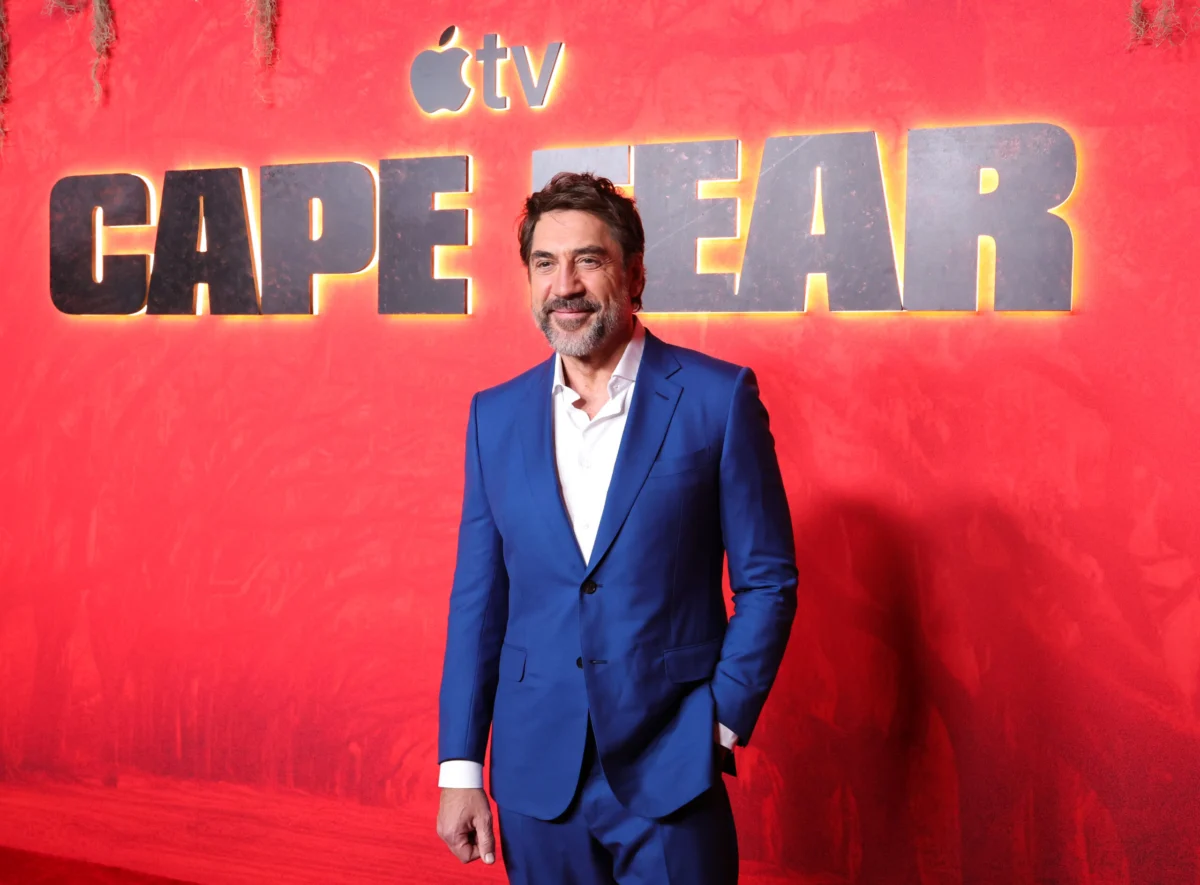
The corridors of cinematic history are often haunted by iconic villains, figures so indelible that they become cultural shorthand for menace. For over six decades, the name Max Cady has stood as a towering monument to psychopathic vengeance—first etched into the public consciousness by Robert Mitchum in the 1962 original, and later refined into a terrifyingly muscular, tattoo-laden nightmare by Robert De Niro in Martin Scorsese’s 1991 reimagining.
Now, the mantle has been passed to Javier Bardem. In Apple TV+’s ambitious 10-episode limited series, the Oscar-winning actor steps into the role of the vengeful convict, marking a significant departure from the source material. By expanding the narrative scope from a two-hour film to a ten-hour deep dive, the series promises a more granular, psychological exploration of obsession, justice, and the fragility of the American dream.
The Evolution of a Menace: A Chronology of Cady
To understand the weight of the task Bardem faced, one must look at the legacy he is inheriting. John D. MacDonald’s 1957 novel The Executioners provided the blueprint for Max Cady, a man who views the legal system not as a arbiter of justice, but as a mechanism of personal betrayal.
- 1962 – The Original Chill: J. Lee Thompson’s film introduced audiences to Robert Mitchum’s Cady. Mitchum played the character with a serpentine, quiet intensity, a slow-burning fuse that made him feel like a force of nature—inevitable and unbothered.
- 1991 – The Scorsese Spectacle: Martin Scorsese’s version pushed the character into the realm of the grotesque and the hyper-violent. De Niro’s Cady was a body-building, scripture-quoting zealot, a physical manifestation of righteous fury. The film’s critical success and De Niro’s Oscar nomination turned Cady into a titan of the thriller genre.
- 2024 – The Streaming Expansion: Apple TV+’s series, spearheaded by showrunner Nick Antosca, shifts the paradigm. By moving the story to a serialized format, the production moves away from the "cat-and-mouse" trope to focus on the institutional failings that allowed Cady to exist in the first place.
Casting the Monster: Why Bardem?
When showrunner Nick Antosca began the daunting process of casting the lead, the shadow of his predecessors loomed large. "You have Robert Mitchum, you have Robert De Niro—two of the most iconic villain roles ever," Antosca noted during the show’s Los Angeles premiere. "How do you match that? It has to be someone who is worthy of that legacy, and who out there can bring the magnetism, the menace, and the intensity?"
For Antosca, the choice was always Bardem. The decision wasn’t rooted in a desire to emulate the previous actors, but to subvert the audience’s expectations. "I knew Javier wasn’t going to do an imitation," Antosca added. "He was going to bring something new to it. It had to be one-of-a-kind."
Bardem himself was initially hesitant. "I would not have dared to touch the role if it was another straight remake," the actor admitted. He found the prospect of a 10-hour narrative arc more compelling than a traditional filmic adaptation, noting that the extended runtime allowed for the "humanization" of a monster—a process that makes the character’s actions feel more grounded and, ultimately, more terrifying.
Professionalism in the "Pretending Department"
One of the most intriguing aspects of the production was Bardem’s ability to compartmentalize. During the filming of the series, the actor was simultaneously working on the highly anticipated Dune: Part Three, reprising his role as the Fremen leader Stilgar.
The juxtaposition is jarring: the spiritual, stoic leader of Arrakis versus the unhinged, vengeful Max Cady. Bardem, however, remains remarkably grounded about the process. "You have a plane trip to just put it out and put it in," he remarked, referring to the travel between sets. "It’s what you do for a living. We are in the ‘pretending department.’"
This discipline extended to his off-camera behavior. While many method actors are known for staying in character to maintain a level of darkness, Bardem eschews that practice. "I don’t find it even interesting to do it otherwise," he said. "I’m not that guy." This professional distance allowed him to deliver a performance that his co-stars describe as both transformative and frighteningly authentic.
A Shift in Dynamic: Challenging the Justice System
The most significant departure in the new series is the structural pivot from a solo male attorney being targeted to a married couple. Amy Adams and Patrick Wilson portray the high-powered attorneys who placed Cady behind bars, and whose relationship becomes the central focus of his obsession.
This choice is not merely a change in cast, but a thematic repositioning of the story. Antosca explains that the couple’s lives are inextricably linked to Cady’s suffering. "Their happiness and their perfect life is built on his suffering," the showrunner notes. "They wouldn’t have everything that they have if he hadn’t been seemingly wrongly convicted."
This narrative wrinkle introduces complex questions about privilege, the ethics of the legal profession, and whether the "good guys" in the story are actually as innocent as they believe. It transforms Cape Fear from a simple revenge thriller into a critique of institutional power.
Supporting Data: The Atmosphere on Set
The transformation of Bardem into Cady was a total physical overhaul. With the addition of intricate tattoos, custom contact lenses, and a bleached-hair aesthetic, the character’s presence on set was jarring.
Amy Adams, who has worked with some of the most intense actors in the industry, noted that when Bardem stepped onto the set in full character, the air in the room seemed to change. "I could feel that energy sort of step into the room," Adams said. "It was palpable."
Patrick Wilson, who plays the husband to Adams’ character, emphasized the nuance Bardem brought to the role. "He really locked into the charm and the humor of it," Wilson said. "And him being able to switch on a dime into that dangerous mode is something he’s very, very, very good at." This duality—the ability to be charming one moment and a physical threat the next—is what makes this iteration of Cady feel distinct from the more monolithic versions of the past.
The Blessing of the Titans
Perhaps the most telling endorsement of the series comes from the architects of the 1991 version. Both Martin Scorsese and Steven Spielberg serve as executive producers on the Apple TV+ series. Their involvement was not merely a ceremonial title; Antosca reports that Scorsese was actively involved in the development process.
"He gave amazing suggestions and encouraged Javier and everyone else to make it their own," Antosca revealed. By giving the project their blessing, the legendary directors have signaled that the story of Max Cady is not a static relic of 20th-century cinema, but a living, breathing narrative capable of evolution.
Implications for the Future of Streaming
The arrival of Cape Fear on Apple TV+ signals a broader trend in the streaming industry: the "prestige limited series" as a vehicle for reimagining classic cinema. By taking intellectual property that was once defined by its theatrical brevity and stretching it into a serialized format, studios are betting that audiences are hungry for deeper character studies.
Whether this new iteration of Cape Fear can capture the cultural zeitgeist in the same way its predecessors did remains to be seen. However, with a cast of this caliber, a showrunner deeply committed to subverting expectations, and the explicit support of the franchise’s previous masters, the series is positioned as a landmark entry in the genre.
As audiences tune in this Friday, they will be watching a masterclass in adaptation. Javier Bardem’s Max Cady is not an attempt to erase the past, but an attempt to build upon it—a reminder that in the world of storytelling, even the most familiar monsters can be reinvented if you are willing to look into the shadows long enough.











No comments yet. Be the first to join the conversation!