Evan Lee Salim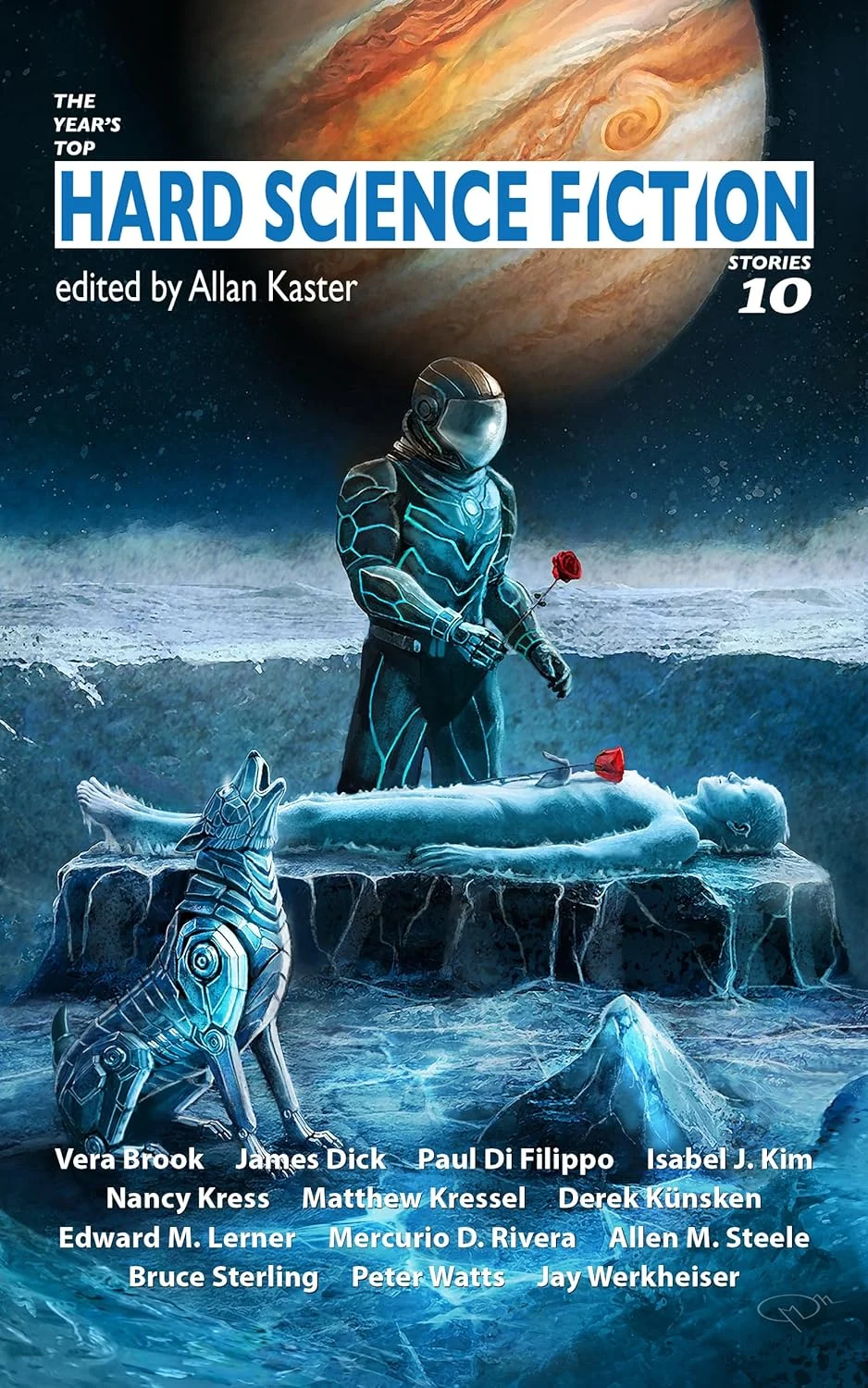
In the ever-evolving landscape of speculative literature, hard science fiction remains the definitive gold standard for readers who demand scientific rigor alongside narrative ingenuity. On June 19, editor and publisher Alan Kaster cemented his status as a premier curator of the genre with the release of The Year’s Top Hard Science Fiction Stories 10. This latest volume in his acclaimed annual anthology series serves as a definitive roadmap for the best hard SF published in 2025, capturing the anxieties, technical aspirations, and moral quandaries of a rapidly advancing civilization.
The collection is more than a mere reprint anthology; it is a vital snapshot of the intellectual discourse occurring within the science fiction community. By gathering the most rigorous, technically grounded novellas and short stories from the past year, Kaster provides a panoramic view of where the bleeding edge of science meets the limitations of the human condition.
The Pillars of the Collection: An Overview
The anthology features an expansive lineup of both legendary masters of the genre and emerging voices, ensuring a blend of classic narrative sensibilities with fresh, experimental perspectives. The 2025 selection is marked by a palpable focus on the consequences of human expansion—from the deep-space isolation of Ganymede to the claustrophobic pressures of pocket-dimension urban living.
For the reader, The Year’s Top Hard Science Fiction Stories 10 offers an unabridged journey into the mechanics of tomorrow. The stories within are characterized by their commitment to "hard" principles: physics, biology, and computer science serve as the foundational bedrock for every plot point. Whether it is the biological intricacies of borane-based life or the geopolitical ramifications of AI-led existential threats, the science is treated with a level of respect that challenges the reader to think alongside the characters.
Chronology of Innovation: A Thematic Breakdown
The stories selected by Kaster can be categorized into several thematic pillars that defined the scientific and social zeitgeist of 2025.
The Biological and Psychological Frontier
The anthology begins with a fascination for the limits of the human mind and body. In Nancy Kress’s "Reality Check," the focus shifts to the intimate, domestic impact of future technology. By exploring deep brain stimulation as a remedy for digital addiction, Kress probes the ethical boundary between parental guidance and neurological autonomy. Similarly, Peter Watts’s "The Twenty-One Second God" pushes this narrative of consciousness further. Dealing with the aftermath of a hivemind experience, the story examines the fragile nature of individual sanity when confronted with the collective—a topic that has gained significant traction in the age of neural link research and swarm intelligence.
The Mechanics of Expansion
A significant portion of the anthology deals with the logistics of exploration. James Dick’s "ESRI" provides a sobering look at the cyclical nature of human ambition, detailing the third mission to Europa following a failed second attempt. It is a story of legacy and persistence. Allen M. Steele, ever the master of lunar procedural, offers "The Hunt for Lemuria 7," which grounds its mystery in the technical reality of robotic rovers and the inherent dangers of commercial space tourism.
The Alien and the Artificial
Hard science fiction has always been the primary vehicle for examining the "Other." In Jay Werkheiser’s "Infestation," the reader is introduced to the concept of borane-based life-forms, a classic staple of speculative biology that challenges our carbon-centric worldview. Conversely, the collaborative effort between Matthew Kressel and Mercurio D. Rivera, "Threat Assessment," brings the debate over Artificial General Intelligence to the lunar surface. By utilizing a psychologist as the protagonist, the authors pivot away from the standard "rogue robot" trope, instead focusing on the logical, perhaps even rational, motivations of an AI that has decided humanity is an impediment to progress.

Supporting Data: Critical Acclaim and Awards
The prestige of this anthology is bolstered by the critical reception of the individual works included. A hallmark of Kaster’s curatorial process is the inclusion of award-finalists, which acts as a secondary verification of the collection’s quality.
- "Apartment Wars" by Vera Brook: Currently a finalist for the 2025 Analog Analytical Laboratory (AnLab) Award, this story provides a brilliant blend of domestic drama and speculative physics. The premise—a widow in a space-starved nation discovering pocket-dimension technology—highlights the intersection of economic scarcity and scientific breakthrough.
- "Tenth Contact" by Bruce Sterling & Paul Di Filippo: As a finalist for a 2025 Asimov’s Readers’ Award, this novelette captures the sheer scale of the cosmos. The depiction of a galactic aurora storm on Ganymede is a masterclass in atmospheric writing, grounded in the reality of space-faring logistics.
- "The Twenty-One Second God" by Peter Watts: Already earning recognition as a finalist for the 2026 Locus Award, Watts’s inclusion ensures that the volume is not just looking back at the year’s best, but looking forward to the future of the field.
Implications: Why This Anthology Matters
The significance of The Year’s Top Hard Science Fiction Stories 10 extends beyond the bookshelf. In an era where technological progress often outpaces public understanding, hard science fiction serves as a "stress test" for society.
The stories within this volume are not merely entertainment; they are thought experiments. When Edward M. Lerner writes of humans and green scum antagonizing each other on a malodorous water world in "In the Slime of Life," he is reflecting our current anxieties regarding ecological collapse and inter-species survival. When Isabel J. Kim explores the maintenance of portal-spanning cables in "Freediver," she is addressing the fragility of the infrastructure that binds our globalized—or, in this case, interstellar—civilization together.
The anthology serves as a reminder that the "hard" in hard SF is not just about the accuracy of equations; it is about the hardness of reality. It is about the friction between human desire and physical law.
Looking Toward the Future
Alan Kaster’s ability to compile these stories into a cohesive, readable, and intellectually stimulating volume is a feat that requires both a deep knowledge of the genre’s history and a keen eye for its future trajectory. By self-publishing these thematic anthologies, Kaster has created a platform that bypasses the traditional gatekeepers of the publishing industry, allowing the best, most rigorous stories to find an audience that might otherwise miss them in the sprawl of digital content.
As we look at the list of contributors—from veteran writers like Bruce Sterling and Nancy Kress to the rising stars of the genre—it becomes clear that hard science fiction is in a state of robust health. The genre has moved beyond the "slide-rule" tropes of the mid-20th century, evolving into a nuanced, multi-faceted exploration of what it means to be human in a universe that is increasingly understandable yet infinitely mysterious.
For readers, scholars, and aspiring writers, The Year’s Top Hard Science Fiction Stories 10 is an essential purchase. It is a testament to the fact that, even as our world changes, the core mission of science fiction remains the same: to use the tools of the present to map the possibilities of the future.
Whether you are interested in the potential for pocket dimensions, the psychology of sentient AI, or the logistical nightmare of space tourism, this collection offers a rigorous and rewarding experience. As we move further into the decade, these stories will likely be viewed as the foundational texts that helped us navigate the complex, often daunting, technological landscape of the mid-2020s.

 Ammar Sabilarrohman
 Pevita Pearce