Layla Zulfa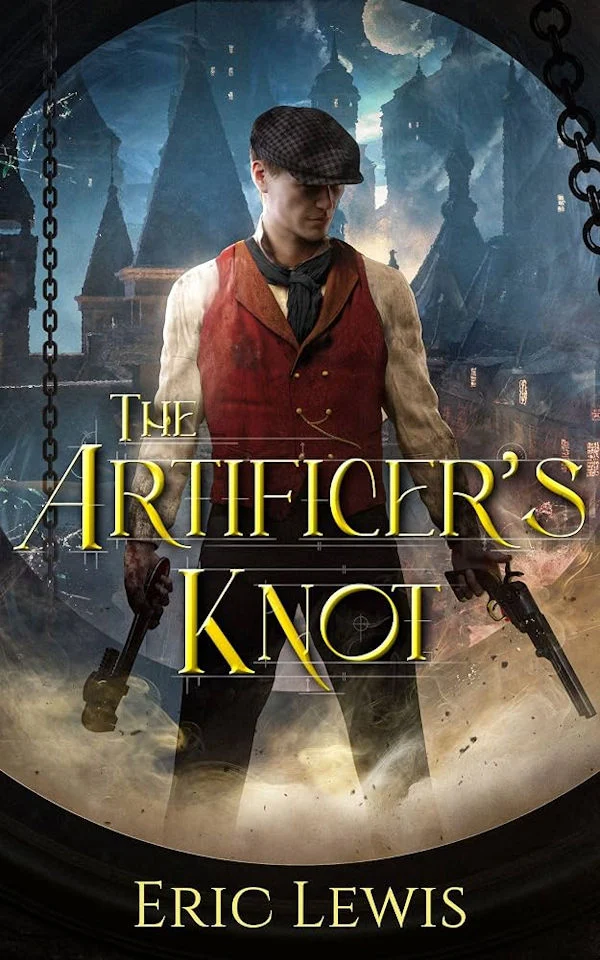
In the competitive arena of modern fantasy, few sub-genres manage to balance the mechanical wonder of steampunk with the grit of noir crime fiction. The Artificer’s Knot, a standout entry in the 11th annual Self-Published Fantasy Blog-Off (SPFBO), has officially secured its place as a semi-finalist, sparking rigorous debate among critics regarding the intersection of industrial innovation and moral corruption.
The novel, which serves as a centerpiece for this year’s competition, presents a world dominated by "Vril"—a mystical, high-energy substance controlled by a monopolistic cabal of Alchemists. When protagonist Randyll Tephius, a brilliant young artificer, discovers massive oil deposits, he inadvertently threatens the status quo. His subsequent expulsion from university and descent into the criminal underworld serve as the catalyst for a narrative that is as much a cautionary tale about energy hegemony as it is a high-stakes crime drama.
The Narrative Core: A Collision of Industry and Crime
The story follows the classic "fall from grace" trajectory with a gaslamp twist. After Randyll’s academic career is sabotaged by the elite Alchemists, he finds himself destitute on the streets. His unlikely salvation arrives in the form of Gouger Nebb, an aging mob boss seeking to pivot his illicit operations toward "legitimate" business.
By leveraging Randyll’s technical genius to develop petroleum-based alternatives to Vril, the duo attempts to climb the social ladder. However, their ascent is met with brutal opposition. As Randyll maneuvers between the cutthroat world of rival gangs, the aristocratic elite, and a corrupt police force, he faces an existential crisis: how does one revolutionize an industry without becoming the monster they are trying to displace? The narrative reaches a fever pitch when the very Alchemists who destroyed his career offer him a seat at their table, forcing a choice between global redemption and the betrayal of the man who saved him.
Chronology of a High-Stakes Competition
The inclusion of The Artificer’s Knot in the SPFBO semi-finals marks a milestone for the contest, which prides itself on surfacing hidden gems in the self-published market. The evaluation process for this title has been exhaustive, involving a panel of esteemed judges who scrutinized the prose, character development, and world-building over several months.
- Phase 1 (The Initial Reading): Judges were immediately struck by the book’s sharp, fluid prose and its ability to ground high-concept fantasy in the relatable struggles of a working-class protagonist.
- The Mid-Point Evaluation: As the story crossed the 60% threshold, the judges noted a shift in tone. While some praised the escalating tension, others expressed concerns regarding the predictability of the dramatic set-pieces.
- Final Review Synthesis: By the conclusion of the evaluation period, a consensus emerged: while the novel occasionally leans on genre tropes, its intellectual engagement with themes of monopoly and environmental cost makes it a standout.
Critical Analysis: A Divided Panel
The SPFBO judging panel provided a diverse spectrum of feedback, reflecting the polarizing nature of the book’s pacing and characterization.
The Case for Excellence: Prose and World-Building
E.G. Stone, one of the panel’s primary reviewers, lauded the "smooth and unique" prose. "The dialogue is distinct to each character," Stone noted, highlighting that the writing style successfully elevates the narrative beyond standard genre fare. This sentiment was echoed by Julia, who found the political and scientific underpinnings of the world—specifically the uncomfortable parallels between the fictional energy crisis and real-world resource wars—to be the book’s greatest strength. "The story is not interested in easy answers," Julia remarked. "Its refusal to offer clean solutions gives the world real bite."
The Tension of Tropes and Pacing
Not all feedback was celebratory. Some judges identified issues with the book’s reliance on established archetypes. Kerry Smith pointed out that the "brilliant student turned gangster" trajectory borders on the trope-heavy, though she conceded that the execution was structurally sound.
Perhaps the most significant critique came from the pacing of the drama. "It got to the point where I was so bored because the drama just kept increasing," Stone observed, suggesting that the relentless escalation of crises eventually dampened the stakes. Conversely, Maureen Neuman found this same quality exhilarating, comparing the reading experience to "riding a zip line above the crowds on a fairground midway."
Character Depth: The Nebb Factor
The character of Gouger Nebb served as a litmus test for the judges. While Adawia initially found Nebb to be a "try-hard" version of classic cinematic gangsters, she ultimately warmed to his "brutal common sense." The consensus among the panel is that while the supporting cast may not be revolutionary, their purpose-driven writing keeps the narrative moving at a relentless clip.
Implications: The Moral Cost of Progress
At its heart, The Artificer’s Knot serves as a mirror for modern anxieties. The central struggle—a fight between an established, corrupt monopoly and an insurgent, petroleum-based technology—carries a heavy weight of historical and contemporary irony.
The novel refuses to portray Randyll’s inventions as purely heroic. By framing the transition from Vril to oil as a choice between two morally fraught energy systems, the author forces the reader to confront the environmental and social costs of "progress." This thematic depth elevates the book from a standard steampunk adventure into a work of serious socio-political fiction. The ending, which leaves the reader questioning the protagonist’s ultimate moral trajectory, is a deliberate choice that challenges the reader’s investment in the hero’s success.
Official Responses and Next Steps
The SPFBO organizers have emphasized that the selection of The Artificer’s Knot as a semi-finalist underscores the contest’s commitment to "unconventional" fantasy. According to the official blog, the judges’ split opinions are not a sign of failure, but a testament to the book’s ability to provoke intense, intellectual engagement.
"Putting your work forward for a competition takes real courage," the editorial board stated in their latest dispatch. The competition continues to track toward its June 26th deadline, at which point the final selection for Round Two will be announced.
For readers interested in following the remainder of the competition, the official SPFBO website remains the hub for all scoring updates and judge profiles. As the industry looks toward the next phase of the contest, The Artificer’s Knot remains a formidable contender, having already succeeded in its primary goal: starting a conversation.
Conclusion
Whether or not The Artificer’s Knot advances to the finals, it has already secured a legacy as one of the most intellectually provocative entries in the 11th annual SPFBO. By blending the aesthetic charm of gaslamp fantasy with the uncomfortable realities of corporate monopolies and moral compromise, the author has crafted a story that stays with the reader long after the final page.
In a literary landscape often dominated by "safe" narratives, this novel serves as a reminder that the best stories are often the ones that refuse to settle for easy resolutions. As the judging panel prepares for the final deliberations, the fate of Randyll Tephius—and the future of his volatile world—remains a subject of intense anticipation.
For those seeking to explore the full breadth of the competition, visit the official SPFBO portal or follow the updates provided by the Fantasy Faction editorial team. All queries regarding the competition process should be directed to editor Jennie Ivins via authorized social channels.


 Ammar Sabilarrohman
 Pevita Pearce