Ammar Sabilarrohman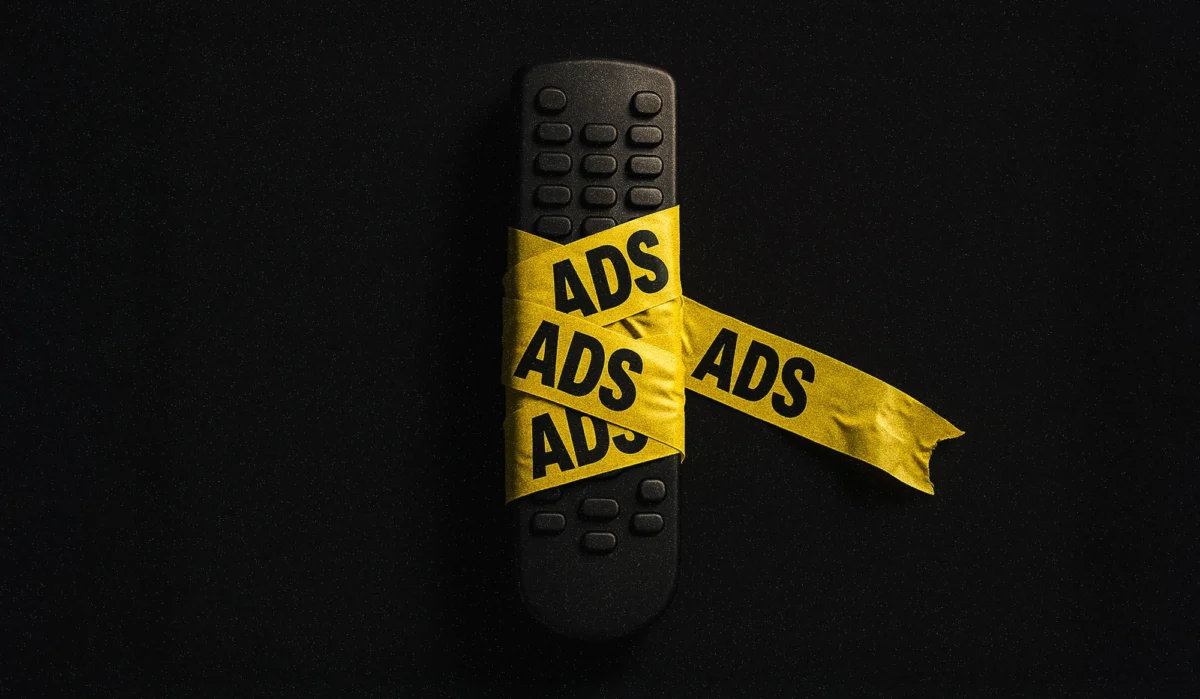
By Tim Peterson | June 24, 2026
The landscape of home entertainment has undergone a seismic shift. For years, the streaming industry defined itself by a singular, seductive promise: an ad-free, premium experience that liberated viewers from the tyranny of the commercial break. Today, that promise has been effectively retired. As of mid-2026, the streaming ecosystem is rapidly transforming into a predominantly ad-supported medium, mirroring the traditional linear television models that many of these platforms originally sought to disrupt.
This transition, however, is not merely a change in business model; it represents a fundamental recalibration of how brands interact with audiences. While the influx of ad-supported tiers provides advertisers with the scale they have long craved, the current execution of these campaigns—often relying on recycled creative from social media—is pushing the boundaries of viewer patience.
The State of Subscriptions: An Ad-Supported Reality
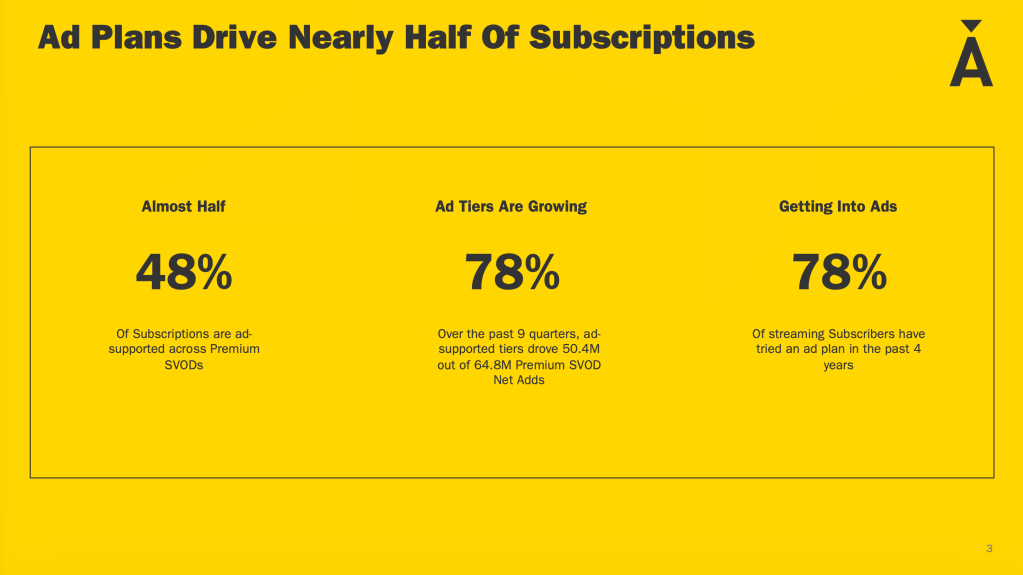
The latest data from Antenna’s "State of Subscriptions — Ads & Adds" report paints a clear picture: the ad-supported model is no longer a niche offering; it is the industry standard. Nearly half of all top-tier streaming service subscriptions are now ad-supported. This "premium" category, which includes heavy hitters like Disney+, Netflix, HBO Max, Paramount+, and Peacock, has seen a decisive migration toward hybrid tiers.
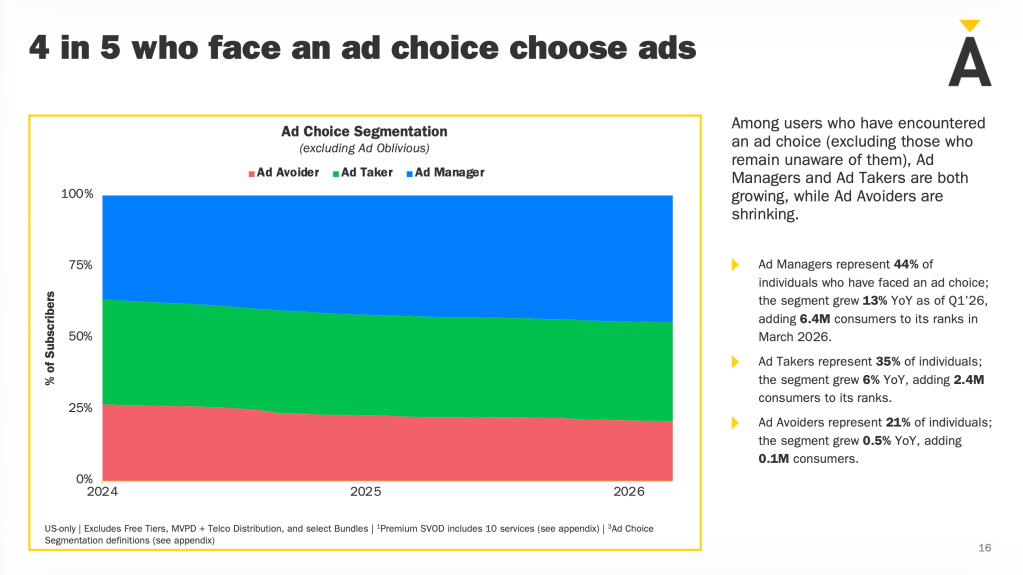
The rise is driven by two specific consumer segments identified by analysts: "ad takers," who exclusively choose ad-supported plans, and "ad managers," who toggle between ad-supported and ad-free tiers depending on their budget and content needs. With the vast majority of new streaming sign-ups opting for ad-supported tiers, it is becoming mathematically inevitable that the ad-supported segment will soon command the majority share of the total subscription market.
Chronology of the Pivot
- Late 2022 – Early 2023: Netflix and Disney+ break the "ad-free" taboo, launching lower-cost ad tiers to satisfy Wall Street’s demand for diversified revenue streams and higher average revenue per user (ARPU).
- 2024: The "Streaming Wars" pivot toward profitability. Services begin bundling, price-hiking ad-free tiers, and aggressively pushing users toward ad-supported options through marketing incentives.
- 2025: Ad-supported tiers move from "secondary" offerings to the primary engine of subscriber growth. Industry reports show consumer price sensitivity outweighs brand loyalty to ad-free viewing.
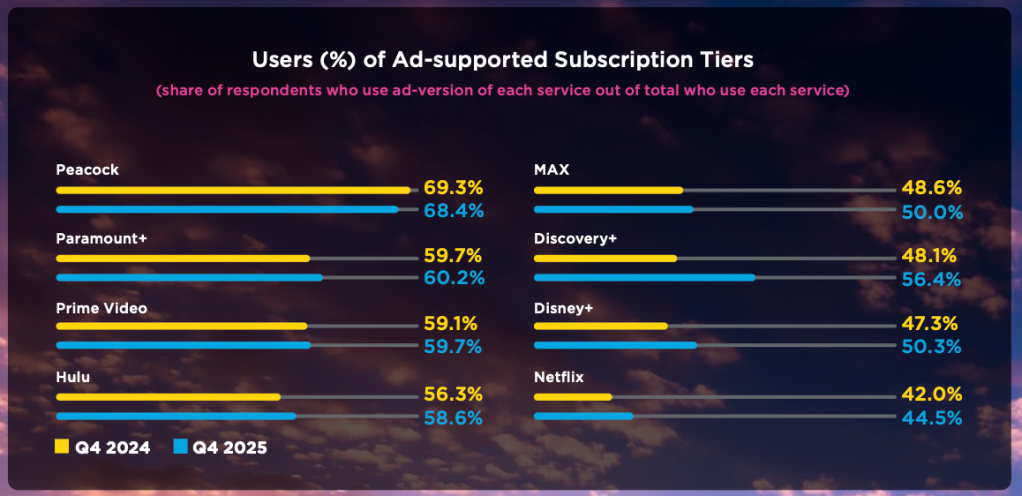
- Mid-2026: The current state of play. Research from TiVo indicates that for almost every major streaming platform—with the notable exception of Netflix, which is catching up quickly—the majority of the user base is now on an ad-supported plan.
Supporting Data: Why Viewers Are Tuning In
The transition is not just a top-down mandate from media executives; it is a bottom-up choice by consumers. Price sensitivity is the primary driver, but the traditional narrative that "viewers hate ads" is losing its validity.
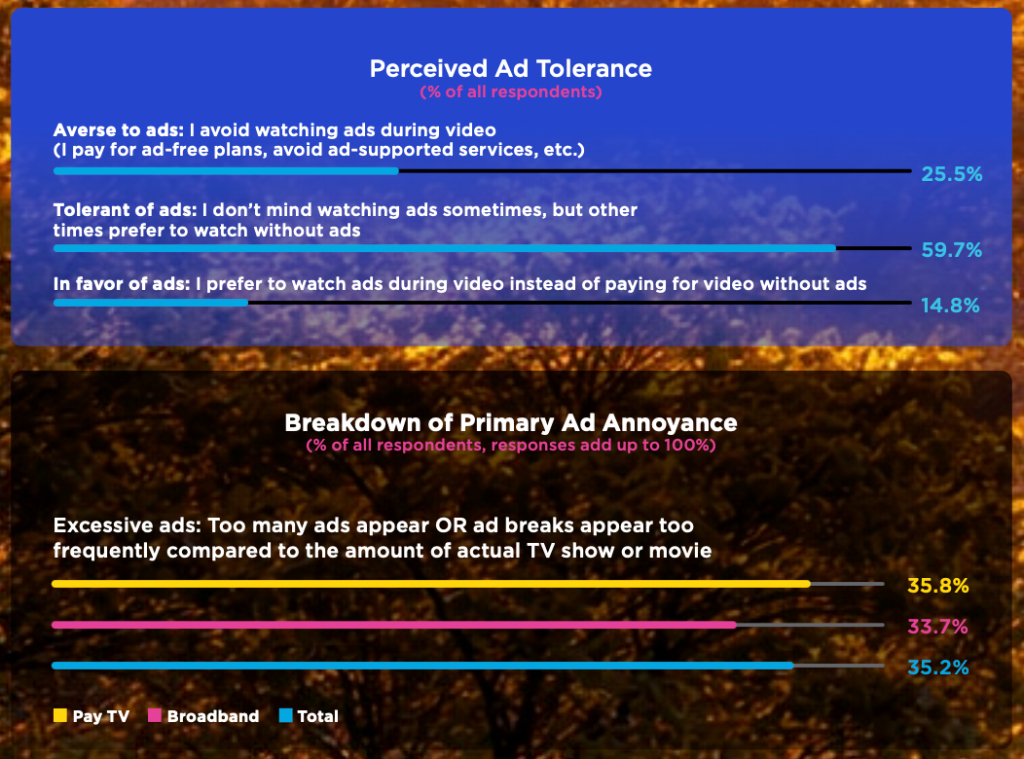
According to TiVo’s "Q4 2025 Video Trends Report," 75% of respondents expressed that they either do not mind sitting through ads or actually prefer the inclusion of commercials if it means a lower subscription fee. This represents a significant cultural shift. The "ad-aversion" that fueled the initial cord-cutting movement has been dampened by the harsh reality of rising subscription costs.
However, there is a limit to this newfound tolerance. A full third of viewers report feeling "annoyed" by the frequency or nature of the ads they see. This frustration is exacerbated by the "multi-platform fatigue" that occurs when viewers are served the same repetitive, poorly formatted ads across both social media and their television screens.
The "Social-to-Stream" Problem
One of the most pressing concerns for modern advertisers is the strategy of cross-pollination. According to iSpot’s "2026 Video Ad Spend and Strategy Report," there is a heavy reliance on "recycling" content. Nearly 40% of surveyed brand and agency executives admitted that more than half of their TV and streaming ads are identical to the assets they run on social video platforms.
This creates a cognitive dissonance for the viewer. A high-production, cinematic ad designed for a 65-inch 4K television often feels jarring or loses its narrative impact when viewed in the same rotation as short-form, vertical-style social media content. As brands scramble to optimize for performance, they risk sacrificing the "lean-back" experience that gives premium television its inherent value.
Official Responses and Industry Sentiment
The industry is currently in a state of reactive adjustment. During recent discussions at Cannes Lions, media executives acknowledged that while the scale of ad-supported streaming is unparalleled, the creative strategy has lagged behind.
Netflix’s Amy Reinhard recently addressed the delicate balance of programming, noting that while the platform is exploring new ad formats, the conversation surrounding "creator content"—content specifically optimized for the Netflix streaming experience—remains in its infancy. "Not a lot of conversations, honestly, about the creator content at this point," Reinhard admitted, highlighting that the focus remains on integrating traditional advertising into a non-traditional environment.
Conversely, agencies like Omnicom are doubling down on technical infrastructure. Their recent collaboration with Disney Advertising to enable "sequential ads"—a strategy that tells a story across multiple commercial breaks—is a direct attempt to mitigate the annoyance factor by making the advertising experience feel more like a narrative journey rather than an interruption.
Broader Implications for the Media Landscape
The shift to ad-supported streaming has far-reaching consequences:
- The Talent Gap: With $250 million recently committed by CAA to grow creator-led businesses, the line between "influencer" and "traditional entertainment talent" is blurring. Hollywood is realizing that the future of streaming isn’t just studio-produced dramas, but the high-engagement content that creators have mastered on social platforms.
- Consolidation and Survival: The proposed acquisition of Warner Bros. Discovery by Paramount, which threatens to displace an estimated 6,000 jobs worldwide, is a stark reminder of the cost of competing in this new era. Scale is now the only way to survive the high-bandwidth, high-tech demands of the streaming economy.
- The Governance of Quality: As WPP and other agencies test AI-driven "buyer agents" for video, the focus is shifting from simply placing ads to governing them. Brands are becoming increasingly concerned about brand safety and the context in which their ads appear, leading to a renewed interest in rigorous ad-governance frameworks.
- Diverse Representation: Despite the economic pressure, the industry continues to track diversity in content production. With 23.6% of 2025’s streaming movies directed by women—a figure mirrored by BIPOC filmmakers—the industry is under pressure to ensure that the shift toward ad-supported profit models does not come at the expense of inclusive storytelling.
Conclusion: The Path Forward
As we move into the second half of 2026, the "Future of TV" is no longer a distant projection; it is a crowded, competitive reality. The streaming industry has successfully captured the audience, but it has yet to master the art of the commercial break.
For brands, the opportunity is massive: they have access to the most engaged, data-rich audience in history. However, the path to success will not be found in simply dumping social media assets into a streaming queue. Success will require a return to high-quality, long-form creative strategy that respects the viewer’s time. The "ad-supported" era is here to stay, and for those who adapt their creative to the medium, the rewards will be as substantial as the reach.


 Rifan Muazin
 Suro Senen