Evan Lee Salim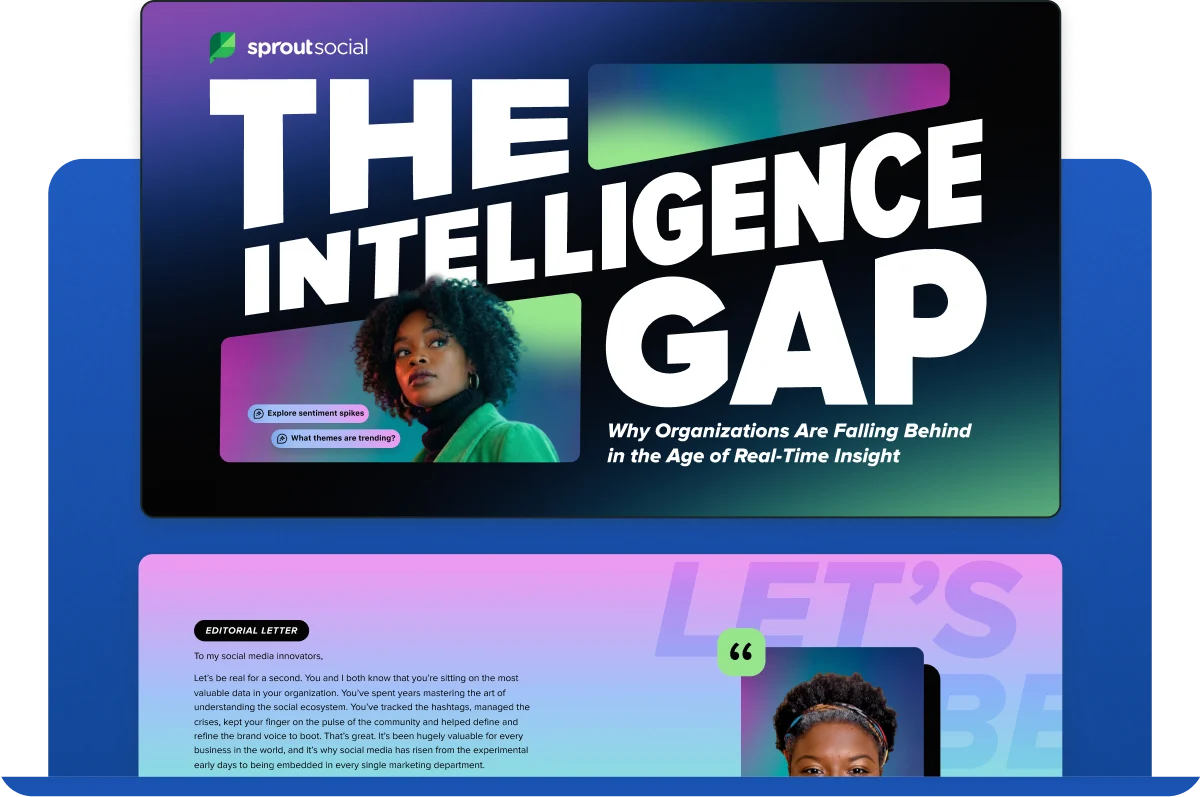
In the modern corporate landscape, data is abundant, but actionable insight remains a scarce commodity. For years, organizations have treated social media data as a secondary stream—a repository for vanity metrics or a retrospective record of past campaigns. However, a seismic shift is underway. The real value of social media data no longer resides in passive marketing dashboards or end-of-quarter reports. Instead, it is being redefined as "Social Intelligence"—a dynamic, forward-looking radar that informs the highest levels of enterprise decision-making.
True social intelligence is defined by the velocity and precision with which an organization acts upon real-time audience signals. It is the practice of closing the gap between discovering a consumer sentiment shift and executing a core business pivot. By transforming raw, unstructured conversation into strategic foresight, companies are no longer just monitoring their brand; they are actively navigating the future of their industry.
The Strategic Imperative: Data-Driven Evolution
According to the 2026 Social Intelligence Report, the boardroom has officially recognized social data as a foundational pillar of modern strategy. The consensus is overwhelming: 93% of professionals now identify social intelligence as an essential requirement for long-term growth.
Perhaps more significantly, the shift in influence is palpable. Roughly 71% of corporate directors predict that by 2029, social data will hold more weight in shaping core enterprise strategy than traditional market research. This transition signals a departure from the slow, cyclical nature of focus groups toward a "continuous listening" model. In this new era, the world’s social media platforms serve as the largest, most unfiltered focus group in human history, offering unprompted and real-time feedback that legacy research methods simply cannot capture.
Inside "Customer Zero": A Case Study in Operationalization
To understand how this shift functions in the trenches, it is necessary to look at organizations that have successfully operationalized these insights. At Sprout Social, the internal team has adopted the identity of "Customer Zero." By treating their own social intelligence platform as a mission-critical tool for internal operations, the team stress-tests workflows, builds repeatable frameworks, and models exactly how social insights can steer a multi-departmental enterprise.
Olivia Jepson, Sprout’s Social Media Intelligence Manager, characterizes this role as "reverse user research." By acting simultaneously as a daily power user and a strategic contributor, her team bridges the gap between software development and market needs. Jepson’s work is not confined to a social team; it is a cross-functional engine that translates the "What are people saying?" of social listening into the "So what?" of social intelligence.
The Chronology of an Insight: From Signal to Strategy
The process of operationalizing intelligence follows a rigorous, non-linear chronology:
- Daily Immersion: The foundation begins with disciplined, time-blocked observation. Rather than aimless scrolling, the team monitors curated feeds aligned with the company’s Ideal Customer Profile (ICP).
- Mapping and Validation: Observations are immediately categorized in collaborative tools like FigJam, which serves as a living knowledge repository. This prevents insights from vanishing into the void of daily operations.
- Quantification: Once a pattern emerges, the team deploys advanced listeners to quantify the volume of the trend. This cross-platform validation ensures the insight is a market-wide shift rather than a localized anomaly.
- Stakeholder Injection: The insight is shared with internal stakeholders—product, design, or sales—not as a raw report, but as a solved problem or a strategic opportunity.
Establishing the Baseline: Foundations of Monitoring
Before an organization can claim to be "intelligence-driven," it must establish what Jepson calls "table stakes." These are the non-negotiable operational foundations that filter out market noise:
- Brand Health Monitoring: Tracking the longitudinal sentiment surrounding the brand identity.
- Competitive Intelligence: Keeping a constant pulse on competitor product releases, marketing shifts, and audience feedback.
- Real-Time Sentiment Analysis: Capturing the immediate emotional temperature of the customer base during product launches or service outages.
By mastering these three streams, an organization creates a "bulletproof foundation" that allows for the extraction of high-value signals without being distracted by the daily noise of the social web.
Bridging the Gap: Cultivating Internal Trust
The greatest barrier to the adoption of social intelligence is not technological, but cultural. Data only drives impact if stakeholders trust the source. Consequently, social practitioners must prioritize relationship-building before system-building.

Cultivating Advocates Across the Enterprise
Jepson emphasizes that social intelligence dies in a silo. To ensure that social data informs the wider business, practitioners must build bridges into four key departments:
- Product Development: Feeding user pain points directly into the roadmap to reduce development risk.
- Sales and Revenue: Providing competitive intelligence that arms the sales force with better talking points during the negotiation phase.
- Market Research: Complementing statistical surveys with qualitative, emotional context.
- Executive Leadership: Delivering high-level strategic opportunities that validate or challenge existing corporate assumptions.
This collaborative model prevents the "us vs. them" mentality that often occurs between traditional researchers and social media teams. Traditional research provides the statistical validation and scale, while social intelligence provides the nuance and the "why." When these two datasets are synthesized, the result is a 360-degree view of the customer that is far more potent than either method alone.
Implications: The Move Upstream
The ultimate goal of a mature social intelligence program is to move "upstream"—away from reactive marketing and toward proactive product strategy. When social practitioners engage with product teams during the discovery phase, they are no longer justifying marketing spend; they are acting as strategic consultants who guide the business roadmap.
The implications for this are profound. When an organization can validate customer demand for a feature before it enters the development pipeline, the risk of product-market mismatch drops precipitously. Social intelligence becomes a risk-mitigation tool.
External-Facing Thought Leadership
Beyond the walls of the organization, these insights fuel external-facing content. By feeding real-time social data into go-to-market strategies, companies can align their branding with major cultural moments. Whether it is analyzing trends during the "Big Game" or the World Cup, the ability to synthesize social signals allows a brand to remain synchronized with the external reality of their audience. This builds a brand perception that is not just "present," but highly relevant and culturally attuned.
Moving Toward a Predictive Posture
Transitioning from a reactive to a predictive posture is the hallmark of the modern, high-performing enterprise. It requires a fundamental shift in behavior: from a "content-first" mindset to a "customer-truth" mindset.
For those looking to implement this within their own organizations, the advice is clear: do not wait for a mandate. Proactively seek out the pain points of your cross-functional stakeholders. Find out what keeps the Product Manager awake at night, or what the Sales Director needs to close a high-value account. Then, provide the social data that solves those specific problems.
Once stakeholders experience their own "aha moment"—the realization that social intelligence has removed a critical strategic blind spot—the culture of the organization begins to change. Adoption scales organically, moving the program from an experimental initiative to a central engine of growth.
In conclusion, the gap between "social listening" and "social intelligence" is the difference between knowing what people say and knowing what to do about it. In an era of rapid technological and cultural flux, those who can transform raw, unfiltered social signals into decisive business action will not only survive; they will define the next generation of industry leadership. The tools are ready; the strategy is clear. The only remaining question is how quickly your organization can move from the dashboard to the boardroom.


 Rifan Muazin
 Suro Senen