Pevita Pearce
The debate regarding the legitimacy of the "audiobook experience" is a perennial favorite among literary traditionalists. For some, the act of reading is inextricably linked to the tactile sensation of paper under fingertips and the mechanical rhythm of eyes scanning lines of ink. To these purists, delegating the act of "reading" to a professional narrator—effectively introducing an intermediary between the author’s intent and the reader’s imagination—is a dilution of the literary craft.
However, this perspective is increasingly viewed as an outdated gatekeeping mechanism. In an era where the consumption of literature is evolving, audiobooks are not merely an alternative; for many, they are a vital medium. Whether serving the needs of the visually impaired, catering to those who possess high auditory retention, or simply acting as a companion to the modern, mobile lifestyle, audiobooks have carved out a permanent, prestigious space in the publishing ecosystem.
When a narrator possesses the unique ability to inhabit the author’s voice, they can elevate a text, transforming static prose into a vibrant, living performance. The following five science fiction masterworks are prime examples of literature that, through exceptional narration, arguably transcend the limitations of the printed page.
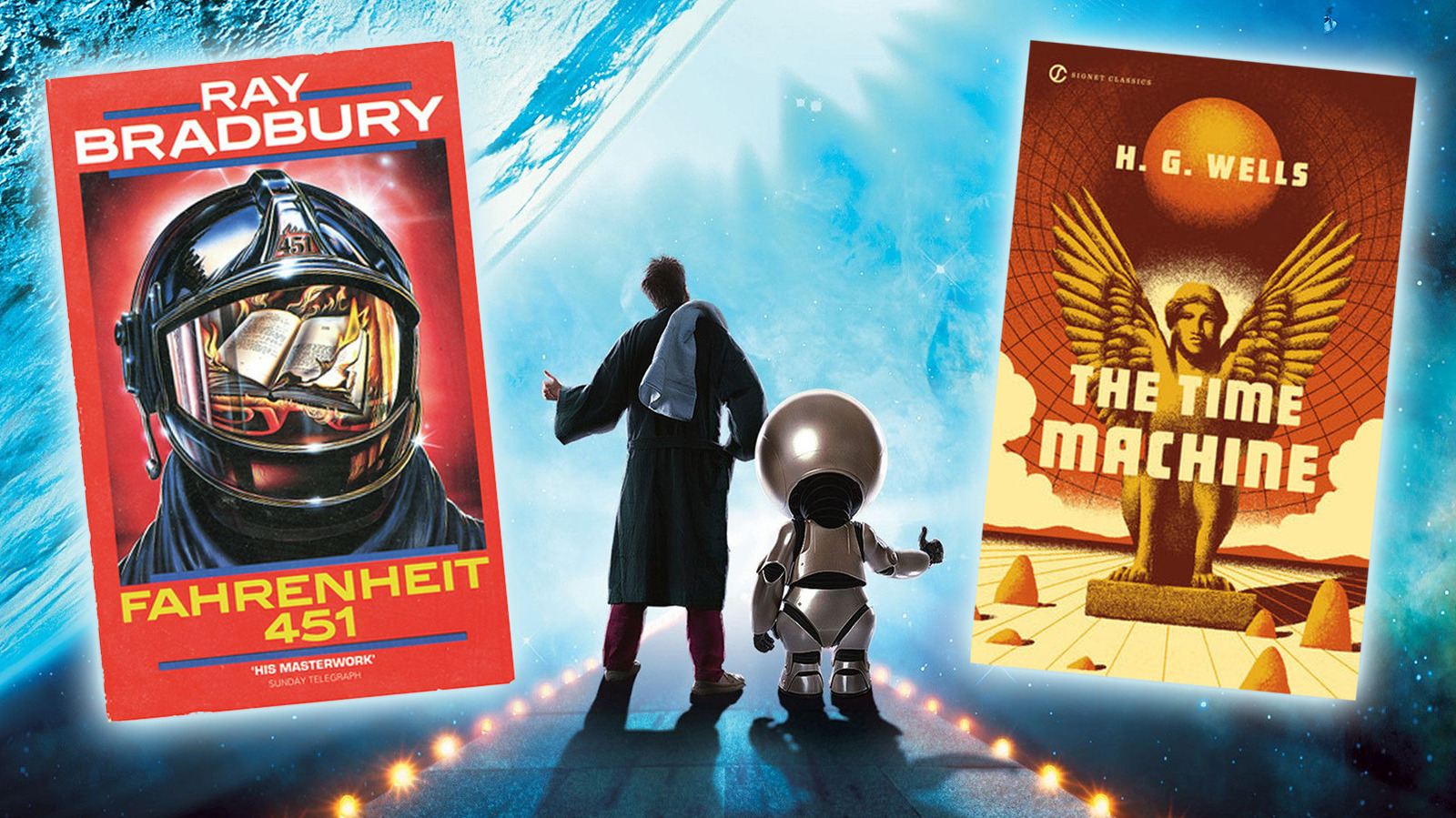
The Time Machine: Scientific Detachment Meets Atmospheric Dread
H.G. Wells’ 1895 foundational text, The Time Machine, remains a cornerstone of the science fiction genre. The narrative follows a Victorian inventor who propels himself into the year AD 802,701, discovering a future where humanity has bifurcated into two distinct, tragic species: the surface-dwelling, childlike Eloi and the subterranean, predatory Morlocks.
Chronology and Scientific Context
Wells’ vision was rooted in the social anxieties of the Industrial Revolution, specifically the widening chasm between the idle wealthy and the exploited labor class. Unlike modern time-travel adventures that focus on paradoxes or action, The Time Machine reads like a field report from an evolutionary biologist. The protagonist acts as a clinical observer, documenting the slow decay of human potential over millions of years, eventually witnessing the extinction of the planet itself.
The Power of Performance
The challenge for any narrator of Wells’ work is to maintain the protagonist’s scientific, somewhat dispassionate tone while conveying the mounting horror of his discovery. The version narrated by Scott Brick achieves this delicate balance perfectly. Brick’s measured pacing allows the listener to digest the philosophical implications of the text without the performance overshadowing the bleak, inevitable conclusions Wells reaches about planetary extinction. It is a masterful interpretation of a classic that reminds us why the 1960 film adaptation remains a landmark of the genre, even as the original text offers a far more nihilistic and thought-provoking experience.
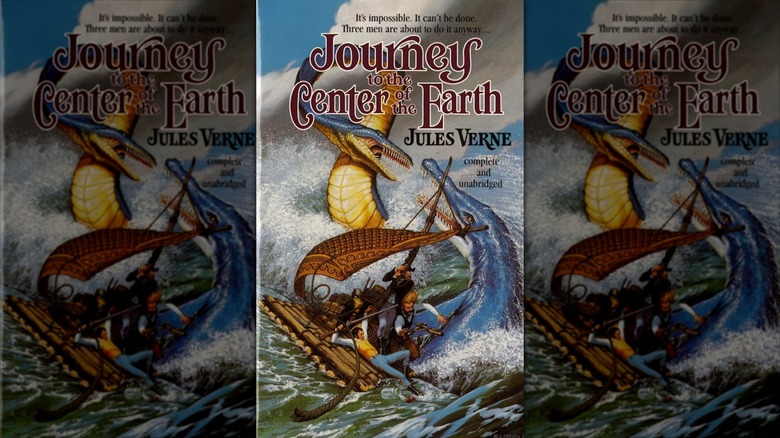
Journey to the Center of the Earth: The Auditory Expedition
Jules Verne’s Journey to the Center of the Earth (1864) is a testament to the power of scientific curiosity. By grounding his wild, subterranean fantasy in the rigorous, detailed geological and mineralogical knowledge of his time, Verne created a narrative that feels startlingly plausible, even to a modern reader.
Narrative Architecture
The story, which follows the intrepid Professor Otto Lidenbrock, his nephew Axel, and their guide Hans, served as a blueprint for the "lost world" subgenre. It influenced generations of writers, from Arthur Conan Doyle to Edgar Rice Burroughs. The brilliance of the book lies in the sensory descriptions of the descent—the shifting pressure, the echoes, and the sudden emergence into a prehistoric, sunlit ecosystem hidden beneath the crust.
Tim Curry’s Definitive Interpretation
The 2011 audiobook recording, voiced by the legendary Tim Curry, is widely considered the gold standard for this title. Curry, who has long been celebrated for his ability to embody villains and complex, mercurial characters, brings an unexpected warmth and human passion to the role of the Professor. By lending a distinct, emotive personality to Lidenbrock, Curry elevates the text from a dry 19th-century adventure to a deeply personal exploration of discovery. His performance transforms the cavernous depths of the Earth into an intimate stage.
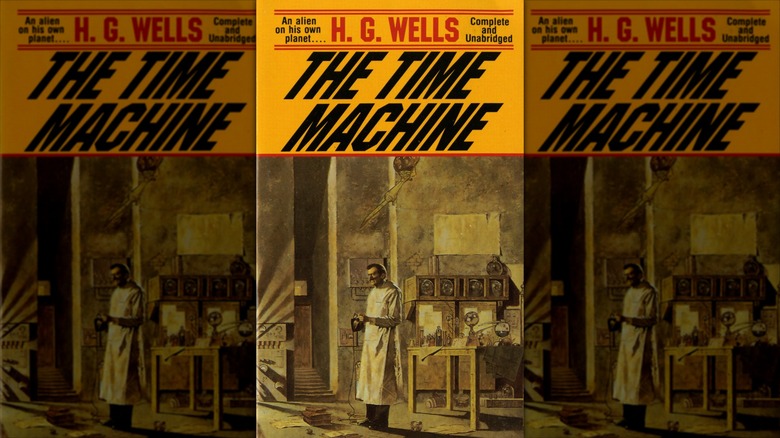
Fahrenheit 451: The Ironic Resonance of a Banned Future
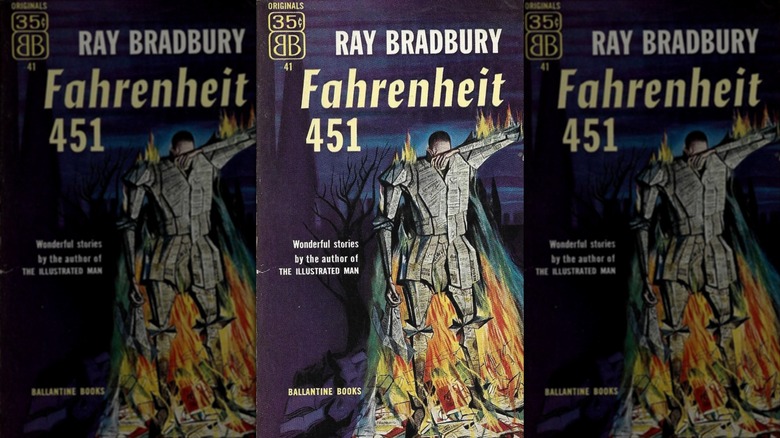
Ray Bradbury’s 1953 masterpiece, Fahrenheit 451, is perhaps more relevant today than at the time of its publication. Bradbury envisioned a future where a self-imposed, screen-addicted society burned books not because of a totalitarian regime, but because they lost the patience for deep, sustained thought.
Implications of the Digital Age
Bradbury’s most profound insight was the nature of the "screens" that would replace literature. While he imagined wall-sized televisions, the contemporary reality of the smartphone—a device that fits in one’s pocket and offers constant, fragmented information—is a chillingly accurate reflection of his warning.
The Author’s Own Voice
While the market offers excellent versions by contemporary actors like Penn Badgley and Tim Robbins, the definitive version remains the one recorded by Ray Bradbury himself. Listening to the author read his own warning about the death of reading is a meta-textual experience of the highest order. His voice carries the weight of history, a profound irony that underscores the tragedy of Montag’s world. It is a passionate, gritty, and deeply personal performance that acts as a final testament from one of science fiction’s greatest visionaries.
The Hitchhiker’s Guide to the Galaxy: Absurdity in Audio
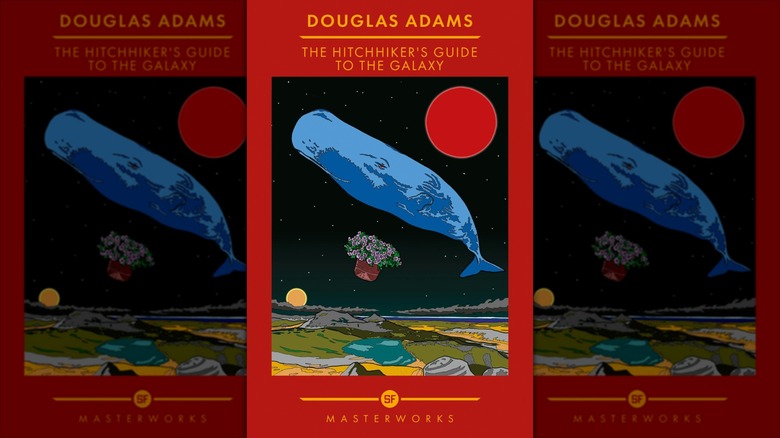
Douglas Adams’ The Hitchhiker’s Guide to the Galaxy occupies a unique place in the canon. It is, by its very nature, a work designed for the ear, having originated as a 1978 radio series before being adapted into a novel.
The Evolution of a Classic
The narrative follows Arthur Dent, an unremarkable Englishman saved from Earth’s destruction by his alien friend, Ford Prefect. Their journey through the galaxy, alongside a two-headed Zaphod Beeblebrox and the existential, depressed robot Marvin, is a masterclass in British satire.
The Importance of Cadence
Because the humor relies heavily on timing, wordplay, and a uniquely British dryness, the narration is crucial. While the author’s own readings are prized collector’s items, the widely available version by Stephen Fry is arguably just as essential. Fry’s impeccable comedic timing and his inherent grasp of the "Adamsian" absurdity ensure that every punchline lands with precision. It is a rare instance where the narrator becomes as iconic as the text itself, proving that in the case of Adams, the medium of the spoken word is the perfect vessel for his chaotic, brilliant universe.
The Road: The Emotional Weight of Silence
Cormac McCarthy’s The Road (2006) is a harrowing exploration of survival in a post-apocalyptic landscape. Unlike many works in the genre that focus on the mechanics of collapse, McCarthy focuses on the psychological toll of existence, centering on the relationship between a father and his son.
Narrative Style and Tone
McCarthy’s prose is intentionally sparse, devoid of ornamentation, and brutal in its honesty. He describes a world where the sun is obscured, nature has ceased to function, and the remnants of humanity have descended into cannibalism. It is a profoundly difficult read, yet it is punctuated by a singular, persistent glimmer of hope: the father’s commitment to "carrying the fire."
Tom Stechschulte’s Masterful Delivery
For a book as stripped-down as The Road, the audiobook format acts as a magnifying glass. The version narrated by Tom Stechschulte is essential for any serious reader. Stechschulte does not attempt to "act" the book; instead, he adopts a tone that is as weary, bleak, and ultimately tender as the text itself. He captures the mourning that permeates every paragraph—a grief for a world lost and a desperate, fragile love for the future. In audio, the silences between McCarthy’s sentences become just as important as the words, allowing the emotional weight of the story to settle in a way that the physical page cannot fully replicate.
Conclusion: The Future of Literary Consumption
The transition from printed text to spoken word is not a sacrifice of quality; it is an expansion of capacity. For the science fiction genre, which relies heavily on world-building, atmosphere, and philosophical inquiry, the audiobook offers a unique opportunity to immerse the listener in the author’s vision. Whether it is the scientific detachment of The Time Machine or the crushing, beautiful intimacy of The Road, these five audiobooks demonstrate that when the narrator and the text align, the resulting experience is not just "good enough"—it is definitive.


 Ali Ikhwan
 Suro Senen