Jia Lissa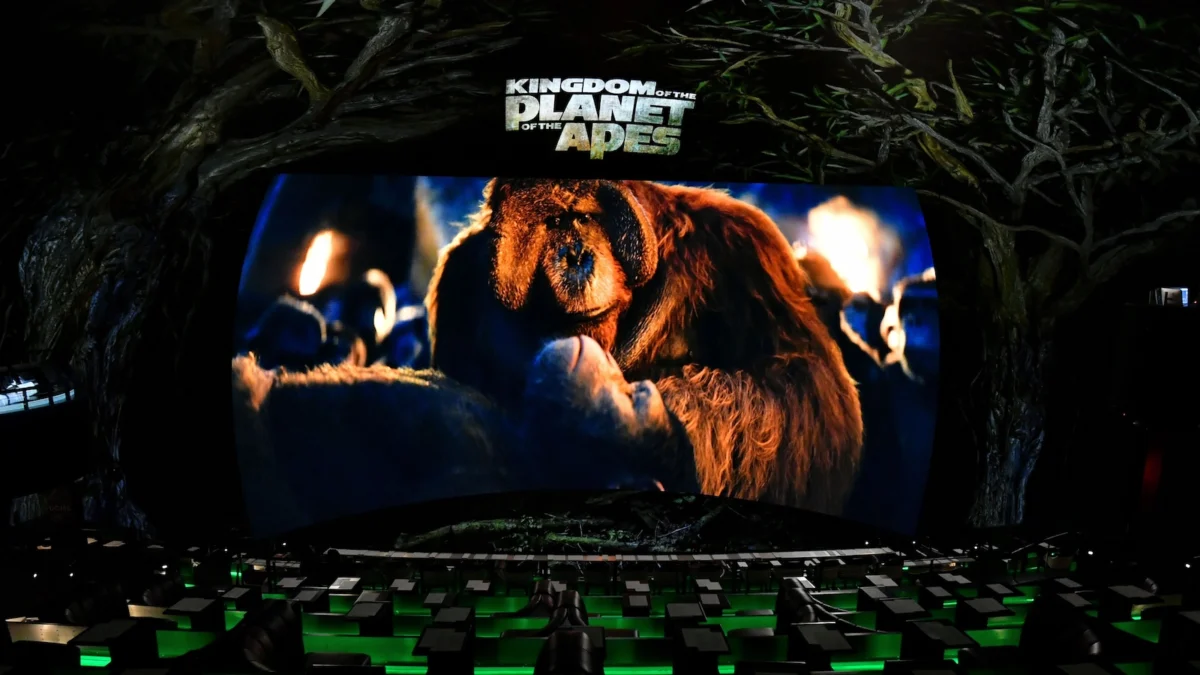
In a bold move that signals a seismic shift in how major studios view the theatrical landscape, Sony Pictures Entertainment (SPE) has announced a $100 million strategic investment in Cosm, the pioneering immersive technology company known for its hyper-realistic, dome-based "Shared Reality" venues. This investment, announced on Wednesday, June 24, marks a significant milestone in Sony’s ongoing strategy to redefine the cinematic experience, positioning the studio at the forefront of a technological evolution that blurs the lines between virtual reality, live event broadcast, and traditional theatrical exhibition.
For Sony, this is not merely a financial transaction; it is a tactical expansion of its footprint in experiential entertainment. Following their landmark 2023 acquisition of the Alamo Drafthouse theater chain—a move that stunned industry analysts by placing a major Hollywood studio in the business of exhibition—Sony is now betting that the future of cinema lies in environments that offer more than just a screen and a bucket of popcorn.
A New Era of "Shared Reality"
Cosm is not your average multiplex. The brand, which has rapidly gained a cult following, operates venues centered around giant, LED-domed screens that wrap entirely around the audience. By utilizing high-fidelity, 8K-plus resolution and spatial audio, Cosm creates an environment that effectively mimics the physical sensation of being at a live event—whether it is courtside at an NBA game, front-row at a global music festival, or inside the narrative of a blockbuster film.
The company labels this "Shared Reality," a term that distinguishes it from solitary VR headsets. Instead of isolating the user in a digital void, Cosm brings audiences together to share the visceral impact of immersive content in a physical space. For Sony, which owns a vast library of intellectual property spanning film, television, music, and interactive gaming, this technology represents a blank canvas for reimagining how audiences consume their favorite franchises.
Chronology: From Alamo to the Dome
To understand why Sony is doubling down on exhibition, one must look at their recent strategic arc.
- 2023: Sony Pictures Entertainment completes its acquisition of Alamo Drafthouse. The move was widely interpreted as an attempt to control the "prestige" theatrical experience. By focusing on film culture, strict theater etiquette, and a food-and-beverage-forward model, Alamo provided a buffer against the declining interest in generic, standardized cinema.
- 2024–2025: Cosm begins its rapid expansion, establishing a flagship location in Inglewood, California, near the SoFi Stadium, followed by successful launches in North Dallas (Grandscape) and downtown Atlanta (Centennial Yards). The venues prove that audiences are willing to pay a premium for "eventized" cinema that cannot be replicated at home.
- June 24, 2026: Sony announces the $100 million strategic investment in Cosm. As part of the deal, Sony Pictures Chairman and CEO Ravi Ahuja is appointed to the Cosm Board of Directors, ensuring that Sony’s creative vision is baked into the company’s expansion.
- Late 2026/Early 2027: Cosm plans to open its fourth and fifth locations in Detroit and Cleveland, respectively, with an aggressive roadmap for international expansion.
The Strategic Synergy: Why Cosm Matters
The rationale behind this partnership is multifaceted. While the Sphere in Las Vegas has captured headlines as a singular, monolithic destination, Cosm is aiming for a scalable, network-based model. By building a chain of these domes across major urban centers, Cosm is creating a permanent infrastructure for live-event and immersive cinema.

For Sony, the benefits are clear. The studio is looking to bridge the gap between its production arms and consumer-facing technology. An insider at SPE noted that "everything is on the table." This includes:
- Immersive Franchise Expansion: Imagine a new Spider-Man or Ghostbusters experience designed specifically for the dome, where the audience feels as though they are part of the action, rather than merely observing it.
- Cross-Platform Integration: Sony’s massive catalog of music (Sony Music) and gaming (PlayStation/Sony Interactive) offers endless possibilities for live, interactive, or tournament-based events held within Cosm’s immersive spaces.
- Data and Audience Engagement: By controlling the venue experience, Sony can gain direct insights into how audiences engage with their IP in real-time, allowing for more precise marketing and content development.
Official Responses and Corporate Vision
The enthusiasm from both parties is palpable, emphasizing a shared vision for the evolution of the fan experience.
"Cosm sits at the intersection of several trends shaping the future of entertainment," said Ravi Ahuja, Chairman and CEO of Sony Pictures Entertainment. "We’ve followed Cosm since before launch and have been impressed with the quality of the experience and the enthusiasm it’s generating with audiences. We’re excited to support Cosm’s next phase of growth and help bring these experiences to more fans around the world."
Jeb Terry, President and CEO of Cosm, echoed these sentiments, highlighting the strategic necessity of the partnership. "Sony Pictures shares our passion for innovation and the future of the fan experience. This investment represents that. We will use this capital to fuel Cosm’s growth as we expand our venue network and advance our technology initiatives. Sony is one of the most storied technology and entertainment companies in the world, and together, we’re positioned to bring more of the world’s most iconic IP to life in Shared Reality."
Market Implications: The Battle for the Audience
The theatrical industry has spent the better part of the last decade trying to lure audiences back from their streaming-equipped living rooms. While traditional chains focus on better seats and upgraded concessions, companies like Cosm and the Sphere are betting on scale and sensory overload.
However, the "experience economy" carries risks. The primary challenge for Cosm will be scaling its content library. A dome is only as good as what is projected onto it. By aligning with Sony, Cosm solves its biggest hurdle: content supply. Sony provides the high-quality, recognizable IP necessary to draw crowds, while Cosm provides the high-tech vessel to deliver it.

Furthermore, this move serves as a hedge against the volatility of the box office. By diversifying into live sports and "Shared Reality" events, Sony ensures that its venues are not reliant solely on the performance of a two-hour narrative film. The venues function as multipurpose hubs, capable of switching from a live broadcast of a championship fight on Friday to a high-end cinematic screening on Saturday.
A Future Defined by Innovation
The involvement of financial heavyweights like Goldman Sachs and Allen & Company in the advisory process underscores the seriousness of the valuation. This isn’t just a gimmick; it’s an infrastructure play. As the industry watches, Sony is positioning itself as a vertically integrated entertainment powerhouse that controls the production of the film, the delivery system of the theater, and the technology that defines the viewing experience.
If the Cosm experiment succeeds, the traditional movie theater might eventually be viewed as a relic of the 20th century. In its place, we may see a rise in "entertainment hubs"—places where the physical and virtual worlds collide, supported by the deep pockets of studios who understand that in a world of endless digital options, the only way to win is to make the experience truly, undeniably, and physically irreplaceable.
As the construction crews move into Detroit and Cleveland to prepare for the next generation of Cosm venues, one thing is certain: Sony has cast its vote for the future, and it is a future that is immersive, dome-shaped, and deeply connected to the power of shared human experience.


 Iffa Jayyana
 Lina Hope