Sagoh
Sagoh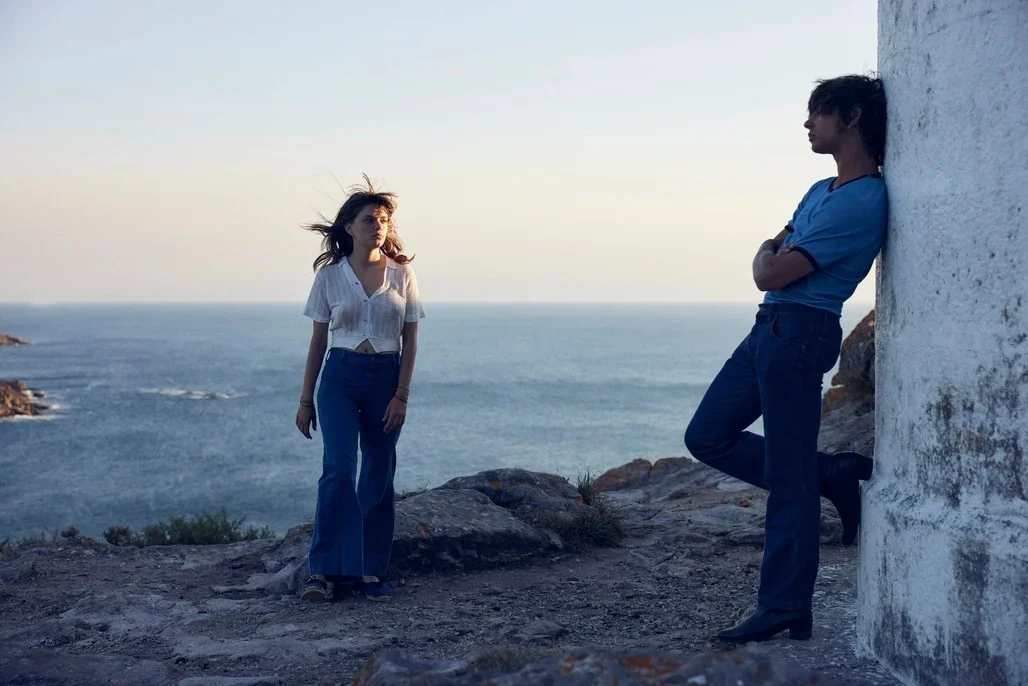
For years, the Spanish filmmaker Carla Simón has acted as a kind of emotional cartographer, mapping the jagged, often subterranean topography of her own upbringing. Her body of work—a triptych of memory—has served as a vessel for the fragmented pieces of her life: the loss of her parents to AIDS, her adoption by her aunt and uncle, and the search for identity amidst the silence of the past. With the arrival of her latest feature, Romería, currently making its way to U.S. audiences via Janus Films, Simón appears to be closing a chapter on her personal history, turning the lens away from her own autobiography and toward the horizon of the future.
The Evolution of a Memory-Maker
Simón’s career began with the intimate, searingly authentic Summer 1993, a debut feature that captured the confusion and resilience of a six-year-old girl relocated to the countryside following the death of her parents. She followed this with the Golden Bear-winning Alcarràs, a sweeping, naturalistic portrait of a rural farming family in Catalonia facing the obsolescence of their traditional way of life.
If Summer 1993 was the prologue and Alcarràs the exploration of a community, Romería acts as the visceral, final act of a deeply personal trilogy. Set in 2004, the film follows Marina, an 18-year-old aspiring filmmaker—a clear stand-in for the director herself—who travels to the coastal town of Vigo in Galicia. Her mission is twofold: to secure a scholarship for film school and, more importantly, to exhume the truth about the father she never knew and the mother who passed away when she was just a child.
Chronology of a Pilgrimage
The narrative structure of Romería is layered, utilizing the dual perspective of a daughter looking back and a mother, through the medium of recovered diaries, speaking from the past. The film’s 1980s-set voiceover narration provides the necessary historical context for the 2004 setting, framing the story as a bridge between the heroin-ravaged Spain of the 1980s and the burgeoning self-discovery of the early 2000s.

Marina’s journey is a pilgrimage, a romería in the traditional sense, but one where the shrines are domestic spaces and the relics are memories. When she approaches her late father’s family, she is met with a wall of silence. The trauma of the AIDS epidemic—a disease historically shrouded in stigma and fear—has left the family’s history in tatters. Marina’s resemblance to her mother acts as a catalyst, forcing her paternal grandparents to confront the ghosts they have spent decades trying to exorcise.
Casting the Alter Ego: The Search for Authenticity
Finding the right actress to embody a character who is essentially a ghost of the director’s past was, by Simón’s admission, the most daunting task of the production. The role of Marina required a performer capable of existing in two temporalities: as the curious, slightly enigmatic teenager of 2004 and as the tragic, vibrant, and eventually doomed mother in the 1980s flashback sequences.
"There were girls who were very good for Marina, good for the mom, but both were complicated," Simón noted in an interview. The search led her crew to the Gràcia neighborhood in Barcelona, where they spotted Llúcia Garcia, a teenager returning from a Boy Scouts meeting. Though initially skeptical, Garcia—who had no prior acting training—eventually agreed to join the project.
Simón’s approach to directing Garcia was unconventional. Rather than traditional acting lessons, the director immersed her star in the source material: the actual letters written by Simón’s mother to friends and family, which were adapted into the film’s central diary. "I just wanted her to get very familiar with my story, but also the story of this generation," Simón explained.

To prepare for the more harrowing sequences—including the depiction of the parents’ descent into heroin addiction—Simón curated a specific cinematic syllabus. She asked Garcia to watch films that captured the atmosphere and despair of that era, including the Spanish cult classic Arrebato, Jerry Schatzberg’s The Panic in Needle Park, and Uli Edel’s Christiane F.
The Mechanics of Intimacy: Crafting the "High"
Perhaps the most challenging sequence in Romería is the recreation of the parents’ hedonistic and ultimately tragic drug bender during the Fiestas de Vigo. Simón was determined to capture the ecstasy and the eventual, soul-crushing despair of the experience without resorting to exploitative tropes.
"We were in this room, and I gave them a spoon and whatever I had to pretend, and we put on some music, and they got into this mood," Simón recalled. "We ended up having a trip without taking anything."
To ensure accuracy, the production brought in a consultant—someone who had lived through the 1980s heroin epidemic—to guide the actors and the director through the rehearsals. This commitment to truth paid off; the film, lensed with a glittering, coastal luminosity by cinematographer Hélène Louvart, manages to balance the harshness of addiction with a profound, almost sublime sense of human connection.

Implications: The Healer’s Lens
For Simón, the process of making Romería has been explicitly therapeutic. By recreating the life of her parents and confronting the reticence of her extended family, she has managed to find a sense of closure that had previously eluded her.
"My grandparents died a long time ago, so obviously they don’t know anything about the film, but the other uncles, they live in Galicia… they all understood my need to make the film," she said. The response from her family has been varied—some found the experience painful, others found it healing—but the consensus was one of acceptance. The film, which premiered at the 2025 Cannes Film Festival, has served as a final reconciliation with her own history.
Looking Beyond the Autobiography
With the completion of Romería, Simón is signaling a departure from the autobiographical mode. "I have three very big families between the adoptive family and the biological family, so I feel I explored them all already," she said. When asked about her fourth feature, she revealed that she is currently pivoting toward a musical, a genre that offers a different kind of creative freedom.
"Cinema has the possibility to get you to know worlds and universes that you wouldn’t otherwise," she remarked. "That’s why, at the moment, I don’t need to explore my personal life anymore. Maybe I will go back. Everything is personal in the end."

Her transition from the introspective, memory-heavy narratives of her youth to the broader scope of new genres suggests a director who has successfully navigated her own history and is now ready to look outward. As Romería arrives in U.S. theaters, it stands not just as a film, but as a conclusion—a beautifully realized monument to the people who shaped her, and a testament to the power of cinema to turn personal trauma into collective art.
Romería opens in select theaters nationwide on Friday, June 26, via Janus Films.

 Laily UPN
 Ali Ikhwan