Nana Muazin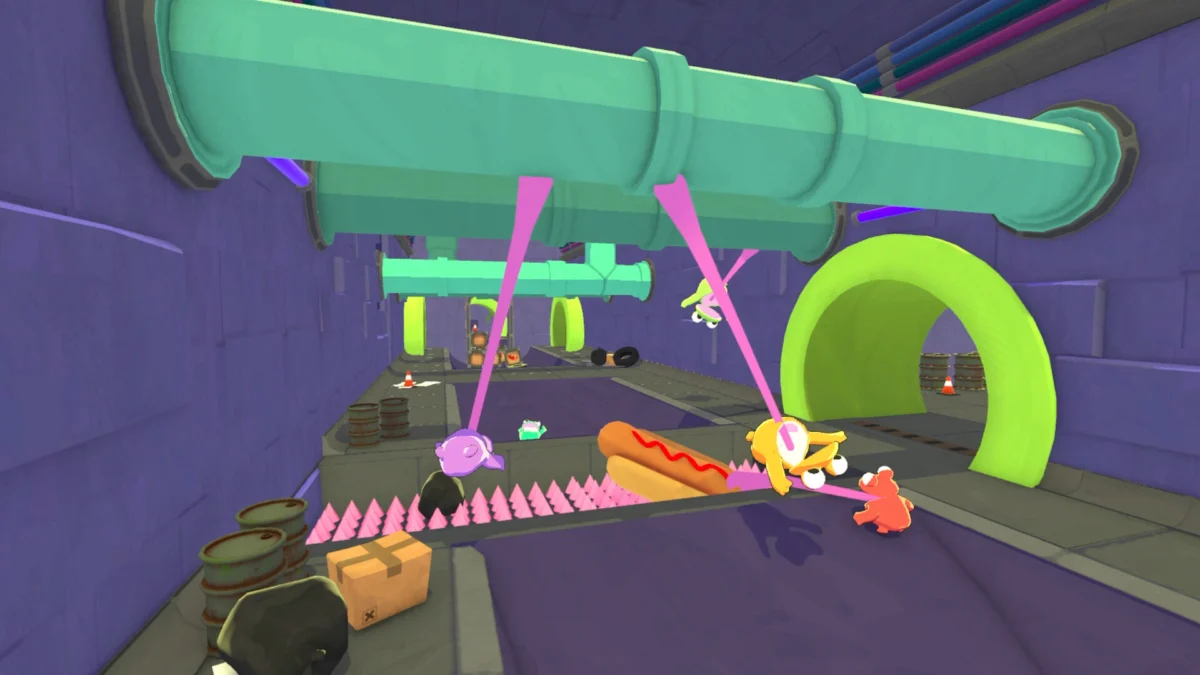
In the crowded landscape of indie party games, it takes a unique premise to stand out. From the developers at the helm of the newly released Frog Sqwad, we have a title that blends physics-based absurdity, cooperative strategy, and the simple, visceral joy of being a frog with an insatiable appetite. Available now on Steam, Frog Sqwad invites players to enter a world where their primary tool for interaction is a sticky, elastic tongue, and their primary goal is to satisfy the demanding, bottomless hunger of the Swamp King.
The Core Concept: Serving the Swamp King
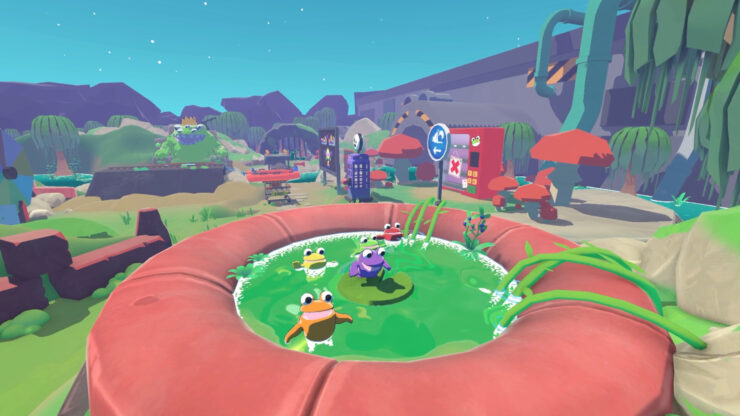
At its heart, Frog Sqwad is a physics-driven party game that supports up to eight players. While the game does offer a single-player mode for those who prefer to tackle the marshy gauntlets alone, the true soul of the experience lies in its multiplayer chaos.
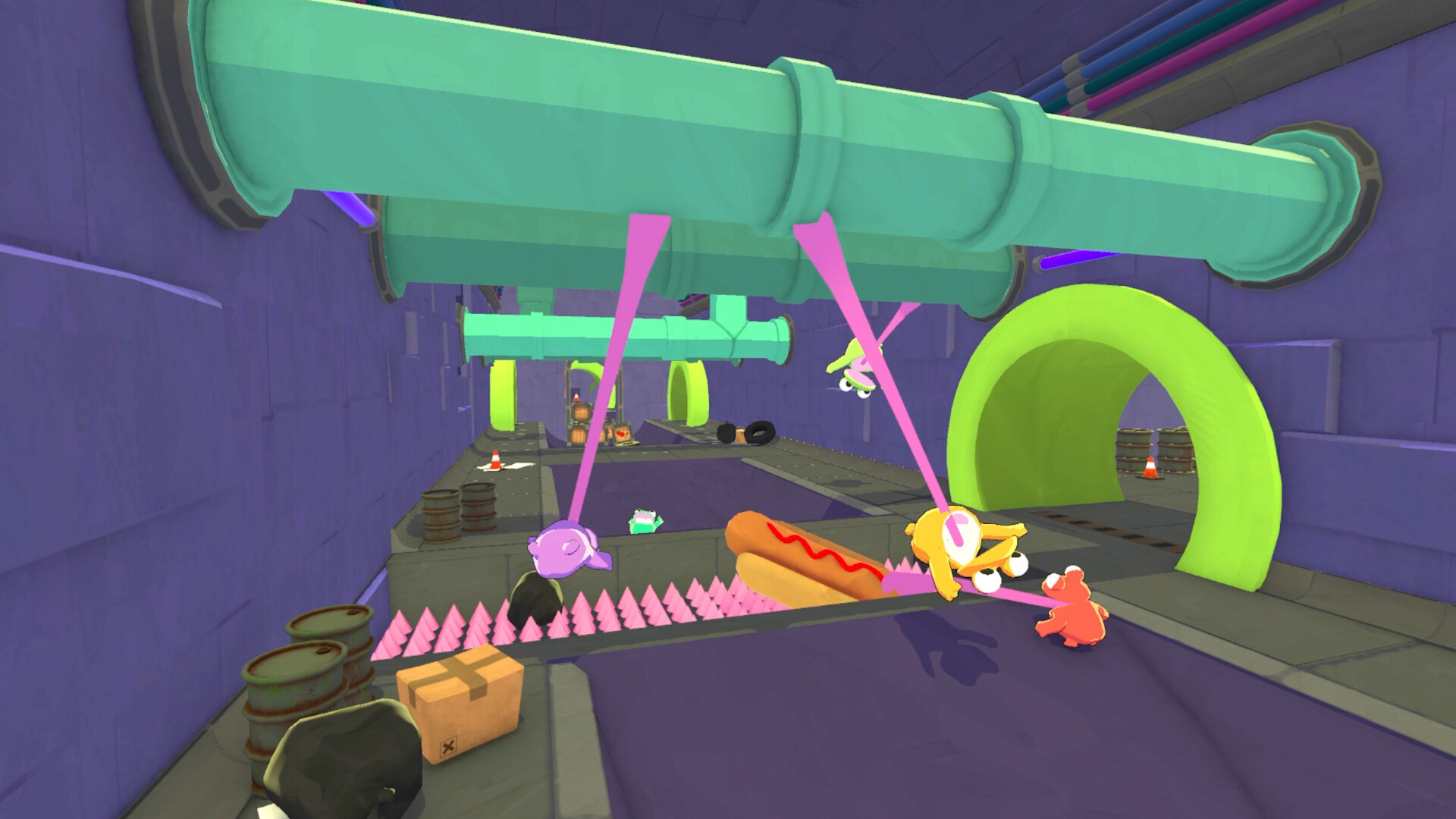
The premise is deceptively simple: as members of the titular "Frog Sqwad," players must traverse procedurally generated levels to collect offerings for the Swamp King. These offerings aren’t traditional swamp fare; instead, the map is littered with human delicacies like hamburgers, crispy fries, giant eggs, and juicy apples. Using your tongue as a grappling hook and a suction device, you must snag these items and navigate the environment to deposit them into the King’s designated bowls. Meeting the daily quota is the only way to progress, but the journey is rarely a straight line.
A Chronology of Chaos: From Development to Deployment
The journey of Frog Sqwad from a conceptual prototype to a fully realized Steam release has been one of iterative design. Initially gaining traction in the indie circuit—notably appearing in playable demo form at events like New Game Plus—the game was built to emphasize the unpredictable nature of physics-based movement.
Early testing phases highlighted the "floaty" nature of the frog movement, a design choice that has become a defining characteristic of the final product. While some players might initially find the controls challenging to master, the developers leaned into this by creating levels that require both precise coordination and a willingness to embrace the resulting hilarity. Following a positive reception during its preview cycle, the game officially launched on Steam, bringing its distinct brand of cooperative bedlam to a global audience.
Mechanics and Gameplay Dynamics
The gameplay loop of Frog Sqwad is layered with surprising depth. It is not merely about dragging items from point A to point B; it is about managing your frog’s state and interacting with the ecosystem of each level.
The Growth Mechanic
One of the most engaging features is the size-shifting mechanic. Smaller food items can be consumed directly by the player. However, these snacks aren’t just for points—they physically alter your frog. Eating enough food causes your frog to grow significantly, transforming from a nimble, jumping amphibian into a hulking, spherical powerhouse. While you lose your agility in this state, you gain the ability to smash through obstacles and walls that were previously impassable, adding a layer of tactical decision-making to the group dynamic.
Physics and Environmental Puzzles
The levels themselves are procedurally generated, ensuring that no two sessions feel identical. Each map is a minefield of environmental hazards. Players must navigate around toxic ooze, avoid ravenous slime monsters, and leap over spikes. Beyond these dangers, the levels are dotted with puzzles and pressure-sensitive buttons. Activating these mechanisms can reveal hidden food stashes or create shortcuts for your team, rewarding those who take the time to observe their surroundings rather than simply rushing toward the goal.
Supporting Data: Why Multiplayer Prevails
While Frog Sqwad is playable solo, the metrics of its design suggest a game built for the "couch co-op" revival. The inclusion of up to eight-player support transforms the game from a platformer into a social experience.
In a group setting, the game’s difficulty spikes, but so does the potential for success. Because the game requires specific tasks—dragging large eggs, hitting buttons, and defending food from hazards—players are naturally incentivized to delegate roles. One player might act as the "tank," having grown large to smash walls, while others act as the "scouts," using their tongues to hook items from precarious ledges. This synergy is where the "magic" mentioned by early playtesters truly manifests. It turns a frustrating jump into a collective victory, reinforcing the game’s identity as a premier party title.
Official Perspectives and Critical Reception
During its showcase at New Game Plus, industry observers and critics had the opportunity to go hands-on with Frog Sqwad. The general consensus centered on the game’s high skill ceiling. The movement, described as "ridiculously floaty," serves as the primary barrier to entry. For many, this precision-based demand feels at odds with the frantic, chaotic nature of the game.
However, the prevailing sentiment is that this difficulty is a feature, not a bug. In a multiplayer context, the game becomes a test of communication. As one player noted, "I can see that if I was playing with friends who were able to solve more of the precise rooms, we could all play to our strengths." The developer’s commitment to this specific control scheme suggests an intent to challenge players, forcing them to learn the "feel" of their frog’s tongue and jump physics, which ultimately makes the successful completion of a level feel earned rather than given.
Implications for the Indie Party Genre
Frog Sqwad represents a growing trend in the indie space: the "physics-co-op" genre. Much like titles that prioritize slapstick failure, such as Human: Fall Flat or Overcooked, Frog Sqwad understands that the fun is not always in the efficiency, but in the struggle.
By introducing variable player sizes, procedural level generation, and a high player count, Frog Sqwad distinguishes itself from simple platformers. It challenges the industry standard of "perfect" movement, suggesting that there is still a place for games that are intentionally difficult to control. For the independent scene, this title serves as a reminder that a simple, repeatable core loop—feeding the King—can be infinitely expanded upon with the right set of systems.
Looking Ahead: The Future of the Sqwad
Now that the game is available on Steam, the community has begun to explore the limits of its procedural generation. As players share clips of their most chaotic, successful, and disastrous runs, the game is likely to gain a following among streamers and content creators. The scalability of the game—from a solo endurance test to an eight-player frenzy—positions it perfectly for social gaming platforms.
For those interested in diving into the marsh, the game is currently available on the Steam store. Whether you are looking for a game to test the patience of your friends or simply want to experience the absurdity of a giant, hamburger-toting frog, Frog Sqwad offers a distinct and memorable experience.
Final Thoughts
Frog Sqwad is not a game for those who demand pixel-perfect platforming precision. It is a game for those who find joy in the unpredictable, who enjoy the friction of cooperative tasks, and who aren’t afraid to let their frog grow into a giant, wall-smashing ball of appetite. It is a bold, frantic, and ultimately delightful addition to the indie party game library, proving once and for all that when it comes to serving the Swamp King, the only thing better than one frog is a whole squad of them.


 Laily UPN
 Evan Lee Salim