Basiran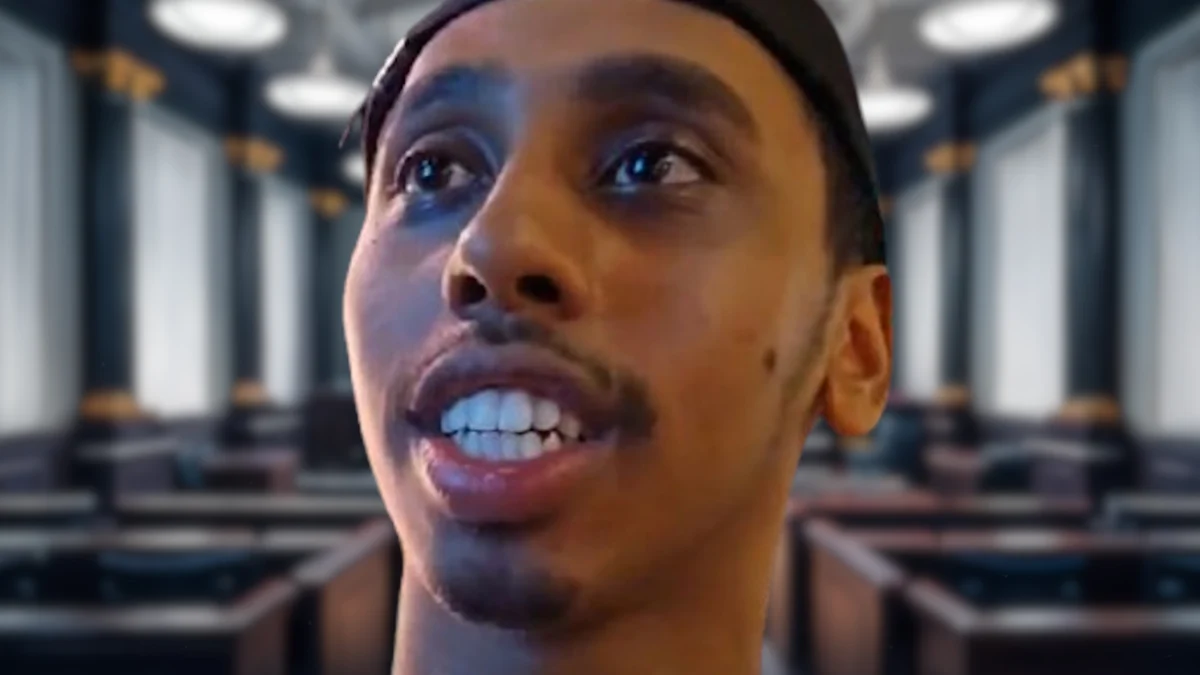
The controversial saga of American livestreamer Ramsey Khalid Ismael, known to the internet as "Johnny Somali," has reached a definitive legal juncture. On June 25, a South Korean court rejected the streamer’s appeal, effectively upholding his original six-month prison sentence, which includes mandatory hard labor. This decision marks the culmination of a months-long legal battle that began with a string of disruptive, culturally insensitive stunts that drew the ire of the South Korean public and authorities alike.
The Verdict and Legal Proceedings
The courtroom atmosphere on June 25 was reportedly tense, filled with observers tracking the high-profile case. Ismael, who had previously pleaded for leniency by citing his inability to access medication for bipolar disorder, appeared largely unfazed as the judge delivered the verdict.
The appeals process was characterized by a tug-of-war between the defense and the prosecution. While Ismael sought a reduced sentence or a lighter form of incarceration, the prosecution argued that the original six-month term was insufficient given the nature and volume of the streamer’s offenses. They had formally requested a significantly harsher penalty, pushing for three years of imprisonment. Ultimately, the court remained unmoved by both sides, signaling a firm stance against the brand of "IRL" (In Real Life) streaming that prioritizes engagement through public nuisance.
According to insights provided by YouTuber "Legal Mindset," who monitored the proceedings closely, the legal road for Ismael may not end here. It is widely anticipated that his defense team will attempt to escalate the case to the Supreme Court of South Korea. If unsuccessful in further appeals, Ismael faces a grueling schedule: three months spent in a high-pressure detention facility—described by the streamer himself as "detention center hell"—followed by three months in a standard correctional facility.
A Chronology of Controversy
To understand the severity of the court’s decision, one must look at the timeline of events that led to Ismael’s arrest in April. His time in South Korea was marked by a deliberate attempt to incite outrage for the sake of viewership metrics.
- The Statue of Peace Incident: Perhaps the most egregious of his actions involved a visit to the Statue of Peace, a monument dedicated to the "comfort women"—victims of sexual slavery by the Imperial Japanese Army during World War II. Ismael performed a provocative dance on the memorial, an act that caused deep offense in a nation where the memory of these historical atrocities is both painful and highly respected.
- Public Disturbance and Harassment: Throughout his stay, Ismael engaged in a pattern of disruptive behavior. He frequently harassed commuters on public transit, blasted North Korean propaganda over loudspeakers in public spaces, and caused scenes in various private businesses, leading to multiple counts of obstruction of business.
- Legal Charges: By the time he was apprehended, the charges against him were multifaceted. They included several counts of violating the Minor Offenses Act, charges related to obstruction of business, and legal action stemming from the creation and dissemination of Deepfake content.
The intensity of his actions eventually invited physical retaliation. In a widely circulated clip, a local Korean streamer—who was identified as a former Special Forces operative—confronted Ismael and knocked him unconscious. The legal fallout from that altercation saw the Korean creator fined, though the penalty was later covered by American influencer "Donut Operator," highlighting the polarized international reaction to the incident.

Implications for the "IRL" Streaming Industry
Johnny Somali’s imprisonment is not an isolated incident; it serves as a bellwether for a shifting global landscape regarding influencer accountability. For years, the "IRL" streaming genre has operated in a legal gray area, where creators push the boundaries of social decorum and law to secure "clout" and donations. However, judicial systems worldwide are beginning to harmonize their response to these digital transgressions.
The crackdown is increasingly international in scope. The legal challenges faced by Ismael are mirrored in the experiences of several other high-profile content creators currently entangled in the justice system:
- ChudTheBuilder: Facing charges of attempted criminal homicide and aggravated assault after a shooting incident outside a courthouse, illustrating the lethal potential when online stunts intersect with real-world violence.
- Fique Ayub: The Canadian YouTuber is currently embroiled in multiple legal battles, including an arrest for terrorizing moviegoers by falsely shouting "gun" in a theater, and a civil lawsuit from a university after disrupting a lecture by throwing food at students.
- Jack Doherty: A prominent American creator who is reportedly facing up to seven years in prison following an arrest involving charges of resisting an officer and possession of a controlled substance while filming content.
- Ayoub Ben Nesnes: In a stark example of the extreme lengths creators will go to for viral fame, the Moroccan YouTuber was arrested for the public butchering and consumption of a stray dog, an act he claimed was a protest against rising livestock prices.
A New Era of Accountability
The judiciary’s refusal to grant Johnny Somali leniency underscores a growing intolerance for influencers who view foreign cultures and public spaces as playgrounds for content creation. The message from the South Korean court is clear: international borders and local laws are not subservient to the demands of an online audience.
For the streaming industry, this represents a structural turning point. Platforms like Twitch, YouTube, and Kick have faced consistent pressure to curb "toxic" behavior, but legal systems are now taking the lead where platform moderation has historically failed. As jail time becomes a common outcome for "viral" stunts, the risk-to-reward ratio for streamers is shifting dramatically.
The "detention center hell" that Ismael is reportedly facing is a stark reminder that digital fame is ephemeral, but a criminal record is permanent. As he prepares for the possibility of a Supreme Court appeal, his case stands as a cautionary tale for a generation of creators who have confused the attention of a chat room with the reality of the courtroom.
Ultimately, the upholding of the sentence is a victory for the rule of law. It reinforces the principle that no individual, regardless of their online reach, is exempt from the laws that govern the society they choose to inhabit. Whether this will deter future "Johnny Somalis" remains to be seen, but for now, the gavel has fallen, and the content creation world is watching closely. The era of the "unrestricted" streamer may well be coming to a cold, hard end.

 Reynand Wu
 Evan Lee Salim