Neng Nana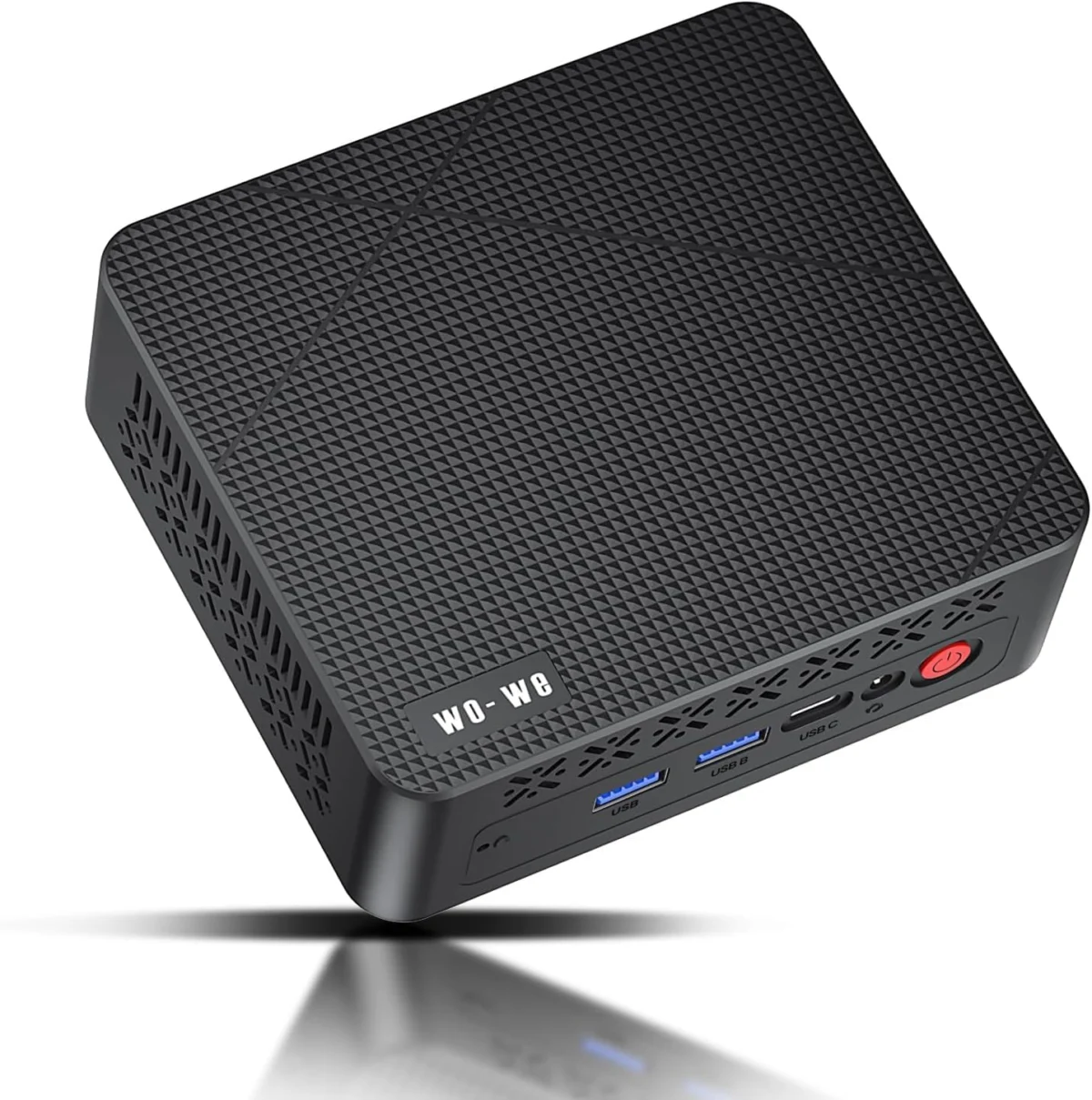
The consumer electronics landscape is currently witnessing a peculiar, if not troubling, trend: the resurrection of obsolete hardware rebranded as “AI-ready” workstations. Following the recent buzz surrounding a budget-friendly Xeon-based workstation, a new contender has emerged on the market that serves as a stark reminder of the dangers of impulsive tech consumption. The “S1,” a mini PC currently retailing on Newegg, has garnered attention not for its innovation, but for its audacity. By packaging a 15-year-old Intel Core i3-2100 processor—a relic of the Sandy Bridge era—as a tool for “AI task automation,” the manufacturer has ignited a debate regarding the ethics of marketing and the environmental impact of modern e-waste recycling.
Main Facts: What is the S1 Mini PC?
At its core, the S1 is a barebones mini PC system currently priced at $99 (discounted from an original MSRP of $199) on the Newegg marketplace. While the aesthetics suggest a modern, compact workstation designed for the contemporary home office, the internal specifications tell a significantly different story.
The machine is powered by the Intel Core i3-2100, a dual-core processor launched in early 2011. In the context of 2026 computing, this chip lacks the instruction sets, thermal efficiency, and core count necessary to handle even the most basic modern operating systems effectively, let alone the computationally intensive demands of local AI workloads. The marketing material for the device explicitly positions it as a gateway for “AI task automation using OpenClaw,” a claim that industry experts find technically dubious, if not outright deceptive.
A Chronology of the "Retro-Fit" Trend
The emergence of the S1 is not an isolated event; it is part of a growing trend of manufacturers scouring warehouses for legacy server and desktop components to assemble into "new" budget systems.
- Early 2024: The market saw an influx of "Frankenstein" PCs—systems built from decommissioned server parts (specifically Xeon CPUs) being sold to consumers looking for cheap workstations.
- Late 2025: As AI-related marketing became the primary driver for PC sales, smaller, less-transparent manufacturers began pivoting. The narrative shifted from "budget gaming" to "AI-readiness" to capitalize on the massive interest in local LLMs and automation scripts.
- Q1 2026: The S1 enters the market. By leveraging the buzz around "OpenClaw" and automated workflows, the manufacturer successfully secured retail space on major platforms, targeting consumers who may lack the technical literacy to distinguish between a modern neural processing unit (NPU) and a processor released during the infancy of the smartphone era.
Technical Analysis: The Performance Gap
To understand why the S1 is considered an example of "tech-washing," one must look at the gulf between the hardware’s capabilities and the tasks it purports to perform.
The Processor Bottleneck
The Intel Core i3-2100 operates on a 32nm process. Modern processors utilize 3nm or 5nm nodes, offering orders of magnitude better performance per watt. The i3-2100 lacks support for AVX-512, a critical instruction set for modern AI inference. Attempting to run AI automation software on this chip is akin to attempting to run a modern high-definition video editing suite on a typewriter.
Thermal and Power Efficiency
While the small form factor of the S1 is convenient, the thermals of a 15-year-old chip are suboptimal. These older architectures run hot and consume significant power relative to their output. The long-term reliability of capacitors and other motherboard components from that era—which have likely been sitting in storage for over a decade—is highly questionable.
The "OpenClaw" Fallacy
OpenClaw, often touted in these marketing materials, is a legitimate framework for certain automation tasks. However, implying that it requires—or even functions reasonably on—a 2011 dual-core CPU is a misuse of the term "AI-ready." The software may technically "run" in the sense that the code executes, but the latency involved would make it functionally useless for any real-world automation application.
Supporting Data: Why $99 is Still Too Much
When evaluating the value proposition of the S1, we must compare it against the current market baseline for low-end computing.
- Depreciation: An Intel Core i3-2100 has a current secondary market value (for the chip alone) of less than $10. The motherboard, case, and power supply used in these builds are similarly valued as scrap or low-cost refurbished parts.
- Opportunity Cost: For the $99 asking price, a consumer could purchase a used corporate-lease laptop (e.g., a refurbished ThinkPad from 2018-2020) that would outperform the S1 in every conceivable metric, including battery life, display quality, and AI-assisted multitasking.
- The Hidden Costs of E-Waste: Beyond the financial cost, there is the environmental burden. These machines are essentially "e-waste with a new chassis." They lack the support for modern OS security patches (Windows 11, for instance, does not officially support the i3-2100), leaving the user vulnerable to security risks almost immediately.
Implications for the Consumer Market
The presence of the S1 on major retail platforms raises significant questions about platform responsibility and consumer protection.
The Ethics of Astroturfing
The practice of using "hot" industry buzzwords like "AI" to clear out obsolete inventory is a form of deceptive marketing. It exploits the knowledge gap between tech-savvy enthusiasts and casual consumers who are simply looking for a budget-friendly way to participate in the "AI revolution."
The Responsibility of Retailers
Retailers like Newegg provide a marketplace for third-party sellers. While this allows for a wider selection of goods, it also necessitates a higher standard of oversight. When a product is marketed using claims that are demonstrably false or misleading, the platform’s reputation is put at risk. Consumers trust these platforms to vet the "AI-ready" label, and when that trust is broken, it diminishes the integrity of the entire retail ecosystem.
Recommendations for the Budget-Conscious
For those with a budget of $200 or less, there are far better ways to secure a functional PC.
- Look for 8th-Gen Intel or Newer: As a general rule, avoid anything older than an 8th-generation Intel Core processor if you intend to use the machine for anything beyond simple word processing.
- Prioritize Refurbished Enterprise Gear: Platforms that specialize in "off-lease" enterprise equipment often offer machines that are significantly more powerful, more reliable, and better supported than "new" ultra-budget builds.
- Verify Requirements: Before purchasing a machine based on "AI" claims, check the software’s official system requirements. If the manufacturer does not list specific requirements for RAM, NPU, or GPU, be extremely skeptical.
Conclusion: A Cautionary Tale
The S1 mini PC serves as a poignant reminder that not every "deal" is an opportunity. It is a masterclass in marketing an obsolete product to an uninformed demographic. While the temptation to secure a sub-$100 PC for AI tasks is understandable in an era where technology costs are rising, the reality is that such a purchase is a net negative for the consumer.
As we look toward the future of computing, it is essential that we distinguish between genuine innovation and the cynical repackaging of yesterday’s trash. If you see a product labeled "AI-ready" that costs less than a decent set of headphones, pause and consider: is this a breakthrough, or is it merely an attempt to turn e-waste into your problem? For the sake of your wallet and your digital sanity, the answer, in the case of the S1, is clear: leave it in the museum where it belongs.


 Azzam Bilal Chamdy
 Jia Lissa