Nana Wu
In a move that has sent ripples through the consumer electronics market, Apple has officially initiated a series of price increases across its flagship Mac and iPad product lines. The tech giant, which has historically maintained relatively stable pricing structures for its hardware, cited an "unprecedented" surge in the cost of memory and storage components as the primary catalyst for these adjustments.
As the industry grapples with the volatility of the global supply chain, Apple’s decision marks a significant shift in how hardware manufacturers are managing the rising costs associated with DRAM and NAND flash memory. While the newly released MacBook Neo remains shielded from these hikes, consumers looking to upgrade to higher-end MacBook Pro or iPad models will find themselves paying a premium compared to pricing structures that were in place just weeks ago.
The Catalyst: A Perfect Storm of Supply Chain Constraints
To understand why Apple—a company renowned for its massive purchasing power and long-term supplier agreements—has been forced to hike prices, one must look at the broader semiconductor market. For much of the latter half of 2025, the electronics industry has been plagued by a tightening supply of critical components.
The situation is driven by a confluence of factors. First, the explosive growth of AI data centers has created a insatiable appetite for high-bandwidth memory (HBM) and high-density NAND storage. As hyperscalers like Amazon, Google, and Microsoft scramble to secure hardware for their burgeoning AI infrastructures, the global supply of traditional DRAM and NAND flash has been diverted to meet this lucrative enterprise demand.
Second, geopolitical tensions and localized manufacturing disruptions have exacerbated lead times for raw materials. This "perfect storm" has resulted in a dramatic inflationary period for the components that constitute the backbone of modern computing devices. Apple, despite its ability to negotiate favorable rates, has reportedly reached a breaking point where internal cost-absorption is no longer a viable strategy for maintaining profit margins.
Chronology of the Price Escalation
The decision to adjust pricing was not made overnight. According to reports from The Wall Street Journal, Apple has been signaling to its supply chain partners for months that the current market volatility was unsustainable.
- Early 2025: Market analysts began noting a steady climb in DRAM and NAND spot prices. At this stage, most manufacturers, including Apple, attempted to absorb the costs, relying on existing inventory buffers.
- Mid-2025: As AI data center demand peaked, the "memory crunch" intensified. Manufacturers across the industry began reporting that their operating expenses were rising significantly due to procurement costs.
- Late 2025: The pressure became systemic. Reports emerged that major memory suppliers were prioritizing high-margin AI contracts, leaving consumer electronics brands at the back of the queue.
- Current Week: Apple formally confirmed the price increases. The changes were implemented globally, with specific focus on high-RAM and high-storage configurations where component costs are most acute.
Impacted Models: Where the Costs Have Risen
The price adjustments are not uniform, but they are concentrated in the professional and performance-oriented segments of Apple’s portfolio.
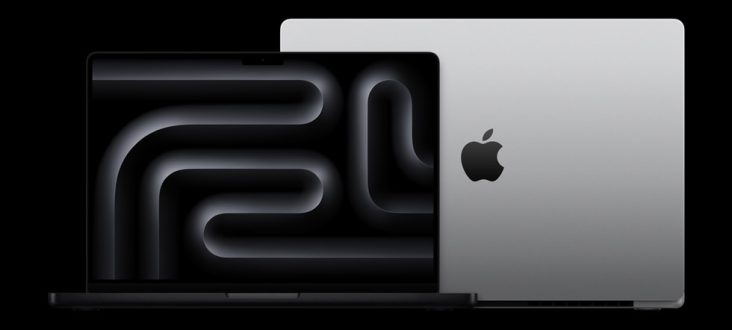
For the 14-inch MacBook Pro (M3), the base price has jumped from $1,599 to $1,799—a $200 increase. The larger 16-inch variant has seen a similar $200 bump, moving from $2,499 to $2,699. Beyond the MacBooks, high-end configurations of the Mac Mini have seen price corrections, as have specific iterations of the iPad Pro and iPad Air.
Crucially, the recently unveiled MacBook Neo has been excluded from these hikes. Industry observers suggest this is a strategic move to maintain Apple’s competitiveness in the student and education market, where price sensitivity is high. By keeping the entry-level "Neo" segment affordable, Apple is attempting to balance its need for profitability on premium devices with the necessity of maintaining market share among younger, price-conscious consumers.
Official Responses and Market Context
The brevity of Apple’s statement regarding these hikes underscores the gravity of the situation. A representative for the company noted, "We have now reached a point where we need to begin raising prices. We have never seen a component price increase this much, this quickly."
This sentiment is echoed by broader industry trends. Valve, for instance, recently confirmed that its new Steam Machine hardware is launching at prices far higher than the company’s internal projections from 2023. Like Apple, Valve cited the impossibility of securing essential components at historical price points.
Industry analysts at major research firms have suggested that this is a "new normal" for the hardware sector. The days of predictable, deflationary component pricing are temporarily on hold as the industry undergoes a structural transition toward AI-driven hardware requirements.
Implications for the Consumer and the Tech Industry
The implications of these price hikes extend far beyond Apple’s storefront. When a company with the scale of Apple—which typically sets the standard for supply chain efficiency—is forced to raise prices, it is a leading indicator for the rest of the industry.
1. The "Component-Driven" Inflation Trend
Consumers should brace for similar adjustments from other laptop and tablet manufacturers. If Samsung, Dell, or Lenovo face the same procurement hurdles, they will likely have to choose between shrinking margins or passing costs to the consumer. In the current economic climate, the latter is increasingly probable.
2. Shifts in Purchasing Behavior
With prices rising, consumers are likely to change their buying habits. We may see a decline in the popularity of high-spec custom configurations. When an upgrade to 32GB of RAM or 2TB of storage suddenly costs hundreds of dollars more than it did last year, many users may opt for base-model hardware and rely on external storage or cloud services, even if those solutions are less convenient.
3. The Secondary Market Surge
As new hardware becomes more expensive, the secondary and refurbished market will likely see an uptick in activity. Devices from 2023 and 2024 that feature similar architecture to current models may hold their value longer, or even appreciate, as buyers look for alternatives to the "new-model" premium.
4. A Potential Cooling of PC Sales
After a period of post-pandemic stagnation, the PC market was beginning to show signs of recovery. These price hikes threaten to dampen that momentum. If hardware becomes prohibitively expensive, the replacement cycle for laptops and tablets—which had already been lengthening—could stretch even further.
Future Outlook: When Will Costs Stabilize?
The question on every industry analyst’s mind is: when will this cycle end? The consensus is that relief will not be immediate. Many experts suggest that the supply constraints for DRAM and NAND will persist well into 2026.
The primary driver—AI infrastructure investment—is not expected to slow down. As long as tech giants continue to pour billions into building the physical foundation for Artificial Intelligence, the competition for memory chips will remain fierce. For consumers, this means that the current "price-hike" environment is unlikely to be a short-term anomaly. Instead, it represents a fundamental shift in the cost of high-performance computing.
Conclusion
Apple’s decision to increase prices is a sobering reminder that even the most powerful companies are subject to the realities of the global supply chain. While the MacBook Neo offers a temporary reprieve for budget-conscious buyers, the broader trend is clear: the era of cheap, high-capacity memory is currently suspended.
As we move forward, the tech industry will need to innovate not just in software and silicon design, but in supply chain resilience. Until the production capacity for DRAM and NAND flash catches up to the massive demand generated by the AI revolution, price volatility will remain a defining feature of the consumer electronics landscape. Consumers would do well to factor these hardware costs into their long-term financial planning, as the days of easy hardware upgrades appear to be, for the moment, behind us.


 Sagoh
Sagoh
 Basiran