Asep Darmawan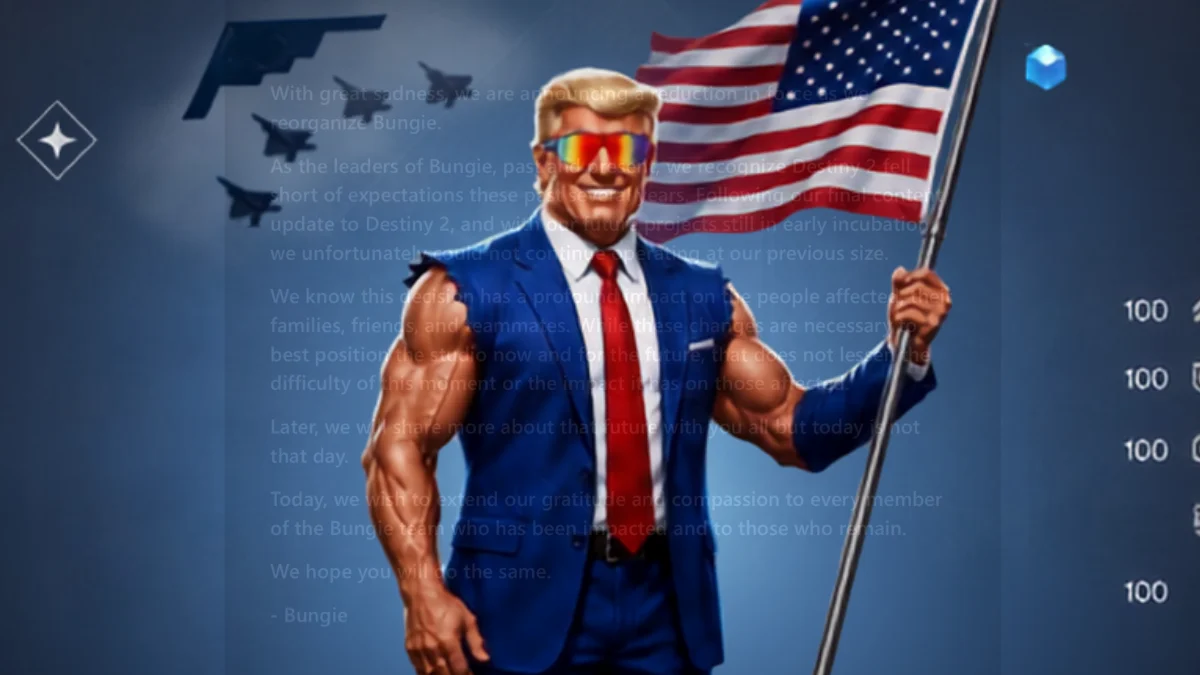
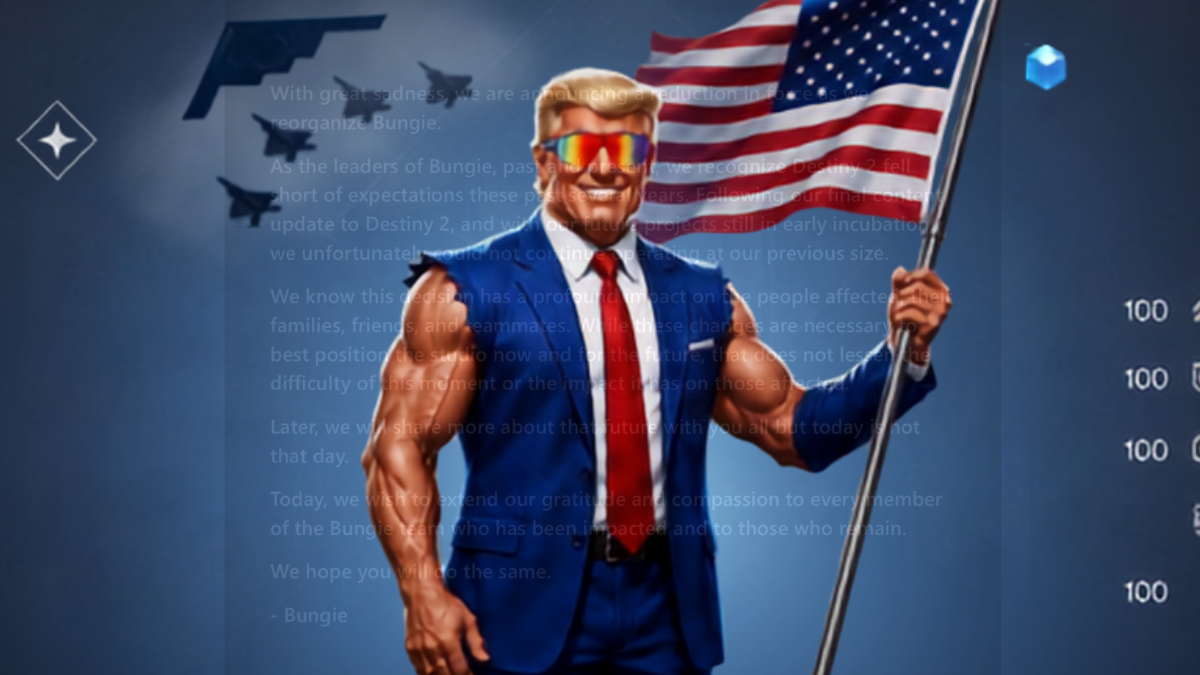
In an era where the lines between statecraft and internet culture are increasingly blurred, the official White House X (formerly Twitter) account has pushed the boundaries of government communication to a surreal new frontier. This week, the administration published an AI-generated Destiny 2 character sheet featuring an idealized, hyper-muscularized Donald Trump. The image, which depicts the President wielding the iconic "Gjallarhorn" rocket launcher, has ignited a firestorm of debate, sitting at the uncomfortable intersection of high-stakes national policy and the volatile reality of the modern gaming industry.
The Viral Image: A Study in "State-Sponsored" Pop Culture
The post, captioned with the classic Destiny catchphrase "Eyes up, Guardians," presents a visual aesthetic that leans heavily into the "Duke Nukem" archetype of action-hero masculinity. Behind a buff, cinematic version of the President, the backdrop features a collage of American iconography: fighter jets, the United States flag, and a luxury Rolls-Royce.
The image is layered with "game-ified" data points that border on the absurd. The AI-rendered character sheet lists a "Power Level" of 4700—a figure that dwarfs the actual maximum Power Level found in the current Destiny 2 ecosystem (currently capped at 550). Perhaps more striking is the inclusion of a "B-2 Bomber" companion. The B-2 Spirit, an engineering marvel with a per-unit price tag exceeding $2 billion, is treated here as an item in an inventory screen, serving as a jarring juxtaposition between the levity of gaming culture and the gravity of military hardware.
A Growing Pattern: The White House’s Pivot to Gaming
This is far from an isolated incident. Over the past several months, federal agencies have seemingly coordinated a shift in outreach strategy, utilizing AI-generated imagery and references to popular video game franchises to capture public attention.
A Chronology of Digital Outreach
- The GTA 6 Trend: Within the last week alone, the Department of Labor and the Customs and Border Protection agency have both leveraged the aesthetic of Grand Theft Auto 6 to promote official messaging.
- The Zelda Influence: Earlier today, the Department of Homeland Security released a riff on the cover art of The Legend of Zelda: The Wind Waker in an attempt to spotlight the U.S. Coast Guard.
- Previous Escalations: As far back as March, the administration faced criticism for using clips from Grand Theft Auto: San Andreas to frame narratives regarding military actions in Iran.
This trend represents a broader shift in how state institutions view "engagement." By co-opting the visual language of gaming, these agencies hope to bypass the traditional, often dry, channels of government communication. However, critics argue that this approach risks trivializing sensitive policy matters and creates a dissonant, often "nightmarish" parody of American governance.
The Bungie Crisis: A Collision of Optics and Reality
The most significant criticism leveled against the White House’s latest post is not necessarily its aesthetic, but its timing. The image was released on the same day that Bungie, the Bellevue-based studio behind Destiny 2, announced a massive restructuring and a wave of "sweeping" layoffs.
According to Sony executive Hermen Hulst, the layoffs affect a "significant number of employees," including a large portion of the Destiny development team and several members of the Marathon project team. For many in the gaming community, seeing the White House use Destiny iconography to celebrate its own agenda while hundreds of the developers responsible for creating that very universe were losing their livelihoods felt, at best, tone-deaf, and at worst, cruelly performative.
"It is difficult to view this as anything other than a mockery of the very people who built the world the government is now using as a digital prop," noted industry analysts. Whether the image was pre-planned in a social media calendar or developed in response to current events, the resulting optics are undeniably poor.
The Economics of Propaganda: What Does $2 Billion Buy?
The inclusion of the B-2 Bomber in the Destiny meme highlights a deeper, more troubling question about the normalization of military spending in pop-culture discourse. By labeling a $2 billion stealth bomber as a "companion" in a game-like interface, the administration is participating in what media theorists call the "gamification of violence."
In the real world, the B-2 Spirit remains a primary instrument of U.S. power projection. By reducing it to a collectible item in a digital inventory, the imagery minimizes the cost—both fiscal and human—of the military operations it is designed to facilitate. This follows a pattern of using video games to frame complex foreign policy, a strategy that has drawn intense scrutiny from ethics watchdogs who argue that government propaganda should remain transparent, rather than masked in the playful aesthetic of entertainment.
Reactions from the Gaming Industry
The contrast between the government’s approach and the response from industry professionals could not be more stark. While the White House was posting memes, the developer community was responding to the Bungie layoffs with somber, tactical solidarity. Many developers have taken to social media to highlight the loss of "generational talent" within the studio, offering support and networking resources to their displaced colleagues.
The disparity highlights a widening chasm between the gaming industry’s internal culture—which is currently grappling with economic instability and a "bittersweet" transition period—and the external view held by political actors who see games merely as a vehicle for reach and engagement.
Implications: The Future of Political Discourse
The White House’s continued reliance on AI-generated memes raises profound questions about the future of public communication.
- The Erosion of Authenticity: When government agencies rely on AI to generate images that distort reality (such as depicting a president as an invincible video game character), it further erodes the public’s ability to distinguish between official information and synthetic propaganda.
- Targeting the "Blue-Tick" Demographic: Much of this content seems specifically tailored to the hyper-engaged, highly online demographic that participates in the "X" (formerly Twitter) echo chamber. This risks alienating the broader public while reinforcing the insular nature of political discourse.
- The Ethics of Appropriation: As corporations and the state lean into the appropriation of gaming culture, the industry itself remains in a state of flux. If the government continues to use these titles as backdrops for political maneuvering, they may eventually face a backlash from the very companies and creators whose intellectual property they are utilizing.
Conclusion: A Parody of Governance
Ultimately, the White House’s Destiny 2 meme is a symptom of a government that has prioritized the metrics of viral engagement over the substance of effective communication. Whether or not the post was intentionally mocking the layoffs at Bungie is almost secondary to the reality that it happened at all.
As the lines between reality, state propaganda, and digital entertainment continue to blur, the public is left to navigate an increasingly fragmented information environment. In this environment, the "Gjallarhorn-wielding" President is not just a meme; it is a signal of a shift toward a style of politics that values the aesthetic of power over the reality of the people—whether they are citizens or the developers building the digital worlds we inhabit.
For now, the gaming community remains focused on the human cost of these rapid industry changes, while the halls of power continue to scroll through their feed, looking for the next viral hit. It is a disconnect that does little to bridge the growing divide between those who make the games and those who use them to make a point.


 Asro
Asro
 Muslim