Reynand Wu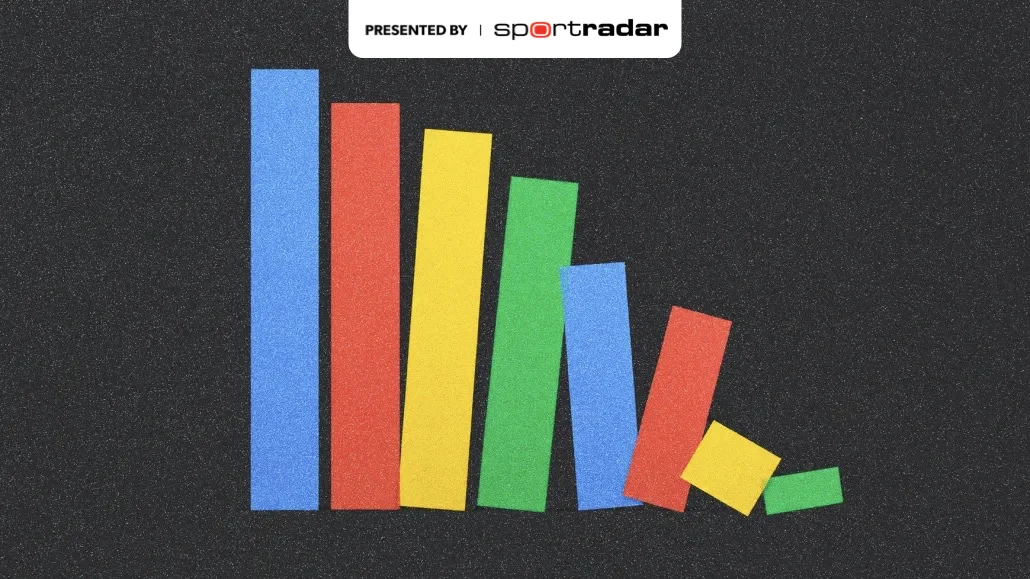
By Sam Bradley | June 25, 2026
For decades, Google’s brand was synonymous with the blue link—a utilitarian portal that prioritized speed and simplicity. But in the summer of 2026, as the world turns its eyes toward the global stage of the World Cup, Google is signaling a fundamental departure from that legacy. Its latest marketing blitz, featuring stars like Spain’s Lamine Yamal and legendary goalkeeper Tim Howard, is far more than a standard sports sponsorship; it is a desperate, high-stakes "tell" that the search giant is fighting to redefine its identity in the age of generative AI.
The Strategy: A Massive Pivot to "Conversational Search"
Google’s current campaign, which saturates linear television, YouTube, and social media channels, is designed to combat a growing cognitive dissonance among its user base. For years, users have been trained to type short, keyword-heavy queries into a box. Now, with the integration of Gemini into features like AI Mode and Overviews, Google is pushing a new paradigm: the "ask anything" approach.
Rebecca Michael, vp of marketing for Google Search and Maps, describes the campaign as a necessary intervention. "Over the last couple of years, Google Search has completely transformed," Michael noted. "But people have many years of asking questions in a specific way. This is about shifting their perceptions and expanding their view. We want people to understand that they can truly ask anything in Google Search—whole paragraphs, complex questions, streams of consciousness."
The inclusion of high-profile soccer talent is not merely for glamour. By pairing the technical prowess of AI with the relatable, high-energy environment of the World Cup, Google is attempting to make its "AI Overviews" feel like a natural companion to the live sports experience, rather than an intrusive feature.
A Chronology of the AI Search Arms Race
To understand why Google is spending millions on a broadcast-heavy campaign in 2026, one must look at the rapid erosion of its search monopoly over the last 48 months:
- Pre-2022: The era of the "Ten Blue Links." Google enjoyed near-total dominance, with its search engine serving as the default gateway to the internet for the vast majority of the global population.
- Late 2022: The launch of ChatGPT. OpenAI’s sudden arrival shattered the illusion that Google was the only place to get a synthesized answer to a complex query.
- 2024: The "Search Crisis." Google’s share of the global search market dipped to 89%—the first time it had fallen below the 90% threshold in a decade. Publishers began openly vocalizing their plans to survive in a post-search-traffic world, as AI-generated answers threatened to eliminate the need for users to click through to websites.
- Early 2025: The "Super Bowl Audition." Competitors like OpenAI and Anthropic began utilizing the massive reach of traditional broadcast media, signaling to the public that AI was a consumer-ready product.
- Mid-2026: The World Cup Campaign. Google pivots to aggressive brand messaging, moving away from its traditional "tech disruptor" disdain for legacy media to re-claim its territory on the biggest stage possible.
Supporting Data: The Erosion of the Search Habit
The data suggests that Google’s anxiety is well-founded. The landscape of information retrieval is no longer a monolith. According to GWI, a research firm, consumer behavior is shifting away from traditional search engines, particularly among younger demographics.
"34-year-olds are more likely to research products on social media rather than search engines," explains Chris Beer, a senior data analyst at GWI. This creates a two-front war for Google: it must compete with specialized AI chatbots like Claude and Perplexity on the technical side, while simultaneously battling the "TikTok-ification" of search on the social side.
Despite the fear of "hallucinations"—the tendency for AI to present false information with high confidence—consumers have been surprisingly forgiving. GWI data indicates that 43% of users report no loss of trust in search quality, and 27% now utilize AI-integrated search tools on a daily basis. While these numbers show adoption, they also show fragmentation. The market is no longer winner-take-all; it is a battle for the "first port of call."
Official Responses: Defending the Territory
Google is not hiding its objectives. The company acknowledges that the primary hurdle is not technological—the tech is built—but psychological. Users are creatures of habit.
"There are lots of options and tools that you can bring your questions to, and we want people to know that they can do that on Google Search as well," Michael said. While she declined to comment on the specific budget allocation for the campaign, she made it clear that the goal is not a temporary promotional spike, but a sustained, year-long effort to retrain the global population.
The campaign effectively "borrows" a strategy from the NBA’s recent broadcasts. During World Cup matches on Fox, commentators are integrating Google’s AI search tools into their live analysis. By providing real-time, context-heavy answers to complex questions, Google hopes to prove the utility of its AI in a way that feels organic to the viewer. For a casual fan who might not know the history of a specific tactical formation or the background of a player, Google is positioning itself as an essential "second screen" coach.
Implications: A New Era of Aggressive Marketing
What does this mean for the future of search and the digital economy? The implications are threefold:
1. The Death of "Disruptor" Humility
Tech giants used to pride themselves on "letting the product speak for itself." Those days are over. Google’s reliance on television spots and celebrity endorsements proves that when market share is threatened, even the most innovative firms fall back on traditional advertising to maintain brand equity. Expect to see "Big Tech" become a permanent fixture in traditional broadcast cycles.
2. The Battle for the "Answer," Not the "Link"
The fundamental nature of the web is changing. If users are satisfied with the AI-generated paragraph at the top of the search result, the downstream traffic to publishers will continue to decline. This forces a confrontation between Google and the creator economy. Google’s branding campaign is essentially a public relations attempt to normalize this shift before regulators or disgruntled publishers can successfully force a change in the model.
3. The Arms Race Will Escalate
As Brian Pappas, director of integrated search at Moroch, pointed out, this campaign is likely the tip of the spear. "Whether these brand campaigns will be effective in convincing the public that these are positive updates remains to be seen," Pappas said. "We anticipate more of these kinds of partnerships and more aggressive messaging in an attempt to do so."
Conclusion: A Turning Point for the Web
Google’s World Cup campaign is a mirror reflecting the current state of the internet. It is a world where search is no longer a simple navigation tool, but a synthetic, curated experience. By putting its AI features front and center, Google is acknowledging that the "blue link" era is effectively over.
Whether this transition will be successful depends on more than just high-budget commercials featuring famous soccer players. It depends on whether Google can convince the average user that its AI-driven "overviews" provide more value than the chaotic, decentralized, and social-first information gathering that currently defines the modern web.
For now, the message is clear: Google is no longer content to just show you the door to the internet. They want to be the one who opens it, reads the room for you, and tells you exactly what you need to know before you even step inside. The question remains: is that what the users actually want? In 2026, Google is spending hundreds of millions to ensure the answer is "yes."

 Neng Nana
 Nana Wu