Lina Irawan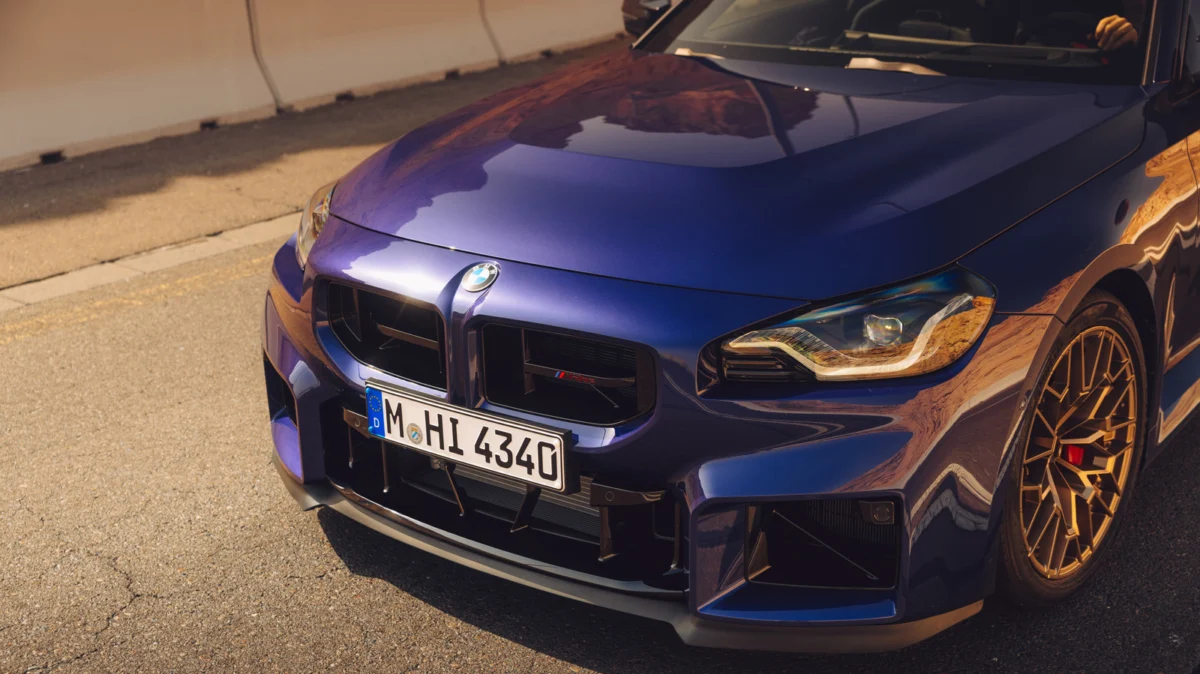
Shopping for a new vehicle in 2026 presents a paradoxical landscape. While industry observers have noted a significant wave of model discontinuations—a culling of the herd that has left some segments feeling barren—the vacuum has been filled by a collection of machines that are as diverse as they are technically daring. From the minimalist utility of the "Slate" to the high-octane engineering of Toyota’s GR GT supercar, the current market reflects a fascinating push-pull between electrification, raw performance, and the stubborn, enduring appeal of the analog driving experience.
For the dedicated enthusiast, these remain prosperous times. The market continues to support icons like the Toyota GR86, Subaru WRX, Nissan Z, and the Chevrolet Corvette, even as newer, more experimental entries vie for shelf space in our showrooms. Defining "the best" is a task fraught with subjectivity; however, by filtering these new releases through the prisms of utility, track performance, and daily livability, we can identify the vehicles that truly define the 2026 model year.
The Daily Commuter: 2026 Nissan Leaf
Main Facts and Market Position
In the hyper-dense environment of cities like New York, the automobile is often viewed as an appliance—a necessary tool for navigating the gaps in public transit. The 2026 Nissan Leaf has emerged as the definitive answer to this urban reality. While Nissan has faced criticism for playing catch-up in the high-stakes EV race, the 2026 iteration of the Leaf refines the platform into a highly competitive, practical, and surprisingly spacious machine.
Supporting Data
The 2026 model addresses the primary pain points of its predecessors: interior refinement and cargo capacity. With a cabin that feels notably airy and a cargo area featuring clever, removable panels, it caters to the "lifestyle" commuter who needs to transport everything from sports gear to groceries without the bulk of a full-sized crossover. Critics at MotorWeek and Edmunds have lauded the car for its sprightly handling, which, when coupled with its small footprint, makes it an ideal candidate for tight urban maneuvering. While its price point sits higher than some legacy competitors, the trade-off is a modernized, reliable, and genuinely usable EV that proves "appliance" motoring doesn’t have to be joyless.
Crossover Utility: The Subaru Outback Wilderness
Chronology and Evolution
The Subaru Outback’s lineage is legendary, tracing back to the first-generation Legacy wagon that fundamentally changed the perception of the family vehicle. Today, in a market saturated with oversized trucks and heavy SUVs, the 2026 Outback Wilderness serves as a bridge to that heritage. It offers the ground clearance and AWD capability of an SUV without the bloated weight or compromised handling of a truck.
Implications of Design
Though the Wilderness package introduces polarizing plastic cladding, its performance data remains compelling. It handles with the grace of a passenger car while offering a cargo bay that makes camping excursions not just possible, but comfortable. For the buyer who needs to transport fishing rods or camping gear, the Outback offers superior visibility and lower ingress points compared to traditional SUVs. Despite its reliance on a CVT and a boxy aesthetic, the Outback remains the standard-bearer for the "adventure wagon" segment, proving that utility and drivability are not mutually exclusive.
The Muscle Truck Revival: Ford Maverick Lobo
Official Responses and Industry Context
The automotive world has long held a soft spot for the "muscle truck"—vehicles like the Dodge Ram SRT-10 or the Jeep Grand Cherokee Trackhawk. These are, essentially, adult-sized Tonka toys. The 2026 Ford Maverick Lobo represents a calculated, refreshing return to this ethos. By utilizing the lightweight, unibody Maverick platform, Ford has created a truck that is nimble, balanced, and surprisingly affordable.
Technical Implications
The Lobo is not just a cosmetic package; it is a performance-oriented rethink of the small-truck segment. By dropping the chassis and enhancing the powertrain response, Ford has built a vehicle that feels at home on a track day. While some may argue that a GR86 offers similar performance for the price, the Lobo adds a layer of undeniable utility: the ability to haul dirt bikes or camping equipment. It is a bold, "unapologetic" performance truck that signals a potential renaissance for the mini-truck category, provided the market responds to this blend of sports-car dynamics and light-duty hauling.
Sports Car Purity: BMW M2 CS
Engineering and Performance Data
The BMW M2 CS occupies a unique space in the 2026 performance hierarchy. Boasting 523 horsepower from a twin-turbocharged straight-six, it remains a purist’s machine. The design language is aggressive—almost bordering on aftermarket tuner aesthetics with its widebody and ducktail spoiler—but it is backed by an exceptionally balanced chassis.
The Human-Machine Interface
While the performance is universally praised, the interior remains a point of contention. The industry-wide trend toward massive, screen-heavy dashboards has reached the M2 CS, much to the chagrin of traditionalists who crave tactile knobs and physical switches. However, once the engine is engaged, these criticisms often fade. With an Alcantara-wrapped steering wheel and a race-focused seating position, the M2 CS prioritizes the connection between driver and road, making it one of the most compelling driver’s cars of the year.
The Supercar Benchmark: Chevrolet Corvette ZR1X
Main Facts and Power Metrics
The Chevrolet Corvette ZR1X is a masterclass in American excess. With an output of 1,250 horsepower, it is a machine that defies logical street utility. By integrating an electric motor with the existing LT7 architecture, Chevrolet has created a car that functions less like a production vehicle and more like a land-based rocket.
Implications of Engineering
The ZR1X is the ultimate realization of the C8 platform. It isn’t just about straight-line speed; the aerodynamics package and the car’s record-breaking performance at Pikes Peak demonstrate a level of engineering depth that is rarely seen outside of hypercar manufacturers. It is a vehicle that commands respect and, frankly, a healthy dose of fear. Its existence as a dealership-purchasable item is a testament to the current era of automotive engineering, where the barriers between "supercar" and "hypercar" have been effectively demolished.
Methodology and Conclusion
Critical Selection Criteria
The selection of these vehicles for the 2026 model year was predicated on a methodology of "purpose-built excellence." Each vehicle was evaluated based on its primary function: the Leaf for urban efficiency, the Outback for wilderness versatility, the Maverick Lobo for performance-utility, the M2 CS for track-day engagement, and the ZR1X for sheer technical dominance.
Industry Synthesis
This guide avoids the "same old" recommendations by focusing on new or significantly updated models. Because these vehicles are fresh to the market, they carry a certain inherent risk, yet they also offer the most exciting technological advancements. By synthesizing data from industry stalwarts like Car and Driver, Road and Track, and Motor Trend, we have attempted to provide a snapshot of a market that—despite its shrinking list of players—is more technically diverse than it has been in a decade.
The 2026 automotive landscape is not just about what is being lost; it is about the audacity of what is being created. Whether you are navigating the concrete gridlock of New York or testing the limits of a mountain pass, there is a machine being built this year that answers the call. The cars listed here are not merely modes of transport; they are the benchmarks for the next chapter of the automotive story.


 Azzam Bilal Chamdy
 Jia Lissa