Basiran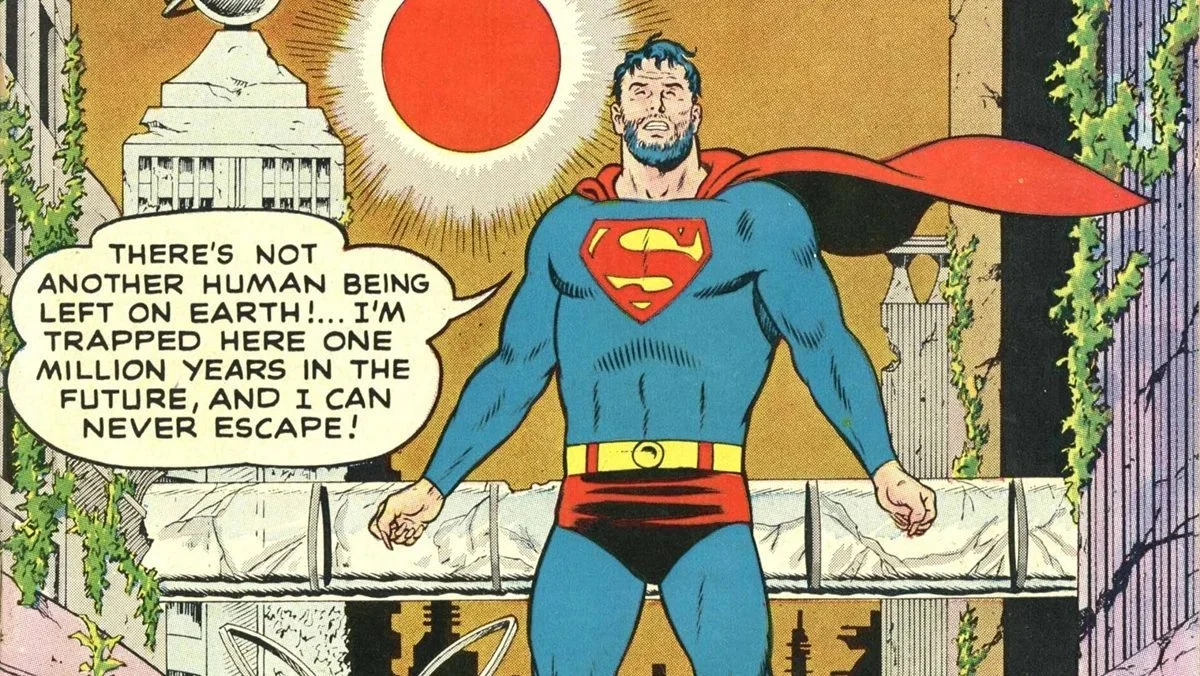
In the most recent cinematic outing for the Girl of Steel, audiences watched as Kara Zor-El faced a harrowing ordeal: exposure to a lethal green sun. As her powers withered and her health rapidly declined, the film highlighted a fundamental truth of the DC Universe—the biology of Kryptonians is inextricably linked to the radiation of the stars they orbit. While the average moviegoer understands that Superman draws his strength from Earth’s yellow sun, the deep lore of DC Comics reveals a far more complex and dangerous celestial tapestry.
Just as Kryptonite manifests in various colors with distinct, debilitating effects, the stars of the DC Universe act as biological catalysts. From the god-like potential granted by white dwarfs to the systematic energy drainage caused by black holes, the "S" shield is effectively a barometer for the cosmic radiation of its surroundings.
The Foundation: Kryptonian Photobiology
To understand the impact of various suns, one must first look at the unique cellular makeup of Kryptonians. Their bodies act as living solar batteries, absorbing radiation and converting it into extraordinary abilities. This process is not merely a "power-up"; it is a complex biochemical reaction.

The original home of the Kryptonian race, Krypton, orbited Rao, a red dwarf star. Consequently, the native biology of a Kryptonian is calibrated to function at a baseline level under red solar radiation. When a Kryptonian enters a system dominated by a star of a different wavelength, their cells enter a state of flux, either hyper-charging, stagnating, or—in the most extreme cases—undergoing cellular degradation.
Chronological Evolution of Solar Lore
The concept of solar-dependent powers was not fully realized in the earliest days of Superman’s publication history. Initially, his abilities were attributed to the "density" of Krypton’s gravity. It wasn’t until the Silver Age of Comics that writers began to codify the "Solar Battery" theory.
The Silver Age Awakening (1960s)
The 1960s served as the true testing ground for cosmic exploration in comics. Superman #155 (1962) was a landmark issue, introducing the concept of the green sun. This story, "Under a Green Sun," established that Kryptonians were not invincible across the cosmos. Shortly thereafter, Superman #164 (1963) solidified the red sun as the ultimate "equalizer," providing a narrative device to challenge the Man of Steel without relying solely on Kryptonite.

The Modern Interpretations (2000s–Present)
As the DC Universe expanded, the mythos became more granular. Writers like Geoff Johns and Brian Michael Bendis introduced variations like blue, orange, and white stars, turning these celestial bodies into active narrative tools. These additions allowed for higher-stakes storytelling, forcing heroes to adapt their tactics when their primary source of strength is either stripped away or mutated into something unpredictable.
The Stellar Spectrum: Effects and Implications
The Green Sun: A Fatal Anomaly
Rare and devastating, the green sun is a nightmare scenario for any Kryptonian. Unlike the red sun, which merely suppresses power, the green sun acts as a persistent toxin. It is essentially a planetary-scale version of Green Kryptonite. As seen in Supergirl: Woman of Tomorrow, prolonged exposure leads to systemic organ failure and cellular breakdown. It is a biological death sentence, stripping away the ability to heal while simultaneously poisoning the blood.
The Yellow Sun: The Baseline for "Super"
The yellow star is the catalyst for the standard Kryptonian power set. Through the absorption of solar energy, the Kryptonian metabolism is supercharged, allowing for feats of flight, invulnerability, and ocular-based energy projection. It is important to note that this is not a unique trait of Kryptonians; other species, such as the Daxamites (e.g., Mon-El), share this biological quirk. Even non-humanoid life from red-sun worlds, such as Krypto the Superdog, undergo this transformation, suggesting that the "Super" gene is a latent potential within many high-density lifeforms when exposed to the correct radiation.

The Red Sun: The Great Equalizer
The red sun represents the "natural" state of the Kryptonian. When exposed to red solar radiation, a Kryptonian’s cells cease their high-level energy conversion. The result is a return to mortality. For a character like Superman, this is the ultimate test of character—without his flight or strength, he must rely on his intellect, combat training, and moral resolve. It serves as a narrative reminder that his heroism is not defined by his powers, but by his upbringing on Earth.
The Blue Sun: The Amplifier
Introduced with the Bizarro-centric lore of the world Hrtae, the blue sun is significantly hotter and more energetic than our yellow sun. While the yellow sun provides strength, the blue sun provides evolution. It has been shown to grant Kryptonians entirely new, exotic powers, including "Superman vision," which can temporarily grant god-like abilities to humans. The sheer intensity of blue solar radiation pushes Kryptonian biology beyond its standard limits, often resulting in erratic energy output.
The Orange Sun: The Half-Measure
Sitting on the spectrum between red and yellow, the orange sun acts as a stabilizer. It does not fully suppress power, but it severely limits it. Kryptonians under an orange sun typically find their power levels reduced to approximately 50%. This creates a "Golden Age" scenario where the hero is still powerful—capable of leaping tall buildings and possessing enhanced durability—but is no longer the omnipotent force they are under a yellow or white star.

The White Sun: The God-Maker
A white dwarf star is perhaps the most dangerous variable in the solar spectrum. It elevates a Kryptonian to near-omnipotent levels. Abilities observed under white solar radiation include time manipulation, teleportation, and the creation of hard-light constructs, similar to the ring-wielding abilities of a Green Lantern. Action Comics #1050 (2023) further expanded this, suggesting that the white sun unlocks dormant, cosmic-level potential that remains suppressed under yellow light.
The Black and Violet Suns: The Outliers
Black suns are the inverse of the white sun. Since they emit no radiation, they act as a vacuum, aggressively drawing energy out of Kryptonian cells and leaving the subject in a state of extreme physical depletion.
On the other end of the spectrum, the violet sun remains one of the most obscure phenomena in the DC canon. Originating in the 1982 issue Superman #371, this radiation was shown to grant reality-warping capabilities. Though it has largely been relegated to the archives, it serves as a testament to the infinite (and occasionally whimsical) nature of comic book science.

Official Responses and Scientific Implications
Within the context of the DC Universe, the study of solar radiation is a primary concern for the Justice League’s scientific wing. Figures like Ray Palmer (The Atom) and various Kryptonian scientists have long posited that the "S" shield functions like a solar sail, focusing incoming radiation into the mitochondria of the Kryptonian cells.
The primary implication of these findings is that Kryptonian physiology is inherently unstable. They are not merely "aliens"; they are sentient conduits for cosmic energy. If the star changes, the hero changes. This creates a strategic vulnerability that adversaries—from Lex Luthor to Brainiac—constantly exploit. By deploying red-sun lamps or luring heroes into specific star systems, villains have effectively turned the heroes’ greatest asset into their most exploitable weakness.
Conclusion: A Universe of Potential
The study of solar radiation in the DC Universe is a masterclass in world-building. It transforms space from a static backdrop into an active character. Whether it is the hope-inducing light of a yellow sun or the chilling vacuum of a black hole, the environment of the DC Universe dictates the limits of its greatest protectors.

As we see in modern interpretations of Supergirl, these stellar hazards ensure that our heroes never grow stagnant. They are forced to confront the fact that their god-like status is entirely dependent on the light that hits their skin. As science continues to evolve within the pages of these comics, one can only wonder: what secrets wait to be discovered in the light of the next undiscovered star? Perhaps a teal sun, or a magenta dwarf, will one day rewrite the rules of the game yet again.


 Siti Muinah
 Azzam Bilal Chamdy