Nana Muazin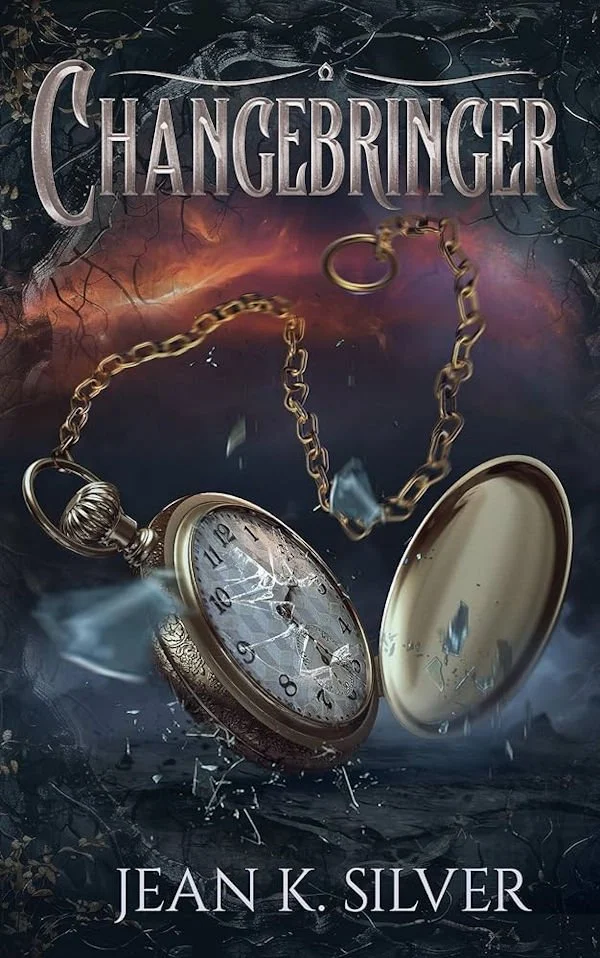
June has arrived, and with it, the relentless momentum of the 11th annual Self-Published Fantasy Blog-Off (SPFBO). As the sun sets on another cycle of evaluation, our team at Fantasy-Faction has reached a significant milestone in our selection process. Today, we bid farewell to three more titles from our Fourth Fall bracket. While these stories will no longer advance in the competition, their journey underscores the immense diversity and creative ambition currently thriving within the indie fantasy sphere.
With these departures, we are now down to the final stretch of the first phase. We have just eight books remaining before our focus shifts entirely toward the four semi-finalists, each of whom will receive a comprehensive, dedicated review.
The SPFBO Philosophy: Why We Evaluate the Way We Do
For those new to the Self-Published Fantasy Blog-Off, it is important to understand our methodology. Our team does not approach this daunting mountain of literature with a rigid agenda. We do not read in a specific order, nor do we rank them from “worst to best” before the process begins. Each entry is given a fair, objective assessment based on its individual merits.
It bears repeating: all reading is inherently subjective. A manuscript that falters for our panel may resonate deeply with a different reader’s personal tastes. If a summary below piques your interest, we encourage you to seek out these authors and decide for yourself. We extend our deepest gratitude to every author who entered this year. The courage required to submit one’s creative labor to the scrutiny of a public competition is substantial, and that vulnerability is the lifeblood of this contest.
For real-time tracking of the tournament, you can follow the official SPFBO website, and for those unfamiliar with the history of this initiative, our introductory guide provides the necessary context.
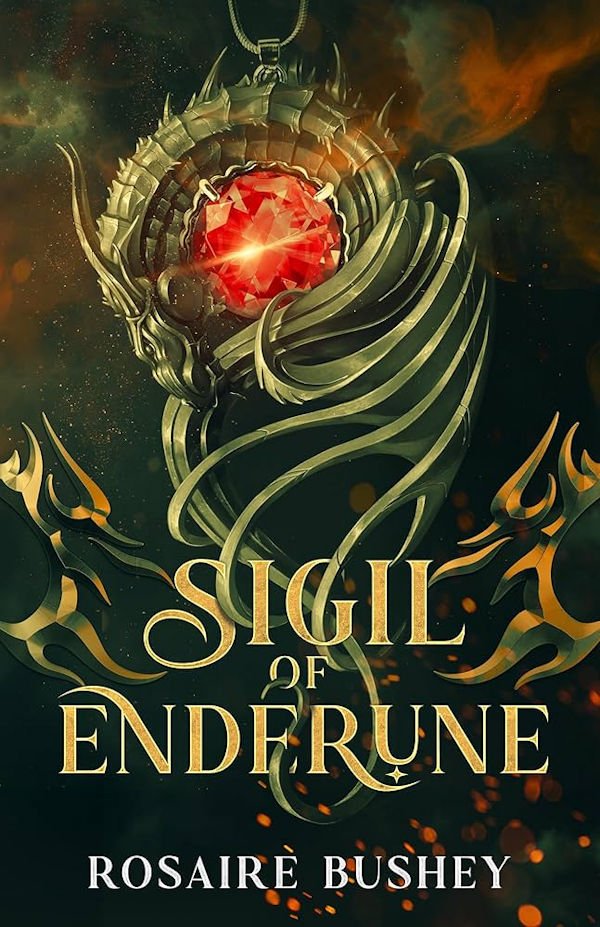
Review: Sigil of Enderune by Rosaire Bushey
Sigil of Enderune presents a world, Revin, where magic is not merely cast; it is an act of orthography. In this realm, power must be physically inscribed in ink to be realized. The narrative revolves around the historical vacuum left by the disappearance of the world’s only true “Artificer”—a figure capable of wielding magic through sheer intent—and the ensuing scramble to locate the legendary Sigil of Enderune, a talisman of immense, lost power.

Critical Assessment
The reception of Sigil of Enderune was notably polarized. Our panel found the core magic system to be a masterclass in creativity. The mechanics—where the specific color of ink, the type of brush used, and the direction of the strokes dictate the outcome—offered a fresh, tactical feel to the spellcasting. Furthermore, the inclusion of the “Snapdragons,” a group of memorable, spunky characters, provided a high point that kept some judges captivated until the final page.
However, the structural challenges were difficult to overlook. Early chapters suffered from a lack of clarity, making it arduous for readers to identify the protagonist or grasp the immediate stakes. Characterization felt inconsistent; the male leads were often indistinguishable, and the female lead failed to leave a lasting impact. Technical issues, such as “head-hopping” (shifting perspectives abruptly within a scene) and characters reappearing without proper reintroduction, hampered the flow.
Perhaps most concerning were the editorial oversights. Inconsistent spelling of codenames and awkward sentence construction suggests a lack of final polish. For an author’s ninth novel, we expected a higher level of technical rigor. While the bones of the story hold promise, it required more diligent editing before publication.
Review: Changebringer by Jean K. Silver
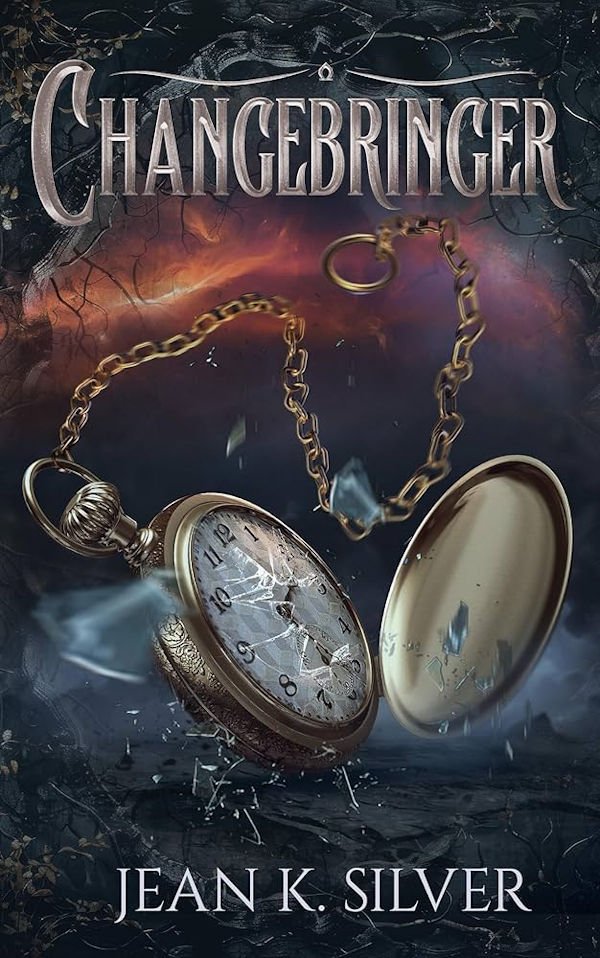
Changebringer offers a premise tailored for fans of high-concept romance and time-travel narratives. Aurelia, a devout priestess of the Lord of Time, is tasked with the solitary burden of sealing rifts in reality and executing the mages who create them. Her path is permanently disrupted by Vlad, an immortal vampire who claims to know her future and insists their fates are inextricably linked.
The Romantasy Divide
Our panel’s reaction to Changebringer highlighted the distinct divide between readers who gravitate toward "romantasy" and those who do not. The narrative, which spans centuries, aims for an epic scale, yet it often struggles to convey the weight of time.
Perspectives from the Bench: Julia’s Analysis
Julia, a judge who typically avoids the romance genre, found the experience surprisingly engaging, noting that the book avoids many of the common pitfalls of the genre. “There is no endless cycle of love-hate tropes, no cheating, and no conflict built solely on miscommunication,” she noted. “The characters are adults who communicate.”
However, the technical execution of the time-travel element was a recurring point of contention. The narrative jumps were frequent and lacked atmospheric distinction; regardless of the era, the settings often felt monolithically medieval. Furthermore, the pacing suffered from a repetitive cycle of “near-misses” and “last-second rescues,” which ultimately dulled the tension. While the character study of a woman whose morals are tested by love was compelling, the lack of world-building depth prevented it from fully landing for our team.
Review: Keeper of the Gate by Margaret Feuerman
Keeper of the Gate stands as a classic representative of the “noblebright” subgenre—a story defined by a multi-generational struggle against an existential evil, populated by characters who strive for virtue. The story centers on Bess Sonnenberg, a girl growing up in a land plagued by a toxic, monster-birthing “Froth.”
The Case for Noblebright
EG, our panel’s primary enthusiast for this title, lauded the book’s structure. “Watching Bess grow from a child to a queen was fascinating and extremely well-executed,” she observed. The book succeeds in creating a culture that feels genuinely shaped by the trauma of its environment, rather than defaulting to generic fantasy tropes. The pacing, while slower than contemporary thrillers, allowed for a deeper appreciation of the world’s internal logic.
Counter-Arguments
Other judges found the simplicity of the narrative to be a double-edged sword. While the moral clarity of noblebright is a feature for many, some panelists found the characters too uncomplicated to sustain long-term interest. The writing style was occasionally described as “scattered,” failing to provide the grounding necessary to fully immerse the reader in the stakes. Ultimately, Keeper of the Gate is a title that will reward readers seeking a straightforward, virtuous epic, while potentially keeping those who crave psychological ambiguity at arm’s length.
Implications for the Competition
As we move toward the conclusion of this phase, the SPFBO 11 leaderboard continues to shift. The elimination of these three titles highlights a core truth about the competition: it is not just about identifying the "best" book, but about finding the right book for the right reader.
The remaining 12 titles are currently under intense scrutiny. We remind our readers that the full list of 300 entrants remains available on Mark Lawrence’s official site. Each of these books represents hundreds of hours of labor, passion, and creative risk. We encourage you to support these authors by exploring their work, regardless of our contest results.
Meet the Panel
Our panel of judges for SPFBO 11 includes Adawia Asad, Eva Geraghty, Evelyn Grimald (“E.G.” Stone), Julia Kitvaria Sarene, Karen Lucia, Kerry Smith, Kit Caelsto, Maureen Neuman, Robert Max Freeman, Sara Rosevear, Sherry Cammer, Stacey Markle, Tianna Twyman, and Yaniv Rosenfeld Cohen.
For further information regarding our judging criteria or to direct inquiries to our editor, Jennie Ivins, please reach out via our Bluesky or Threads channels.
As we look toward the final stages of this tournament, we remain committed to celebrating the indie community and the endless capacity for world-building that these authors bring to the table. Stay tuned for our next round of updates as we narrow the field to our four semi-finalists. Happy reading.
Featured image provided by Rhamely.


 Asep Darmawan
 Dwi Wanna