Reynand Wu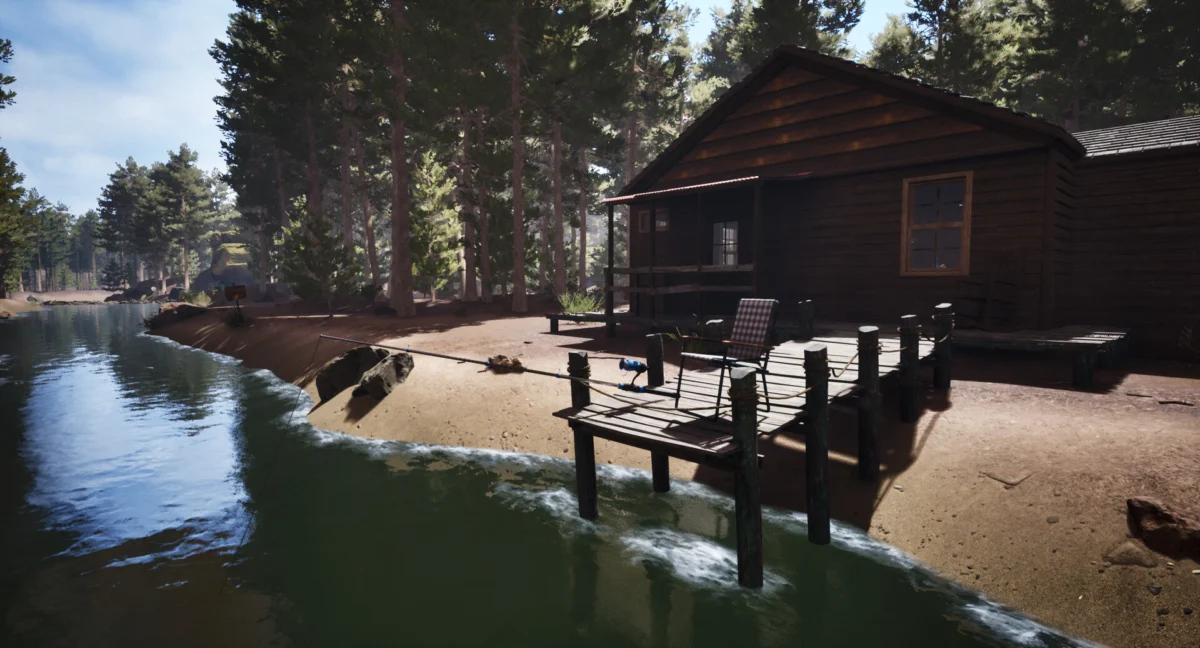
In the saturated landscape of modern indie horror, developers often scramble to find the next terrifying hook. Some lean into psychological trauma, while others embrace grotesque body horror. Then, there is Don’t Mess With Bober, a title that eschews the traditional tropes of the genre in favor of something far more surreal: an angry, revenge-fueled beaver with a vendetta.
While the premise sounds like the punchline to a long-forgotten internet joke, Don’t Mess With Bober has carved out a niche for itself as a “so-bad-it’s-good” experience that manages to be surprisingly memorable. By blending the tension of survival horror with an unapologetically campy tone, the game proves that even the most ridiculous concepts can thrive when they lean entirely into their own absurdity.
The Premise: A Quiet Getaway Turned Rodent-Infested Nightmare
The narrative setup of Don’t Mess With Bober is as classic as it gets. You play as a man seeking solace from the stresses of modern life, retreating to a secluded, picturesque lakeside cabin. It is the quintessential horror trope: isolation, nature, and the encroaching darkness. However, the antagonist is not a masked slasher or a vengeful spirit, but an irate woodland creature named Bober.
After a series of ill-fated interactions with the local wildlife, the protagonist finds himself hunted. What follows is an hour-long odyssey of survival that forces the player to navigate dark woods, solve rudimentary puzzles, and participate in high-stakes chase sequences. The story makes no attempt to explain the supernatural intelligence of the beaver; it simply presents the conflict and expects the player to accept it. In this, the game finds its greatest strength: it never tries to justify its own silliness, allowing the absurdity to become a core part of the gameplay loop.
Chronology of the Experience: A Brief, Intense Descent
For those curious about the structure of the game, Don’t Mess With Bober is a tightly paced, linear experience that unfolds in distinct phases.
Phase 1: The Illusion of Peace
The game begins with the protagonist’s arrival at the cabin. These opening moments are designed to lull the player into a sense of false security. You explore the cabin, interact with mundane objects, and enjoy the ambient sound design of the lakeside environment. It is a classic "calm before the storm" sequence, designed to establish the geography of the map before the chaos ensues.
Phase 2: The Provocation
The transition from peaceful simulator to horror experience occurs following an incident with Bober. Once the inciting incident takes place, the tone shifts abruptly. The environment becomes more hostile, the lighting dims, and the player is no longer a visitor—they are prey.

Phase 3: The Survival Loop
The remainder of the game revolves around a rhythmic cycle of exploration and evasion. Players must navigate from point A to point B to trigger story events, all while managing their limited resources—primarily a flashlight. When Bober appears, the game shifts into a chase sequence, forcing the player to utilize environmental obstacles to escape.
Phase 4: The Climax
The game concludes in a frantic finale that pays off the setup established in the opening hour. While it does not offer a complex branching narrative, the conclusion is a satisfying, albeit bizarre, end to the ordeal, staying true to the game’s commitment to the bit.
Supporting Data: Examining the Mechanics and Execution
To understand why Don’t Mess With Bober succeeds despite its technical flaws, one must look at how it balances its mechanics. The game is, by many modern standards, technically "rough." Its gameplay loop is simplistic, often resembling a walking simulator more than a traditional survival horror title. The voice acting, in particular, has been criticized for being wooden and occasionally jarring.
However, the efficacy of the game is not found in its polish, but in its pacing. Here is a breakdown of how the game utilizes its limited budget to create tension:
- Atmospheric Lighting: The reliance on a single flashlight creates a narrow field of vision. This is a staple of horror design, but it is used effectively here to make the player feel vulnerable in the dark, dense woods.
- Audio Cues: While the dialogue may be lacking, the sound design regarding Bober’s movements is surprisingly sharp. The rustling of leaves and the frantic scurrying of a beaver create genuine auditory tension, keeping the player on edge even when the antagonist isn’t on screen.
- Pacing: Because the game is short—clocking in at approximately 60 minutes—it avoids the common pitfall of overstaying its welcome. It delivers its jokes, scares, and sequences in rapid succession, preventing the player from dwelling on the game’s mechanical simplicity.
Official Responses and Public Reception
The critical reception to Don’t Mess With Bober has been a testament to the power of "meme-worthy" gaming. It has not been hailed as a masterpiece of design, but it has been widely recognized as a highly entertaining title for the streaming community.
Many players have noted that the game is perfect for platforms like Twitch or YouTube, where its absurdity can be shared and laughed at in real-time. The developer has leaned into this, embracing the community’s focus on the game’s "so-bad-it’s-good" status. While there has been no formal "official response" from the developers regarding the game’s flaws, their decision to release a title with such a brazenly silly premise suggests a self-awareness that is rare in the industry.
Implications for the Horror Genre
The success of Don’t Mess With Bober raises an interesting question about the state of the horror genre: Do we need more "silly" horror?

The current trend in horror games has leaned heavily toward high-concept, serious, and often traumatic narratives. While these games are essential, there is a clear demand for "palate cleansers"—games that allow players to engage with the mechanics of horror without the emotional weight of a heavy story.
The Rise of Comedy-Horror
Don’t Mess With Bober highlights that horror and comedy are two sides of the same coin. Both rely on the element of surprise and the subversion of expectations. By placing a threat as inherently non-threatening as a beaver in a life-or-death situation, the developers have successfully subverted the player’s expectations, leading to a unique brand of "comedy-horror" that is finding an audience.
The "Walking Simulator" Evolution
The game also contributes to the ongoing discussion regarding walking simulators. By stripping away complex combat mechanics, the developers forced themselves to focus on atmosphere. While Bober is not the most refined example of this, it serves as a reminder that a strong, singular vision can often compensate for a lack of mechanical depth.
Final Verdict: A Short, Sweet, and Surreal Trip
Don’t Mess With Bober is not going to win any awards for technical innovation or narrative depth. If you are looking for a complex, sprawling horror epic, this is not the title for you. However, if you are looking for an hour of pure, unfiltered absurdity, it is a difficult experience to pass up.
Its commitment to its own ridiculous premise is its greatest asset. It manages to build genuine tension in spite of its silly villain, proving that atmosphere can carry a game even when the premise is essentially a punchline. It is rough around the edges, technically simplistic, and arguably "stupid"—but it is also undeniably fun.
In an industry that often takes itself far too seriously, there is something refreshing about a game that is content to simply let an angry beaver terrorize a cabin-dweller for an hour. Whether you are a fan of horror, a streamer looking for your next viral hit, or just someone who appreciates a weird, low-stakes gaming experience, Don’t Mess With Bober is a journey worth taking.
Just remember: whatever you do, don’t mess with the beaver. You’ve been warned.

 Sagoh
Sagoh
 Ammar Sabilarrohman