Nana Wu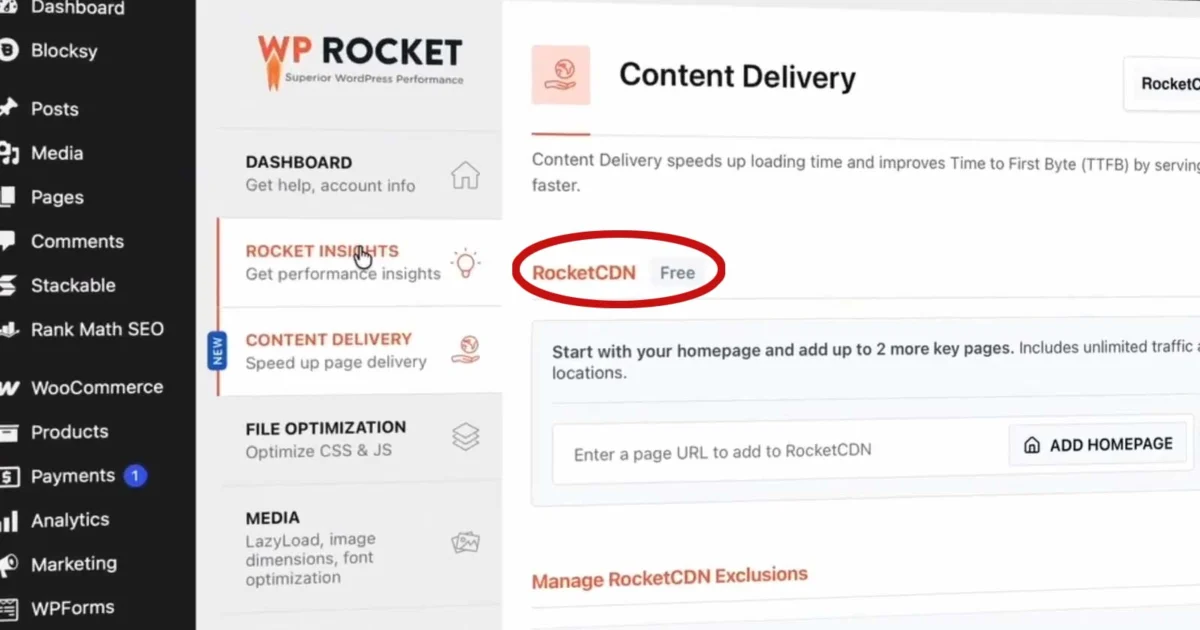
In an industry where milliseconds translate directly into revenue, website performance is no longer a luxury—it is a foundational requirement for digital success. WP Rocket, one of the most widely utilized performance optimization plugins for WordPress, has officially raised the stakes with the release of version 3.22. The update introduces a groundbreaking feature: a built-in, free Content Delivery Network (CDN) service directly integrated into the WordPress dashboard.
While the inclusion of a CDN is not a novel concept in the realm of web hosting, WP Rocket’s approach is unique. By offering a streamlined, "set-it-and-forget-it" integration, the company is bridging the gap between complex infrastructure management and accessible user-centric performance optimization.
Main Facts: What Does Version 3.22 Change?
The core of the update revolves around the "Content Delivery" tab now accessible within the WP Rocket settings. Powered by RocketCDN—the company’s proprietary infrastructure built upon the robust Bunny.net network—this feature allows users to distribute static assets across a global network of servers without the typical overhead associated with external service configuration.
Key Highlights of the Update:
- Built-in Integration: Users no longer need to navigate third-party interfaces or configure complex CNAME records to experience the benefits of a CDN. The integration is seamless, functioning entirely within the WordPress environment.
- Strategic Limitation: The free tier is intentionally capped at three specific pages per site. This is not designed to serve as a sitewide CDN replacement, but rather as a surgical tool for performance optimization.
- One-Click Deployment: By prioritizing ease of use, WP Rocket has lowered the technical barrier to entry, allowing non-developers to benefit from edge-caching technology.
- Technological Backbone: By leveraging the Bunny.net network, WP Rocket ensures that content is delivered via a high-performance, low-latency architecture known for its reliability and speed.
Chronology: The Evolution of WP Rocket’s Performance Suite
WP Rocket’s trajectory has long been focused on simplifying the "Core Web Vitals" challenge for WordPress users. The journey to this release reflects a broader trend of platform consolidation:
- Foundational Optimization: Initially, WP Rocket focused exclusively on caching, minification, and database cleanup.
- Introduction of RocketCDN: Recognizing that caching alone couldn’t solve the latency issues caused by geographic distance, WP Rocket introduced RocketCDN as a premium add-on service.
- Integration of Rocket Insights: Earlier this year, the company launched "Rocket Insights," a performance monitoring tool that allowed users to track their Core Web Vitals metrics within the plugin.
- Version 3.22 (The Current Milestone): By folding a free tier of RocketCDN into the core plugin and linking it with performance monitoring data, WP Rocket has moved from being a static optimization tool to an active performance management suite.
Supporting Data: Why "Three Pages" Matters
The decision to limit the free CDN tier to three pages is a strategic one rooted in the Pareto Principle (the 80/20 rule). In the context of web performance, 80% of a site’s business value—conversions, sign-ups, and lead generation—often originates from a small subset of pages.
The Impact on Key Metrics:
- Time to First Byte (TTFB): By serving assets from a server closer to the user, TTFB is significantly reduced. Studies consistently show that a reduction of even 100ms in TTFB can improve conversion rates by nearly 1%.
- Largest Contentful Paint (LCP): For landing pages with hero images or high-resolution graphics, a CDN ensures that these assets are served rapidly, which is critical for meeting Google’s Core Web Vitals thresholds.
- Geographic Parity: For businesses with international traffic, a site hosted in New York will inevitably load slowly for users in London or Tokyo. The free CDN tier effectively "globalizes" the three most important pages, ensuring that international users receive a first impression on par with local visitors.
Official Responses and Strategic Philosophy
WP Rocket’s product team has framed this release not as a "freebie" to replace enterprise-grade CDNs, but as an educational and functional "sampling" of their technology.
In their official communications, the team emphasized that the goal is to make performance optimization democratic. By providing the tools to accelerate high-traffic pages like homepages or checkout funnels, they allow business owners to see immediate ROI—higher engagement and better SEO rankings—without the immediate cost of a full CDN subscription.
"We want our users to experience the power of global content delivery immediately," a spokesperson noted during the announcement. "By focusing on the pages that matter most, we provide the performance gains where they are needed most, while keeping the user interface clean and intuitive."
Implications for the WordPress Ecosystem
The introduction of this feature has several ripple effects for the broader WordPress development and hosting community.
1. The Death of Complex Configurations
Historically, setting up a CDN involved changing DNS settings, configuring zones, and troubleshooting integration issues. WP Rocket’s "three-click" approach threatens to make manual CDN configuration obsolete for small-to-medium-sized businesses (SMBs).
2. A Shift in SEO Strategy
With Google’s continued emphasis on page experience, site owners who previously ignored CDNs due to cost or complexity now have a viable, cost-free path to improving their site speed. This could lead to a broader baseline of performance across the WordPress ecosystem, potentially pushing the "average" page load speed higher across the web.
3. Consolidation of the Performance Stack
The integration of Rocket Insights with the free CDN tier suggests that WP Rocket is moving toward a "closed-loop" system. In this model, the plugin identifies a bottleneck (via Insights) and offers an immediate, in-plugin solution (the CDN). This reduces the need for "plugin bloat," where users install five different tools to handle caching, image optimization, monitoring, and delivery.
Evaluating the Utility: Is It Enough?
For the average hobbyist blog or small business site, the three-page limit is likely sufficient. Most small sites see the vast majority of their traffic hit a landing page, an "About" page, and a contact form. By accelerating these, the site owner captures the most critical user interactions.
However, for enterprise publishers, massive WooCommerce stores, or sites with thousands of dynamic pages, the limitation is evident. For these users, the free tier acts as a "gateway" to the full RocketCDN service, which provides sitewide coverage.
Pros and Cons for the End User:
Pros:
- Zero Configuration: No DNS changes required.
- Immediate Speed Gains: Noticeable improvement on high-value assets.
- Cost-Effective: A premium feature provided at no extra charge.
- Integrated Workflow: Performance monitoring and optimization exist in one dashboard.
Cons:
- Limited Scope: Only three pages; not suitable for large-scale content sites.
- Dependency: Tied specifically to the WP Rocket/RocketCDN ecosystem.
- Feature Gating: Requires users to understand which pages are their "most important," which may be difficult for non-technical users.
Conclusion
The release of WP Rocket version 3.22 is a significant step forward for WordPress performance optimization. By commoditizing CDN access, WP Rocket is forcing the hand of the industry to focus on user experience and speed as a standard rather than an add-on.
For the average site owner, the message is clear: You no longer have an excuse for slow landing pages. By targeting your most valuable content with this free tool, you can reap the benefits of global performance, improved SEO, and a better user experience—all within the familiar confines of your WordPress dashboard. As the digital landscape continues to demand faster, more responsive websites, tools that simplify complex infrastructure will continue to define the success of the platform.


 Lina Irawan
 Jia Lissa