Nana Wu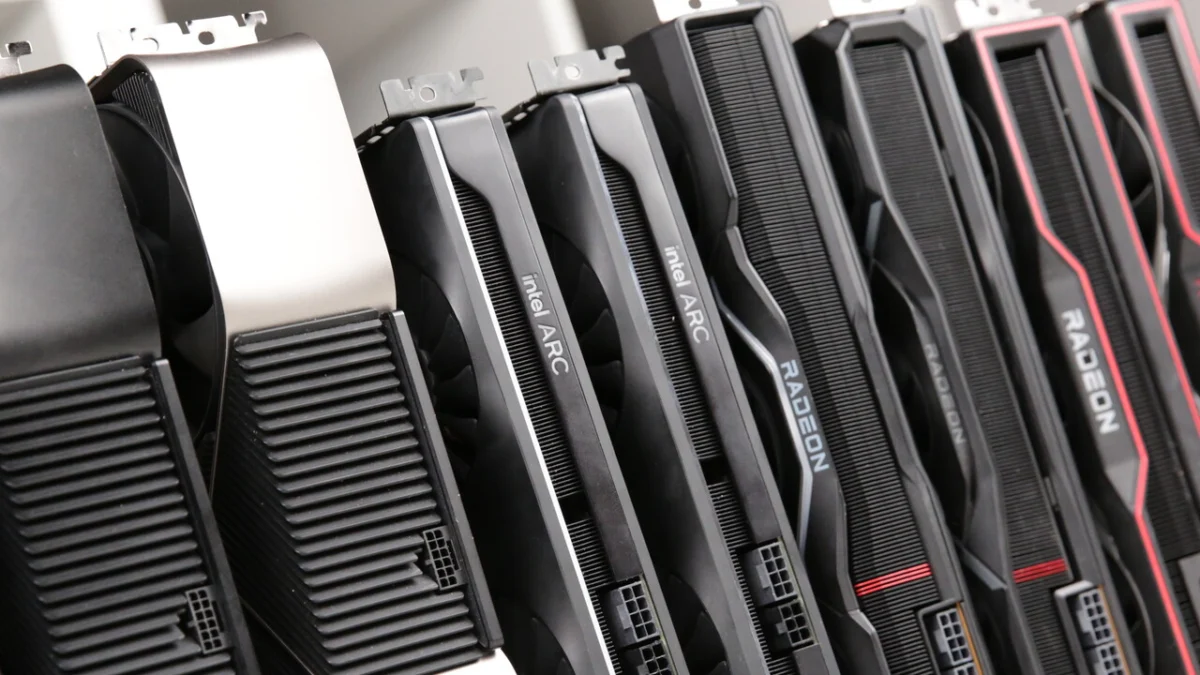
The decision to purchase a new graphics card has always been a delicate balancing act. While raw performance remains the primary metric for most gamers, the volatile nature of the current hardware market has shifted the focus toward efficiency and longevity. As of June/July 2026, gamers are navigating a landscape defined by significant price plateaus, a persistent VRAM crisis, and a strategic pivot toward AI-driven rendering technologies.
This analysis evaluates the current market by calculating "Frames Per Second (FPS) per Euro," providing a comprehensive guide for those looking to optimize their hardware investment.
Main Facts: The State of the GPU Market
As of mid-2026, the graphics card market is characterized by a "wait-and-see" approach from major manufacturers. Price volatility, which plagued the industry in previous years, has largely stabilized into a high-plateau equilibrium. However, this stability comes at a cost to the consumer: high-end hardware prices remain elevated, with flagship models like the NVIDIA GeForce RTX 5090 defying market logic by reaching near-4,000 Euro price points—nearly double its original suggested retail price (MSRP) of 2,329 Euro.
The central takeaway for consumers is that raw power is no longer the only benchmark for value. With the advent of technologies like DLSS 5 and FSR 4.1, the industry is moving toward a hybrid model where neural rendering bridges the gap between hardware capabilities and increasingly demanding gaming titles.
Chronology: A Market in Flux
The first half of 2026 has been defined by a "holding pattern" for hardware releases.
- Early 2026: Significant price increases across the board caused a cooling effect on enthusiast-level upgrades.
- April 2026: Implementation of automated price-tracking systems provided a more transparent look at the market, revealing that older generations (like the Radeon RX 7000 series) have largely lost their competitive edge in terms of value.
- Late June 2026: The arrival of the Radeon RX 9070 GRE in European markets marked a rare injection of new choice, though its value proposition remains questionable compared to its siblings. Simultaneously, the RTX 4060 Ti has effectively been phased out, becoming scarce and overpriced.
- Looking Forward: Reports suggest that next-generation architectures have been delayed. NVIDIA’s "Super" refresh of the 5000-series is now expected for early 2027, while AMD’s RDNA 5 architecture is slated for no earlier than Q2 2027.
Supporting Data: FPS per Euro Metrics
To determine the best value, we analyzed current retail pricing against performance in a standardized test track.
WQHD (2560 x 1440) Performance
In the 1440p bracket, the NVIDIA GeForce RTX 5060 Ti remains the leader in pure FPS-per-Euro metrics. However, this comes with a major caveat: the 8GB VRAM limitation. In 2026, 8GB is no longer a sustainable amount of memory for high-fidelity gaming. Consequently, while the RTX 5060 Ti leads the charts, the Radeon RX 9070 and 9070 XT (16GB) are significantly more recommendable for long-term users. The RX 9070 GRE is notably underperforming in value due to its high price relative to the faster standard RX 9070.
UWQHD (3440 x 1440) Performance
For ultrawide gaming, the Radeon RX 9070 XT takes the top spot. It balances cost and performance effectively, leaving NVIDIA’s RTX 5070 behind, specifically because the latter’s 12GB VRAM creates a "bottleneck" that forces users to lower texture settings in modern titles. The RTX 5080 and 5090 remain prohibitively expensive, offering poor value for the average consumer.
4K UHD (3840 x 2160) Performance
At 4K, performance requirements are immense. AMD’s RX 9070 XT and 9070 currently provide the best efficiency-to-cost ratio. Interestingly, the introduction of FSR 4.1 has breathed new life into older hardware. Recent testing confirms that FSR 4.1 on RDNA 3 architectures provides a meaningful uplift in image quality, suggesting that owners of older cards may be able to delay upgrades longer than anticipated.
The Ray Tracing "Great Equalizer"
Historically, NVIDIA dominated ray tracing performance. However, with the RDNA 4 architecture, AMD has effectively closed this gap. In most modern titles, the performance delta is negligible. The primary differentiator now is VRAM; cards with 16GB of VRAM (like the Radeon 9000 series) now consistently outperform 12GB cards in ray-traced scenarios, as the memory capacity prevents the severe performance penalties seen in the RTX 5070 and similar models.
Official Responses and Industry Sentiment
The industry is currently divided on the direction of graphical fidelity. NVIDIA’s leadership, specifically CEO Jensen Huang, has defended the aggressive integration of AI in rendering (such as DLSS 5) against criticism from the gaming community, who often view this as a crutch for hardware stagnation.
Despite this, manufacturers have shown a genuine commitment to improving energy efficiency. With Blackwell (NVIDIA) and RDNA 4 (AMD), the long-standing myth that NVIDIA is inherently more power-efficient has been debunked; both manufacturers now offer similar power-to-performance profiles.
Implications for the Consumer
The VRAM Threshold
If you are planning a build in 2026, the absolute minimum for a mid-to-high-end card should be 12GB of VRAM, with 16GB being the recommended standard. Cards with 8GB are increasingly struggling, even at 1080p, due to texture streaming demands in modern game engines.
Operating Costs
The cost of electricity has become a point of interest for many. Our analysis shows that the difference in annual electricity costs between a power-efficient card and a high-draw card, assuming three hours of daily use, is roughly 50 Euros per year. While this should not be the sole deciding factor, it confirms that power efficiency should be viewed as a "hidden" savings account rather than a primary driver of the purchase decision.
Final Verdict
The market is currently in a state of high-priced stability.
- Best Value: The Radeon RX 9060 XT and RX 9070 series currently offer the most balanced performance and memory capacity.
- The NVIDIA Alternative: The RTX 5070 is a viable option for those committed to the NVIDIA ecosystem, provided the user acknowledges the limitations of 12GB VRAM.
- Avoid: Avoid 8GB cards at all costs for new purchases in 2026. Also, be wary of the RX 9070 GRE, as it currently lacks the price-to-performance ratio required to justify its position in the lineup.
Ultimately, consumers are encouraged to consult community forums and independent benchmarks before finalizing a purchase. In a market where prices are stagnant and hardware cycles are slowing, patience remains the most effective tool for the smart shopper. The goal should not be to chase the latest flagship, but to secure hardware that possesses the memory overhead to remain relevant for the next 3 to 4 years.

 Raul Delapena Setiawan
 Ali Ikhwan