Asep Darmawan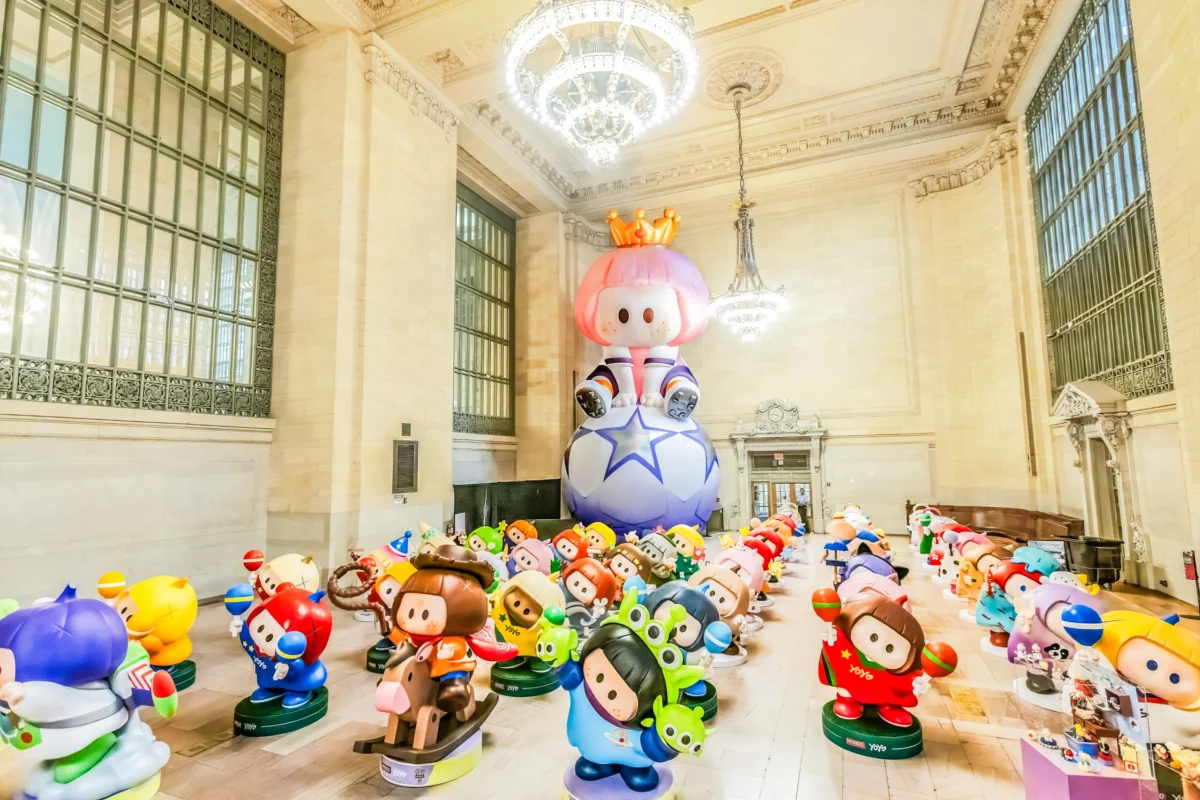
NEW YORK — The cavernous, historic Vanderbilt Hall at New York’s Grand Central Terminal, usually reserved for the hurried transit of commuters, was transformed on June 20 into a vibrant, immersive playground. MINISO, the global lifestyle retail giant, officially unveiled MINISO YOYO: Small Yet Significant, a landmark art exhibition that serves as both a public celebration of creativity and a bold statement of the brand’s evolution into a formidable global intellectual property (IP) powerhouse.
The exhibition, which stands as the largest of its kind for the brand, features a mesmerizing array of 50 five-foot-tall YOYO figures, capped by a towering, 40-foot-tall installation that commands the attention of every passerby. This activation is not merely a marketing stunt; it is the physical manifestation of MINISO’s pivot toward becoming a content-driven, global IP operating platform.
A New Icon for the Modern Era
Introduced in 2025, YOYO was conceived as an embodiment of the "small joys" found in the minutiae of daily life. Characterized by a distinctive pumpkin-shaped head and minimalist dot eyes, the character has transcended its origins as a retail product to become a cultural touchstone. Within just six months of its launch, the YOYO line—spanning vinyl plush toys, blind boxes, and scented surprise figures—has generated over US$14 million in global sales.

The success of collections such as the YOYO Tilted Head series and the Cupid Ring icon box demonstrates a shift in consumer behavior. Modern shoppers are increasingly drawn to characters that offer emotional resonance and aesthetic storytelling, rather than simple utility. By tapping into this sentiment, MINISO has successfully positioned YOYO as a brand mascot that bridges the gap between affordable retail and high-end collectible art.
The Exhibition: A Chronology of Co-Creation
The Small Yet Significant exhibition is a testament to the power of collaboration. The project’s timeline began with the conceptualization of the character in early 2025, followed by an aggressive global rollout that included the "YOYO Travel Diary" exhibition in Singapore. That event, which featured 13 large-scale installations, proved that the character could serve as a vehicle for narrative-led experiences.
The New York installment takes this concept further by inviting the community into the creative process. The 50 figures on display at Grand Central are not uniform; they are the result of co-creation between MINISO’s internal design team, global artists, and various community groups.

A pivotal highlight of the exhibition is a special installation designed in partnership with the New York-based animal welfare organization, Animal Haven. This collaboration underscores a strategic shift: MINISO is using its IP to engage with social issues and local community causes. By integrating philanthropic elements, the brand elevates YOYO from a static toy to a platform for public dialogue and shared human experience.
Strategic Pillars of the IP Operation Platform
MINISO’s transformation is built on a dual-track strategy. The first track involves high-profile global licensing partnerships—collaborating with established entities to bring familiar faces to their stores. The second, and perhaps more critical track, is the aggressive development of proprietary, original IP.
Beyond YOYO, the brand’s portfolio includes other homegrown successes such as Gift Bear and Friends, Dundun Chicken, and the MINI Family. Additionally, the company has signed exclusive artist IPs like KUMARU and Carrot Street. This strategy has yielded dividends, with these characters gaining traction among high-profile influencers, Hollywood actors, and models who have shared their enthusiasm for the products on social media, further cementing the brand’s "cool factor."

The "MINISO Gallery" and Experiential Retail
In tandem with the Grand Central exhibition, the brand launched the "MINISO Gallery" in Shanghai this June. This permanent, top-tier exhibition space represents the company’s commitment to providing an independent, high-culture platform for IP-driven artistic expression.
This is part of a larger experiential retail strategy. Concepts like MINISO LAND and MINISO FRIENDS are designed to turn the retail environment into a "treasure hunt." By focusing on these interactive formats, MINISO is insulating itself from the volatility of traditional brick-and-mortar retail, instead offering an experience that necessitates physical attendance and social media sharing.
Official Perspectives: Redefining the Role of Retail
Robin Liu, Chief Marketing Officer of MINISO, emphasized that the New York exhibition is a strategic milestone.

"The YOYO Small Yet Significant exhibition builds on our growing portfolio of immersive, IP-led experiences, designed to engage global audiences beyond traditional retail," Liu stated during the opening ceremony. "It demonstrates that IP is no longer confined to products and visual identity; rather, it has become a core MINISO content asset that connects consumer emotions, culture, social issues, and public expression."
For MINISO, the goal is clear: to move from being a store that sells products to a brand that curates experiences. By positioning YOYO as a storyteller, the company is successfully lowering the barrier to entry for consumers who want to participate in a "lifestyle brand" without the high price point typically associated with such status.
Implications for the Global Toy and Lifestyle Market
The success of the YOYO activation has significant implications for the wider toy and retail industry. We are witnessing a clear shift toward "blind box" culture and collectible, character-driven marketing that relies on rapid, thematic product drops.

1. The Rise of the "Global IP Operator"
Retailers are increasingly acting as talent scouts and IP managers. By signing exclusive artists, companies like MINISO are creating a proprietary "ecosystem" that competitors cannot easily replicate. This creates a moat around their business, ensuring that consumers must visit their channels to access specific, limited-edition cultural experiences.
2. Immersive Marketing as the New Standard
The era of static, window-based marketing is waning. Brands that fail to provide "Instagrammable" or "TikTok-ready" real-world experiences are finding it difficult to capture the attention of Gen Z and Alpha consumers. The success of the Singapore and New York YOYO exhibitions proves that high-investment, high-visibility public installations drive organic brand loyalty in ways that traditional advertising cannot.
3. Community-Led Philanthropy as Brand Strategy
Collaborating with local organizations like Animal Haven allows a global brand to "localize" its impact. It transforms a faceless, mass-produced toy brand into a community stakeholder, effectively mitigating the negative perceptions often associated with large-scale manufacturing.

Conclusion: A Blueprint for the Future
As the MINISO YOYO: Small Yet Significant exhibition continues its run through July 12 at Grand Central Terminal, it serves as a harbinger of the brand’s future. MINISO is no longer merely a purveyor of affordable home goods; it is a creative powerhouse that treats its IP as a living, breathing entity.
By prioritizing emotional connection, artistic collaboration, and public engagement, the company has created a sustainable, scalable model for success. The "Small Yet Significant" tag—while originally applied to the character of YOYO—perfectly encapsulates the brand’s current trajectory: the small, everyday joys that, when aggregated, create a significant global movement.
As the retail landscape continues to evolve, MINISO’s ability to blend commerce with culture, and products with public art, will likely serve as a benchmark for other global brands looking to remain relevant in an increasingly crowded and experience-hungry market. For the commuters of New York, YOYO is a bright, pumpkin-headed reminder that even in the middle of a bustling transit hub, there is always room for a little bit of joy.


 Evan Lee Salim
 Nana Wu